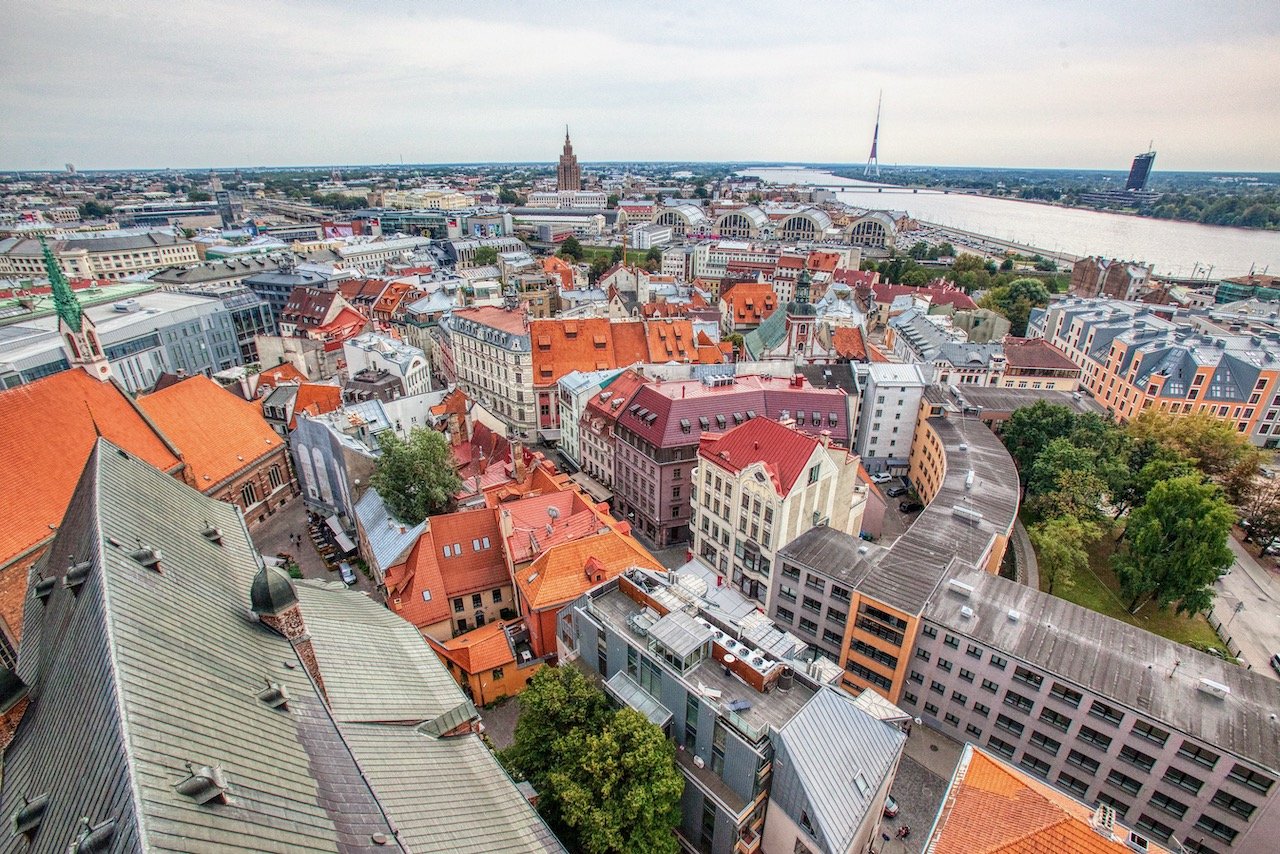
Riga Castle, Riga, Latvia (ISO 250, 16 mm, f/2.8, 1/2000 s)
(Some links in this post are affiliate links. If you click through and take action, I'll be compensated.) If you are also interested in any PRINTS from any of my posts, be sure to check out my store where you can buy prints as posters, in metal/wooden frames or on canvas.
If you’re traveling through Europe and can’t figure out what region to see, you can be sure that traveling through the Baltic region is a good choice. Riga is the capital of Latvia and also the largest city in the Baltic states. It is split across the Daugava river and is separated into Old Riga and Paradaugava.
Riga can be reached by direct flight to the airport itself (Code RIX), by ferry from Stockholm, or by bus (LUX express or ECOlines) from cities like Tallinn, Vilnius, and St. Petersburg.
Riga is known for its Art Nouveau style of architecture, having the largest collection of these types of buildings in the world. This is due to Riga experiencing an economic boom during the peak of popularity of the Art Nouveau style. The city itself is easily walkable (You can find a Googlemap of the places I will discuss at the end of this post) and is charming both in the summer and the winter (wear layers!).
Starting in Old Riga or Vecriga, your first stop is the Riga Castle, which is residence of the Latvian president, and boasts a few museums inside. It has been destroyed several times over the years by a variety of different conflicts. It’s not as striking as other castles, but cool to see.
Vecriga, Riga, Latvia (ISO 1000, 16 mm, f/5.6, 1/8000 s)
Next is the Three Brothers. This housing complex is the oldest in Riga with each home representing different architectural features of the time periods they were constructed in. It’s best to swing by to see them in the morning as it’s a popular destination to see among tourists. Nearby is the Swedish Gate, which is a cultural monument, and is the last remaining portion of the city’s once fortified walls.
The Three Brothers, Riga, Latvia (ISO 1600, 16 mm, f/8, 1/640 s)
Just down the road is the House of the Blackheads, which started off as a guild for unmarried merchants in the 14th century. It was unfortunately demolished during WWII and only rebuilt in the 1990s. Nonetheless, these days its purpose is for hosting events, dinners, conferences, and concerts.
House of the Blackheads, Riga, Latvia (ISO 1000, 22 mm, f/9, 1/500 s)
For a view of the city from above, venture to St. Peter’s Church and get a ticket for the viewpoint up top. Here you get a 360 degree view of Riga. The interior nave of the church features vaulted ceilings. The church construction is interesting in itself since it was constructed and re-constructed during the Gothic, Romanesque, and Baroque periods.
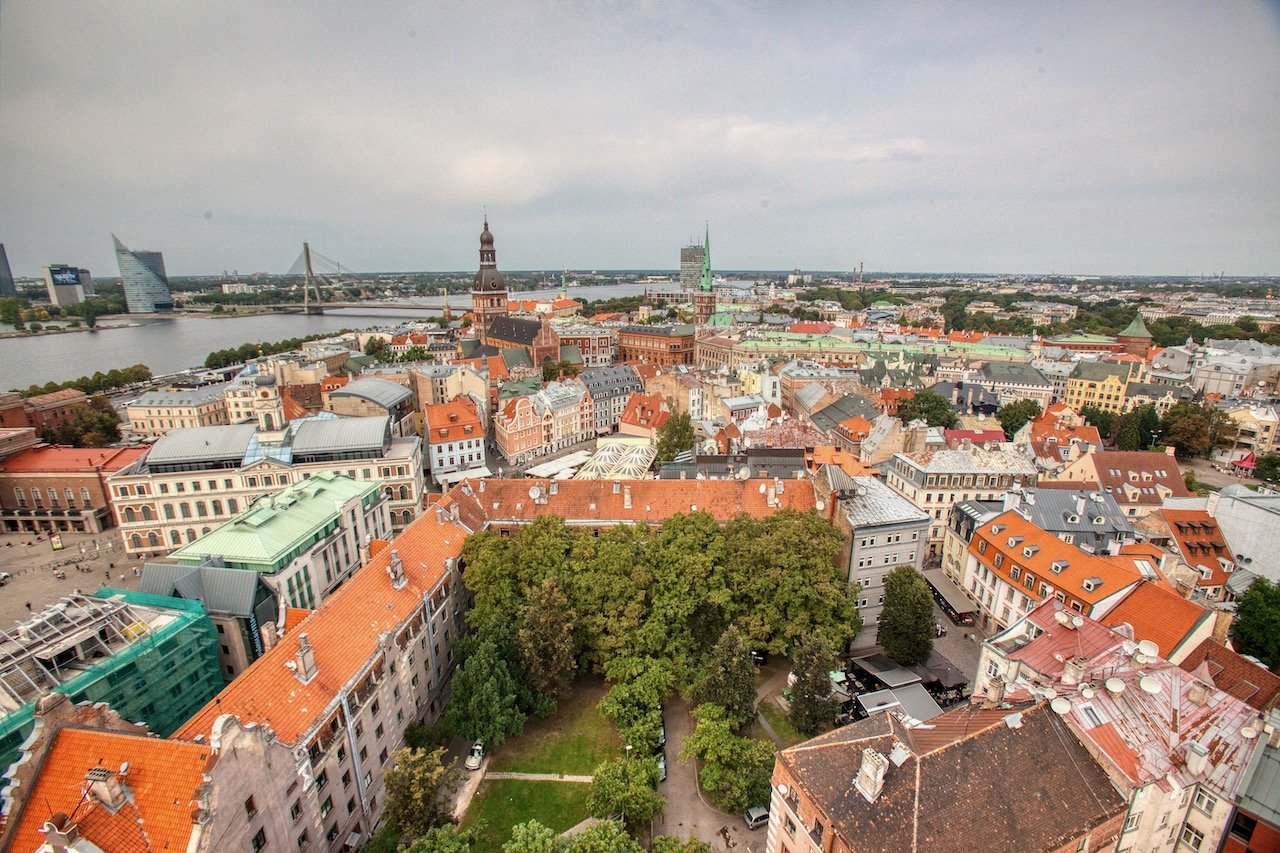
Riga, Latvia (View from St. Peter’s Church) (ISO 2000, 16 mm, f/9, 1/1250 s)
Riga, Latvia (View from St. Peter’s Church) (ISO 2000, 16 mm, f/9, 1/800 s)
Do NOT miss Folkklubs ALA Pagrabs if you are in Riga. This is a tavern located in a cellar which serves traditional Latvian cuisine and plays Latvian folk music (among others). They have live music at least five nights a week and feature brews and wines with Latvian origins. Visiting this place is the best way to get to know Latvian culture.
Riga, Latvia (ISO 2000, 21 mm, f/8, 1/80 s)
The Riga Central Market is Europe’s largest market and bazaar located across 5 pavilions, some of which were old German hangars for Zeppelins. The market itself hosts more than 3000 stands. There is everything from pastries, vegetables, fruit, breads, fish, etc - at decent prices, and they also have souvenirs.
If the weather is nice, it’s a perfect idea to wind down your day at Bastejkalna Park nearby. It’s very peaceful and centrally located near the city center.
I highly recommend taking 2-3 days for this city and also combining it in one bigger trip to see the Estonian capital of Tallinn (blog post here) and the Lithuanian capital of Vilnius (blog post here). You can do all three in just about a week's time.
It is also interesting to see how each of these Baltic countries are ever so different from one another in one trip while each city is fresh on your mind.
The Åland Islands are an autonomous region of Finland, located in the Baltic Sea. The capital city is Mariehamn and the official language is Swedish. The islands are perfect for hiking, sailing, and other outdoor activities and are easily reachable by ferry from Sweden. Notable places to visit include Kastelhomn Castle, Nåtö and Espholm Nature Reserves, and the city of Mariehamn.
The Nordics include Sweden, Finland, Denmark, Norway, Iceland, and the Faroe Islands. This part of Europe contains such awesome metropolitan capitals like Stockholm, Reykjavik, and Tórshavn (among others). Along with such iconic cities in these Northern European countries, you will also find gorgeous fjords, waterfalls, snow topped mountains, massive castle, and cool cathedrals. I have outlined all Nordic cities (including capitals), as well as the natural attractions in this part of the world and consolidated them into this ultimate guide!
Trakai is a small town of 5,000 people just 28 km west of Vilnius in Lithuania with origins dating back to 1337. The town features a large array of different community nationalities (Karaims, Tatars, Lithuanians, Russians, Jews and Poles). The highlight of the town has to be the Trakai Island Castle on Lake Galvé. Today it serves as a museum as well as a venue for festivals and concerts.
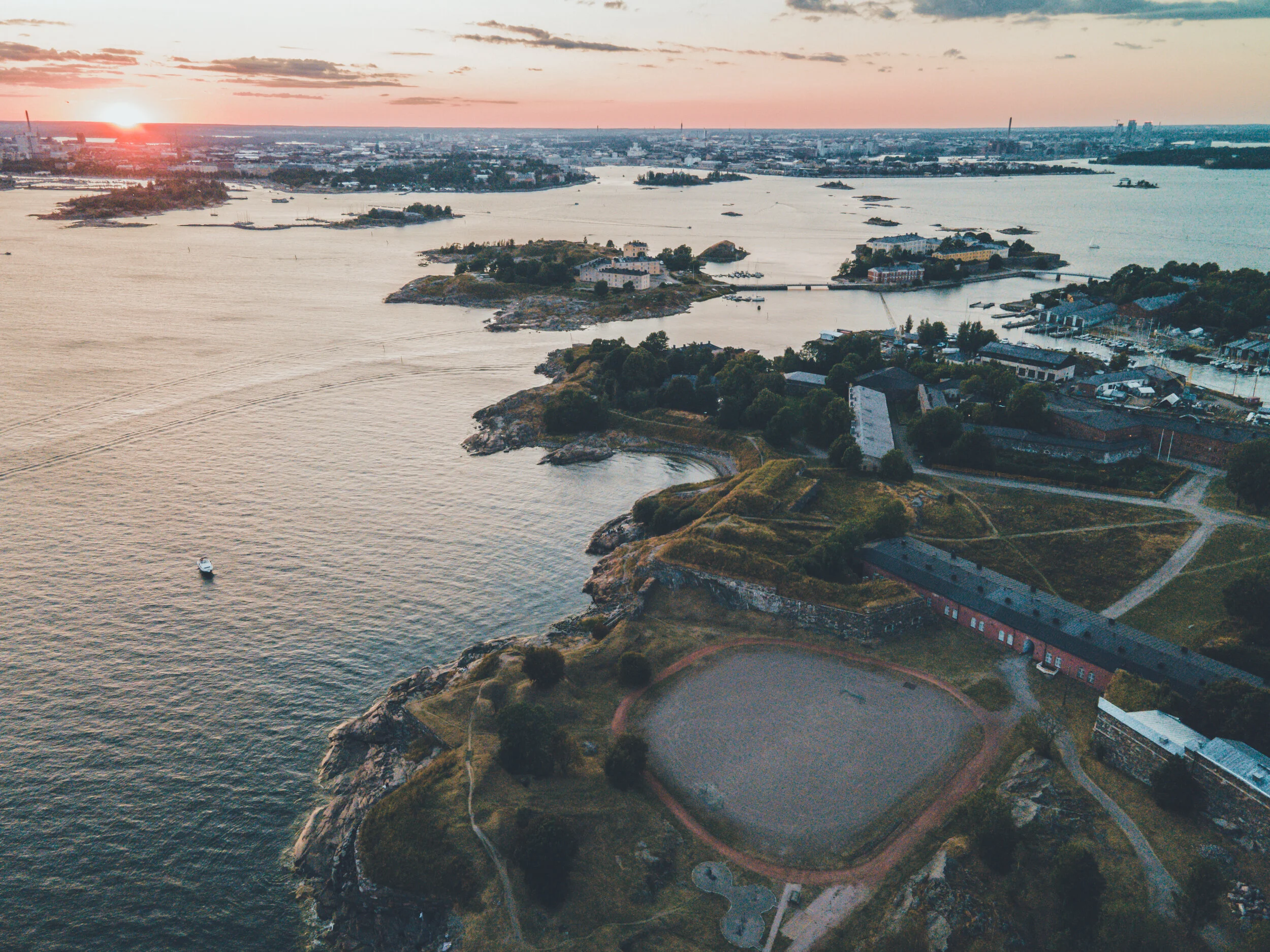
Suomenlinna, situated off the coast of Helsinki, translates to 'Castle of Finland'. Originally built by the Swedes, it has been occupied by the Russians, before being handed over to Finland. Take some time here to explore the Suomenlinna and Military Museums, Cafe Silo, Cafe Vanille, Adlerfelt, the King's Gate and Artillery Battery, Sveaborgs badstrand, and the Jetty Barracks Gallery!
The term Baltic State is geopolitical and refers to the 3 sovereign states located on the eastern coast of the Baltic Sea, which have formed close intergovernmental and parliamentary ties with each other. Each capital is quite different and has much to offer. This guide breaks down the Baltic capital cities of Tallinn (Estonia), Riga (Latvia), and Vilnius (Lithuania).
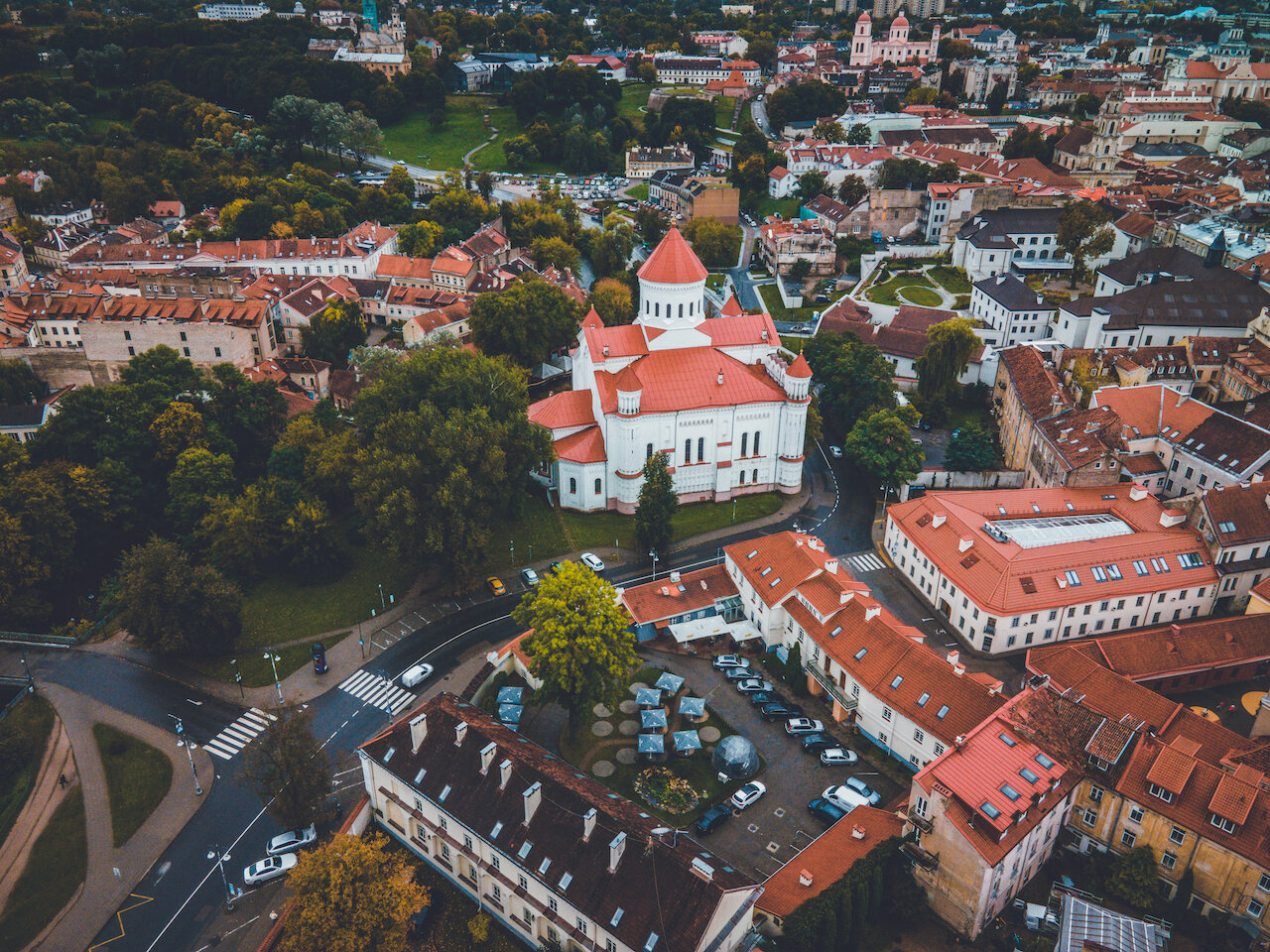
Vilnius is rich in historical and cultural entities that serves as the capital of the Baltic State of Lithuania. My trip here took me to great places like St. Anne's Church, Vilnius Cathedral, the Three Crosses, Gediminas Castle Tower, Bastion Hill, Cathedral and Town Hall Squares, Pilies and Literatai Streets, and Missionary Gardens, just to name a few. This was my FAVORITE Baltic Capital!
The Nordic region of Europe consists of some of the world's happiest countries. The term Nordic is often mixed with Scandinavia though the two represent certain parts of Northern Europe. Each capital is quite different and has much to offer. This guide breaks down the Nordic capital cities of Copenhagen, Stockholm, Oslo, Helsinki, Reykjavik, Torshavn, and Mariehamn.
There is more to Helsinki than it's gorgeous emerald-domed cathedral. This Scandinavia capital is replete with a ton of fantastic cafes that give great views of the capital countryside. The fortress of Suomenlinna is also just a ferry ride away and its solitude and quietness stands in great contrast to the city sounds just across the water.
Estonia's capital of Tallinn is a vastly underrated city not only in the Baltics, but in all of Europe. As technologically advanced as the city is, it boasts a wonderful Old Town. Other attractions include Kadriorg Palace, the artsy district of Noblessner, Victory Square and Column Monument, Alexander Nevsky Cathedral, and great bars like Fersen and cafes like Røst.
The Art Nouveau style of the Latvian capital of Riga is a refreshing change from the skyscrapers that usually accompany capital cities. This city can be reached by bus, plane, or ferry and boasts city center attractions like Riga Castle, Three Brothers, House of the Blackheads, Swedish Gate, St. Peter's Church, and Riga Market.
The Åland Islands are an autonomous region of Finland, located in the Baltic Sea. The capital city is Mariehamn and the official language is Swedish. The islands are perfect for hiking, sailing, and other outdoor activities and are easily reachable by ferry from Sweden. Notable places to visit include Kastelhomn Castle, Nåtö and Espholm Nature Reserves, and the city of Mariehamn.