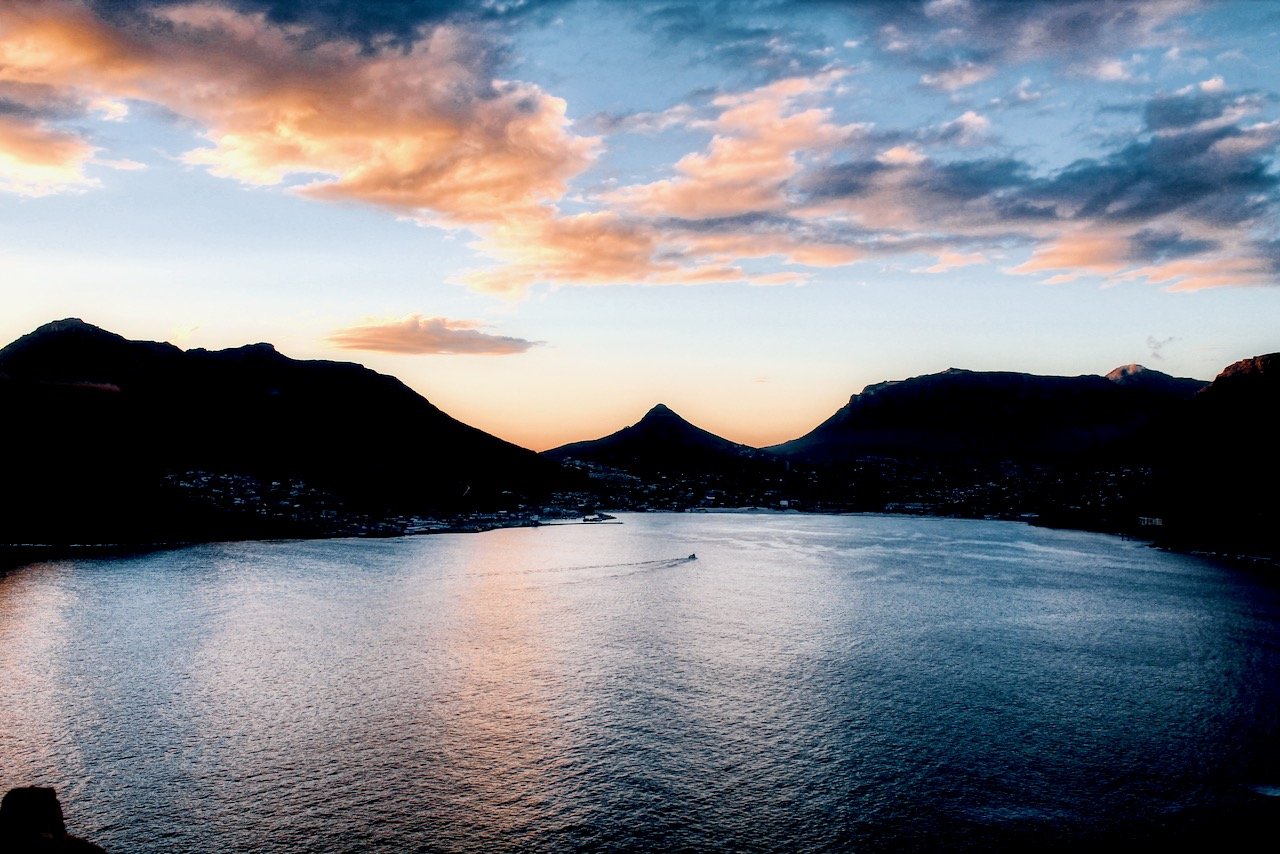
Hout Bay, South Africa (ISO 100, 21 mm, f/4.5, 1/400 s)
(Some links in this post are affiliate links. If you click through and take action, I'll be compensated.) If you are also interested in any PRINTS from any of my posts, be sure to check out my store where you can buy prints as posters, in metal/wooden frames or on canvas.
In addition to wine tasting, the Cape Town area has loads of activities to enjoy for people with different interests. Whether you’re staying in Cape Town city center, or in nearby Stellenbosch, rent yourself a car and embark on a road trip through the Western Cape.
This travel route starts in Stellenbosch, so if you’re staying in the town itself or a winery nearby, this is a great way to start your road trip. You can find a Googlemap of the places I will discuss at the end of this post. Also, if you’re a lover of wine, you’ve come to the right place. Check out my post on some of the wineries in this region.
Some of my favorite travel experiences have usually been when I can incorporate an activity like surfing into the mix. Son Surf school in nearby Strand offer one and one surf lessons with 1.5 hour of instruction and suit and board rentals for very very good prices. If you haven’t surfed before, the one on one instruction is perfect, but make sure you are ready to handle the frigid waters, as it comes in from the Atlantic (Durban on the other side of South Africa is a popular beach town, whose waters come in from the much warmer Indian Ocean, also popular with surfing). As far as sharks go...it is South Africa after all and Shark Alley as it’s called, which contains the highest concentration of great white sharks, is in nearby Gansbaai. Nonetheless, there are flags on all beaches that denote how safe the beach is that day when it comes to sharks in the area. In my experience, i was having too much fun surfing to be thinking about sharks.
Son Surf School, Strand, South Africa (ISO 80, 6.2 mm, f/8, 1/160 s)
If you’re less scared about natural predators on land, then go just down the road to the Cheetah Outreach in Somerset West. The main goal of this entity is to promote the survival of free ranging cheetah in Africa. Your donation here goes towards education programs and research projects that will benefit the cheetah populations for years to come. If you opt for a Cheetah Encounter, you and come face to face (hopefully not literally) with a baby cheetah in the outreach. Everything here is for a good purpose so you can rest assured that the overall wellbeing and health of these cheetahs are a top priority for the center and not purely for exploitative purposes.
Cheetah Outreach, Somerset West, South Africa (ISO 100, 44 mm, f/10, 1/250 s)
As you drive west and eventually turn south down the Cape Peninsula, take an afternoon stop at Muizenburg beach, walk by the dunes and maybe go for a quick dip in this beachside town. It’s a little further away from Strand, but the water is still very cold.
Muizenberg Beach, South Africa (ISO 100, 33 mm, f/5.6, 1/640 s)
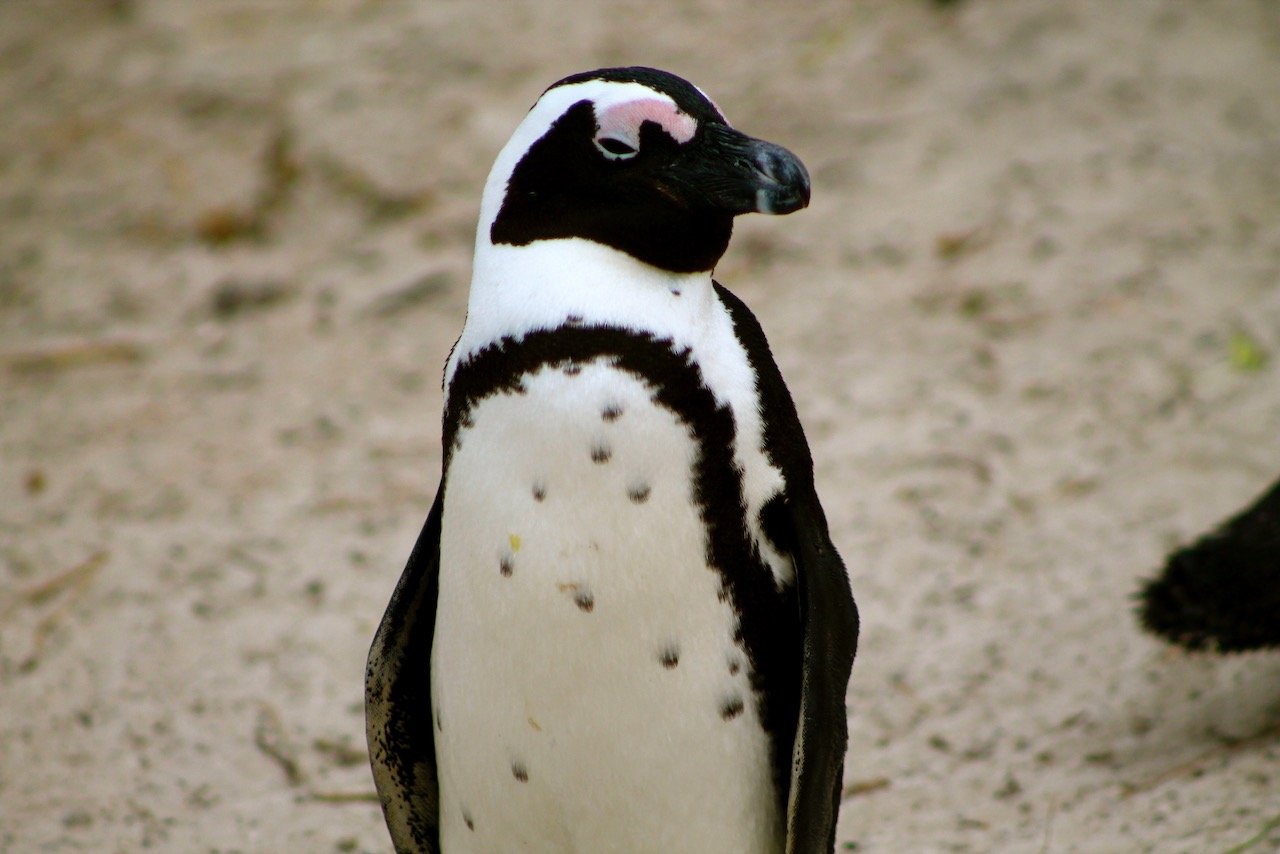
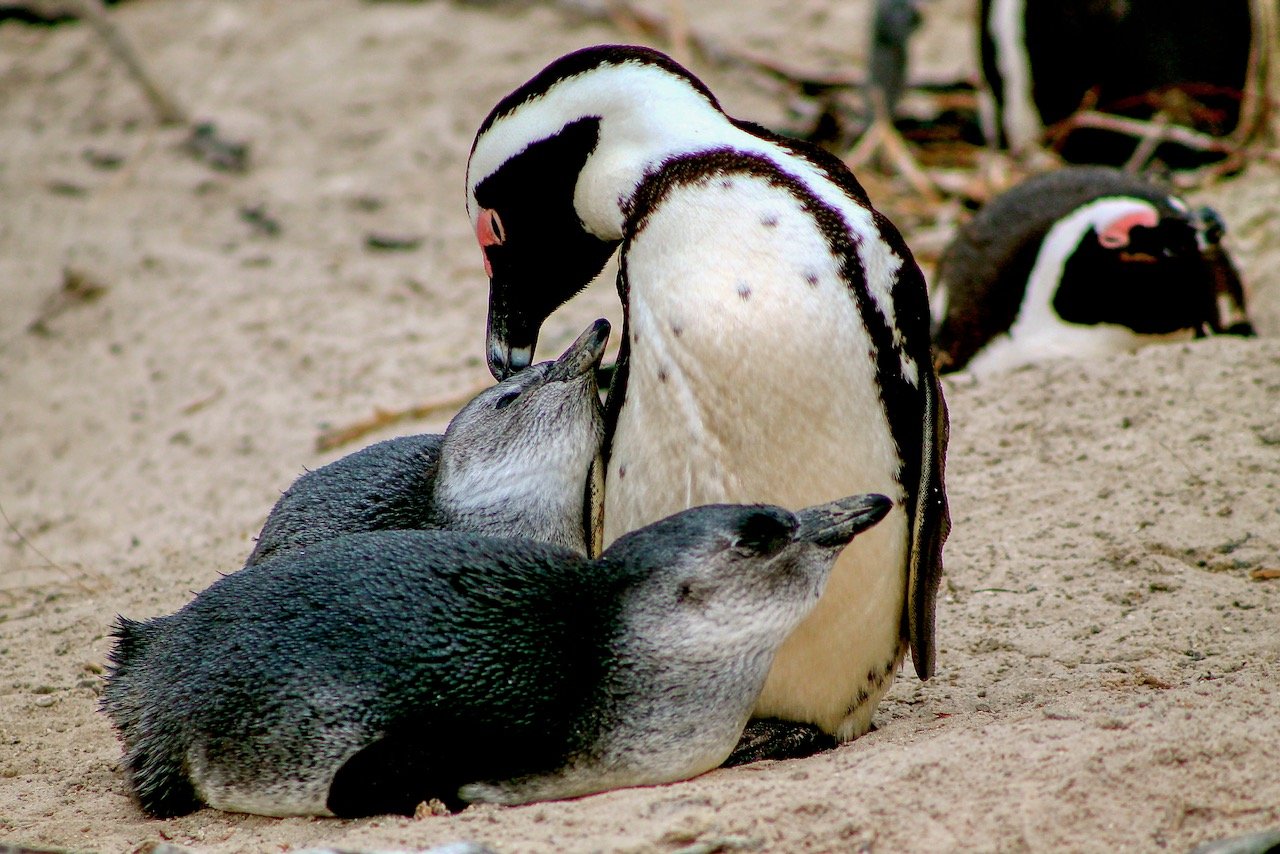
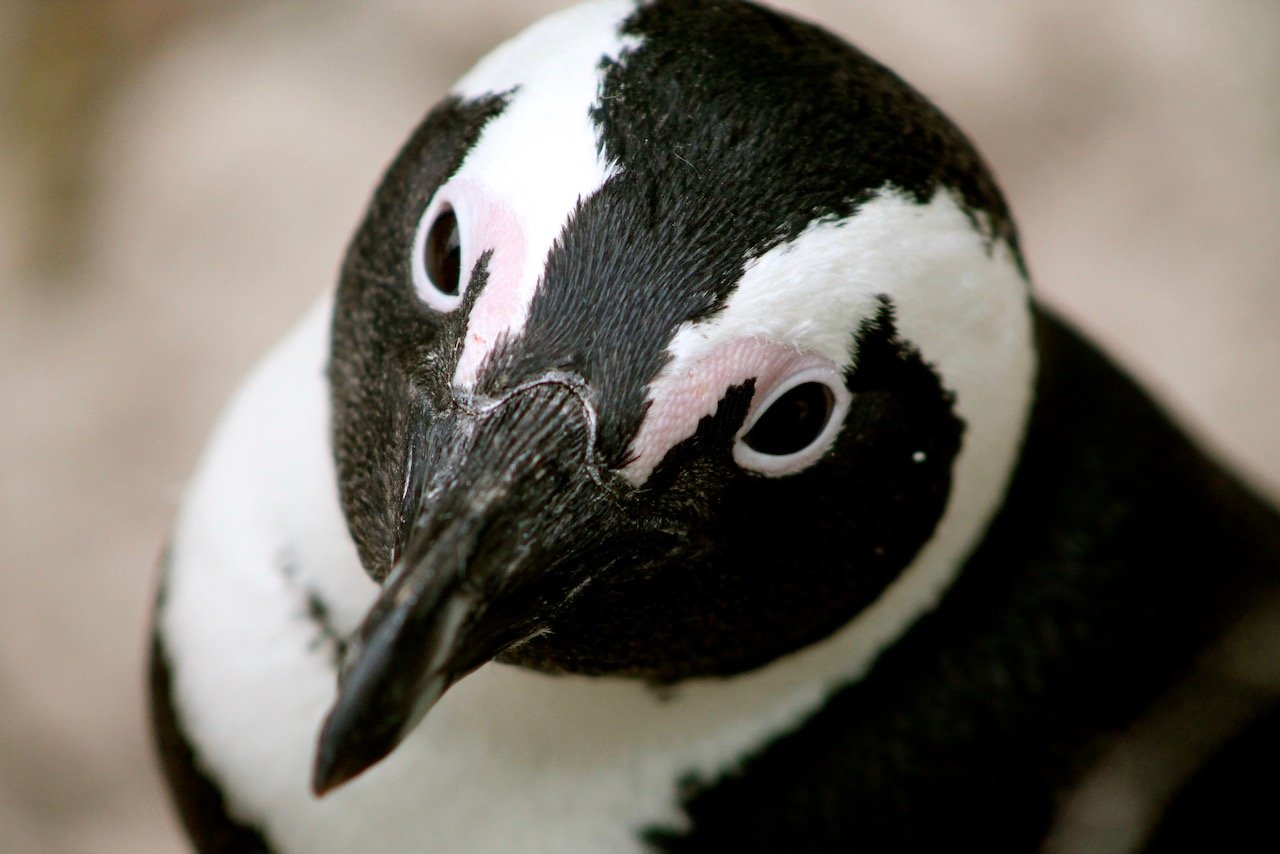
The next stop on the is Boulders Beach at Simon’s Town. Here you can see a small reserve with hundreds of south african penguins (or jackass penguins) roaming around. If you’re lucky, they will even come up to you as you’re swimming in the nearby beach. Here you can get agonizingly close to the birds, but beware, come too close and they too have a nasty bite.
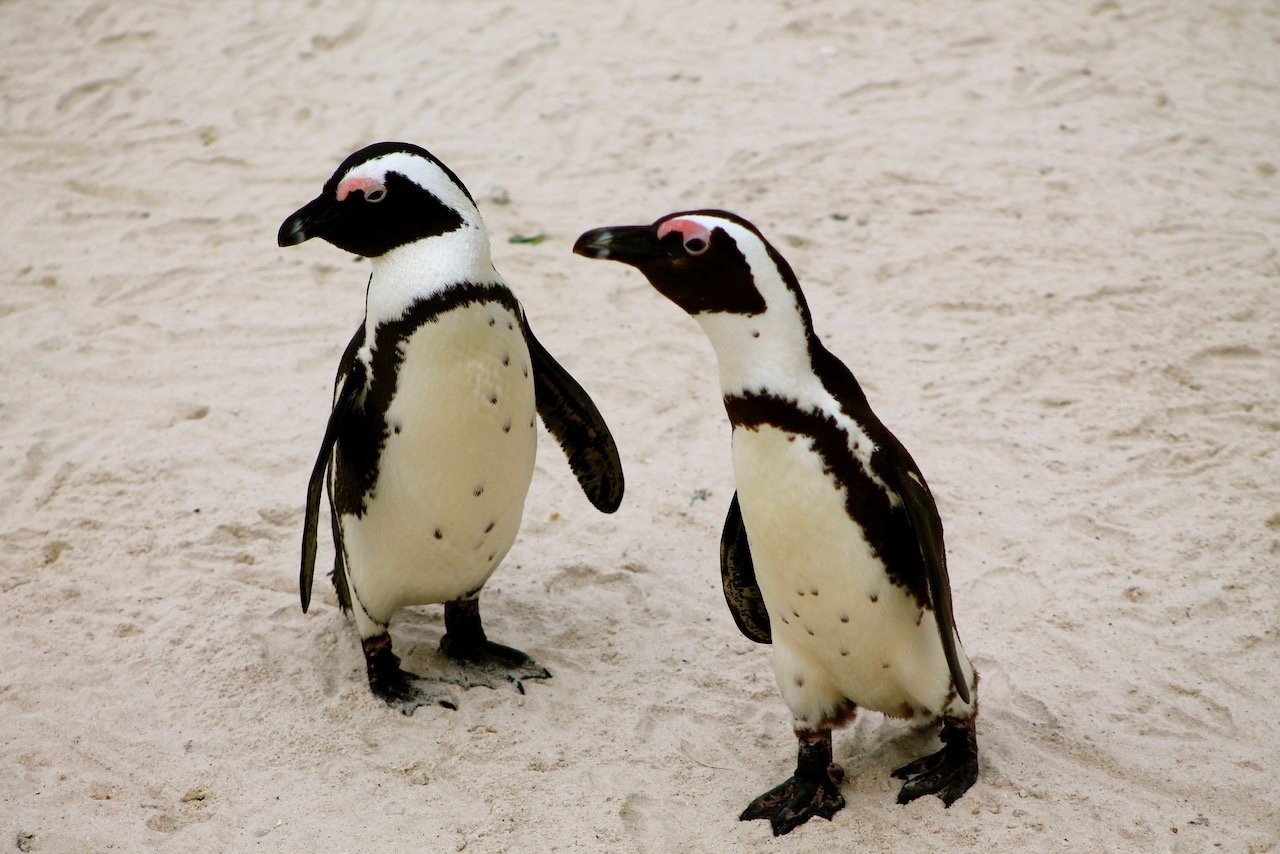
Boulder’s Beach, South Africa (ISO 160, 150 mm, f/5, 1/1250s)
Boulder’s Beach, South Africa (ISO 320, 280 mm, f/5.6, 1/1600s)
Boulder’s Beach, South Africa (ISO 500, 300 mm, f/5.6, 1/2000s)
Boulder’s Beach, South Africa (ISO 2000, 170 mm, f/5, 1/1600s)
If you continue driving to the southern tip of the Cape Peninsula you finally reach the Cape of Good Hope. It’s known for it’s treacherous weather conditions from famous explorers centuries ago and incorrectly known as being the southern most point of south africa (a title which belongs to Cape Agulhas some 150 km to the southeast). Nonetheless, the rocky enclave exhibits great flora and fauna and is not to be missed.
Cape Town (from Lion’s Head), South Africa (ISO 800, 6.2 mm, f/2.8, 1/4 s)
The beach at Llandudno is a smaller beach than Muizenburg and since it faces West, is best enjoyed during the sunset. It is also an excellent area to stay in that is quiet and relaxed, yet still very close to Cape Town city limits.
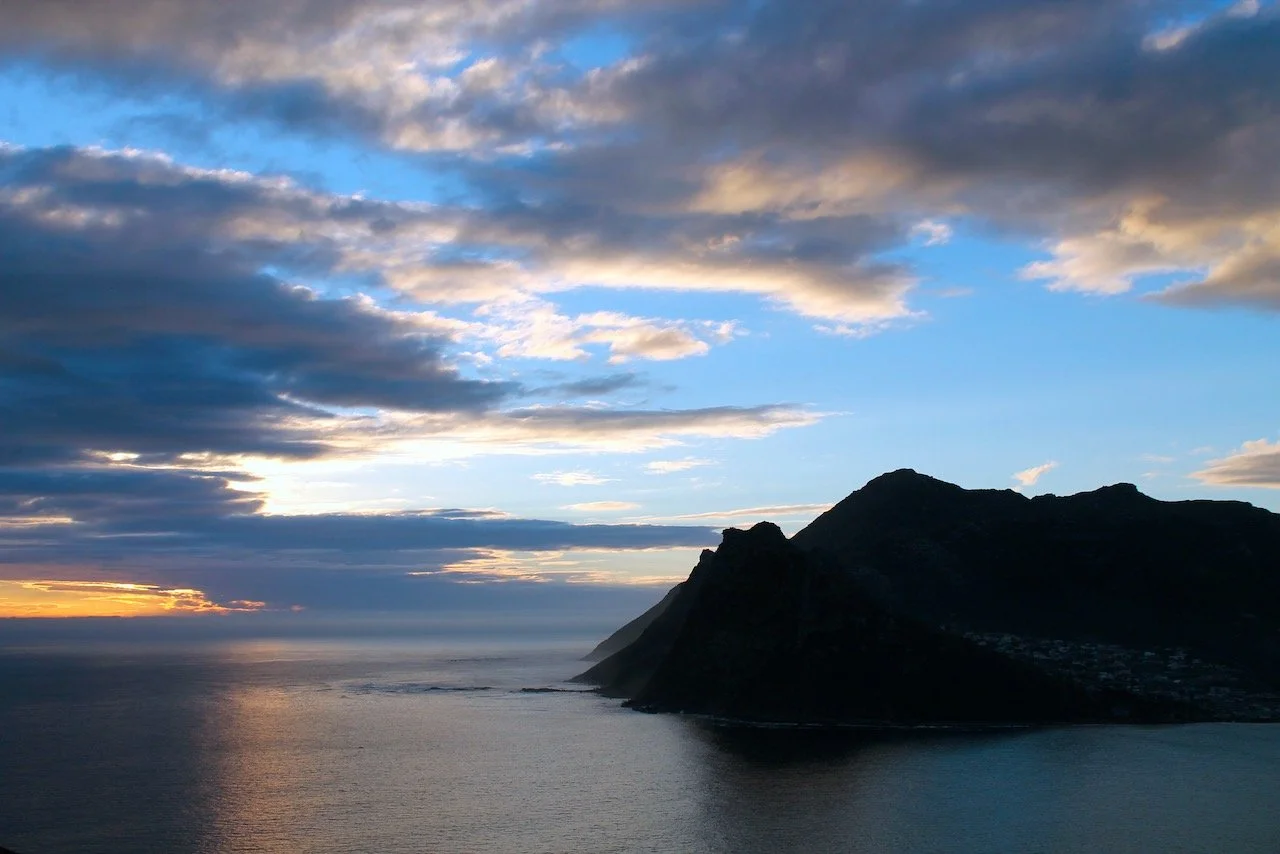
Hout Bay, South Africa (ISO 100, 18 mm, f/6.3, 1/500 s)
Most everyone has heard of Table Mountain in South Africa and has taken the cableway to the top to admire the gorgeous views of Cape Town. If you decide to do this, make sure you check the website often as the area experience smany days of high winds, which result in them closing the cableway for a time. You can also opt to hike up to the top if you fancy it.
A more preferable activity in my opnion is to climb Lion’s Head, just nearby. This hike is especially nice during the evening of a full moon. It takes about 2 hours, depending on your fitness level and gives you a different perspective of the city below. The climb isn’t very difficult, but precautions and proper gear should be taken (adequate shoes, headlamp, water, etc.). Don’t feel like hiking, go to Signal hill down the road from lion’s head. It’s not as high elevation as the other two, but still a great place to relax.
No visit to Cape Town is complete without a visit to the Victoria and Alfred Waterfront. Here you have shops, restaurants, bars, and everything urban you could want to unwind and relax from your day(s) long tour of cape town and its surrounding area.
The Sahara is the largest hot desert in the world comprising much of Northern Africa near the Mediterranean Sea. One of the best places to see it is in Morocco, specifically in the village of Merzouga. The village sits near the famous Erg Chebbi, a large area of sand dunes. Merzouga can be seen on a 2 day trip from either Fez or Marrakech.
Chefchaouen is located in the north of Morocco and is most known for its nearly entirely blue facade of its buildings. Initially founded as a military outpost, it is known as the 'Blue Pearl' of Morocco and its name roughly translates to 'look at the horns', referring to the two mountains on its perimeter. The highlight of the city is its medina, where the alleyways are too narrow for cars to pass.
Essaouira is a port city on the western coast of Morocco. Originally called 'Mogador' until the 1960s, it is characterized as a late 18th century fortified town and therefore listed as a UNESCO World Heritage city. The abundance of blue fishing boats makes it quite obvious that this industry dominates the city. The abundant winds the city receives is perfect for windsurfing and kite surfing.
Marrakech is the fourth largest city in Morocco, situated west of the Atlas Mountains. The city was founded in 1070 and is called the "Red City" due to the red sandstone material used in the construction of its early buildings. The city is a UNESCO world heritage site and has plenty of great sites to check out such as Jemaa Al-Fna, Koutoubia Mosque, Souk Semmarine, Bab Agnaou, and Bahia Palace.
Johannesburg is the largest city in the world not situated on a body of water. Gold is what brought people here first, but now it's the Jacaranda trees, proximity to Kruger National Park, Montecasino, Sandton, Sun City, The Panorama Driving Route, The Apartheid and Hector Pieterson Museums, the Soweto Towers, and Blyde River Canyon. Take a few days to explore this city's offerings.
The Western Cape of South Africa (specifically around Cape Town) is ideal for road trips. Here you can find many historical sites like Robben Island, nature sanctuaries like Jonkershoek Nature Reserve and Kirstenbosch Gardens, sports venues/teams like Ajax Cape Town FC (football) and DHL Stormers (rugby), as well as shark diving and whale watching in nearby Gansbaai and Hermanus.
Although not very high on people's travel list, overlooking Namibia as a prime destination for a road trip would be a mistake. If you're coming from South Africa, the journey to this country couldn't be easier. This road trip takes you up to Windhoek, then west to Swakopmund and Walvis Bay, then back south to Sossusvlei (Namib Desert), and Kolmanskop (and a return to South Africa).
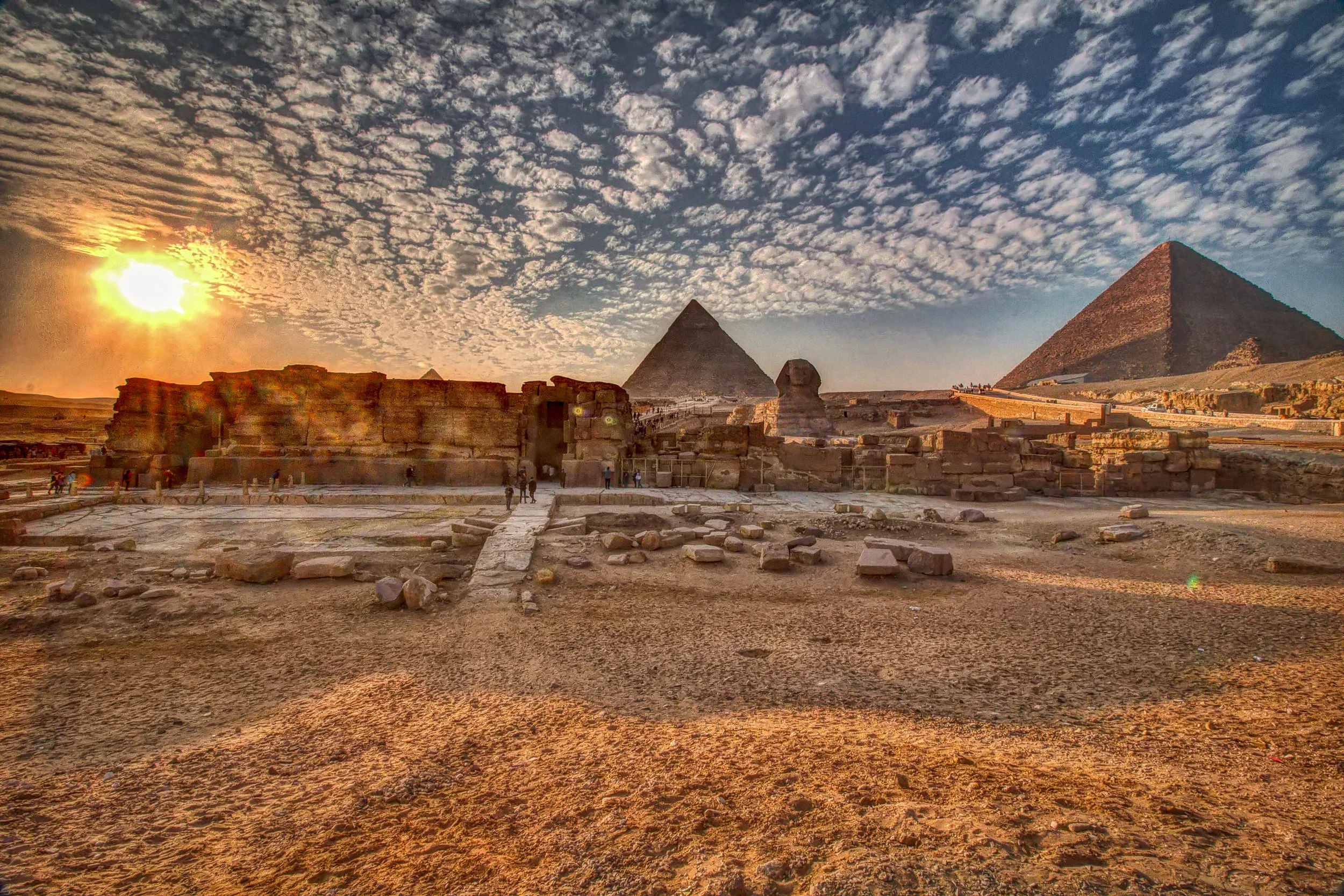
In just one (very efficient) week's time, you can get a glimpse of the vast history of Egyptian culture. This post outlines how to see the Pyramids at Giza, Valley of the Kings, Temples at Abu Simbel, Luxor Temple, Temple of Karnak, Aswan, Temple of Edfu, and Queen Hatshepsut's Tomb (just to name a few). As far as food, EAT EVERYTHING!
The Western Cape in South Africa is one of the best places in the world for a week's long road trip (which should cover MOST of the sites). You can do a plethora of activities around Stellenbosch and Cape Town like surfing at Strand and Muizenburg, see penguins at Boulder's Beach, drive the scenic Chapman's Peak, hike Lion's Head during the full moon, and dine at the V&A Waterfront.
Morocco is one of those countries with a plethora of different cities to satisfy everyone's tastes. You can choose from the coastal cities of Casablanca and Essaouira, the cultural centers Marrakech and Fez, and the blue city of Chefchaouen (among others). Here I'll highlight some of the places to see in these cities like the Hassan II Mosque, Jemaa El-Fna market, and the Chouara Tannery.
South Africa and wine tasting go hand in hand. If you find yourself in the wine rich region of Stellenbosch, look no further for here is a great guide on what some of the wineries in the region have on offer. Choose from vineyards with excellent tasting menus (wine paired with ice cream, cheese, chocolate, etc) as well as insanely nice views.
The Sahara is the largest hot desert in the world comprising much of Northern Africa near the Mediterranean Sea. One of the best places to see it is in Morocco, specifically in the village of Merzouga. The village sits near the famous Erg Chebbi, a large area of sand dunes. Merzouga can be seen on a 2 day trip from either Fez or Marrakech.