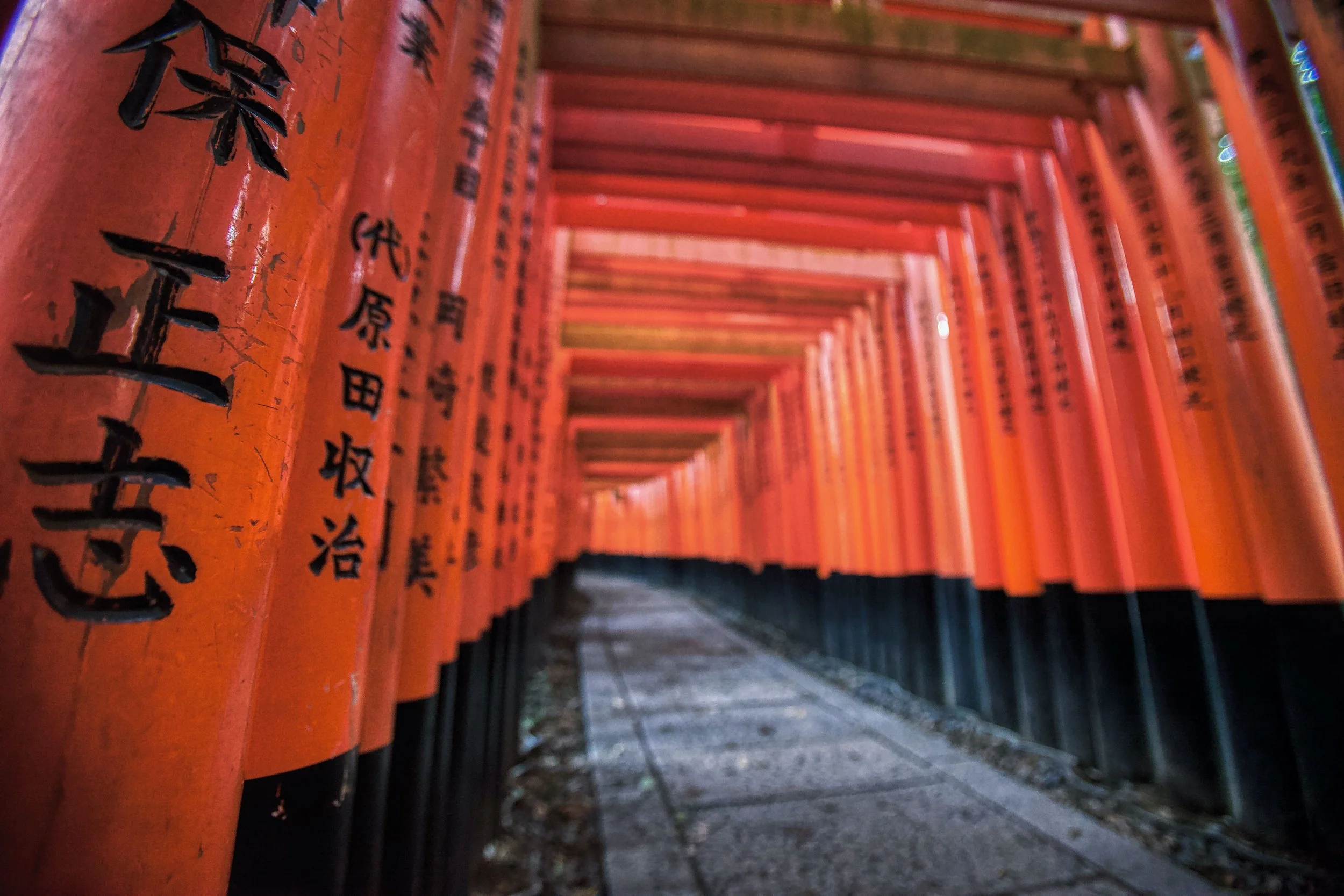
Fushimi Inari-Taisha Shrine in Kyoto, Japan

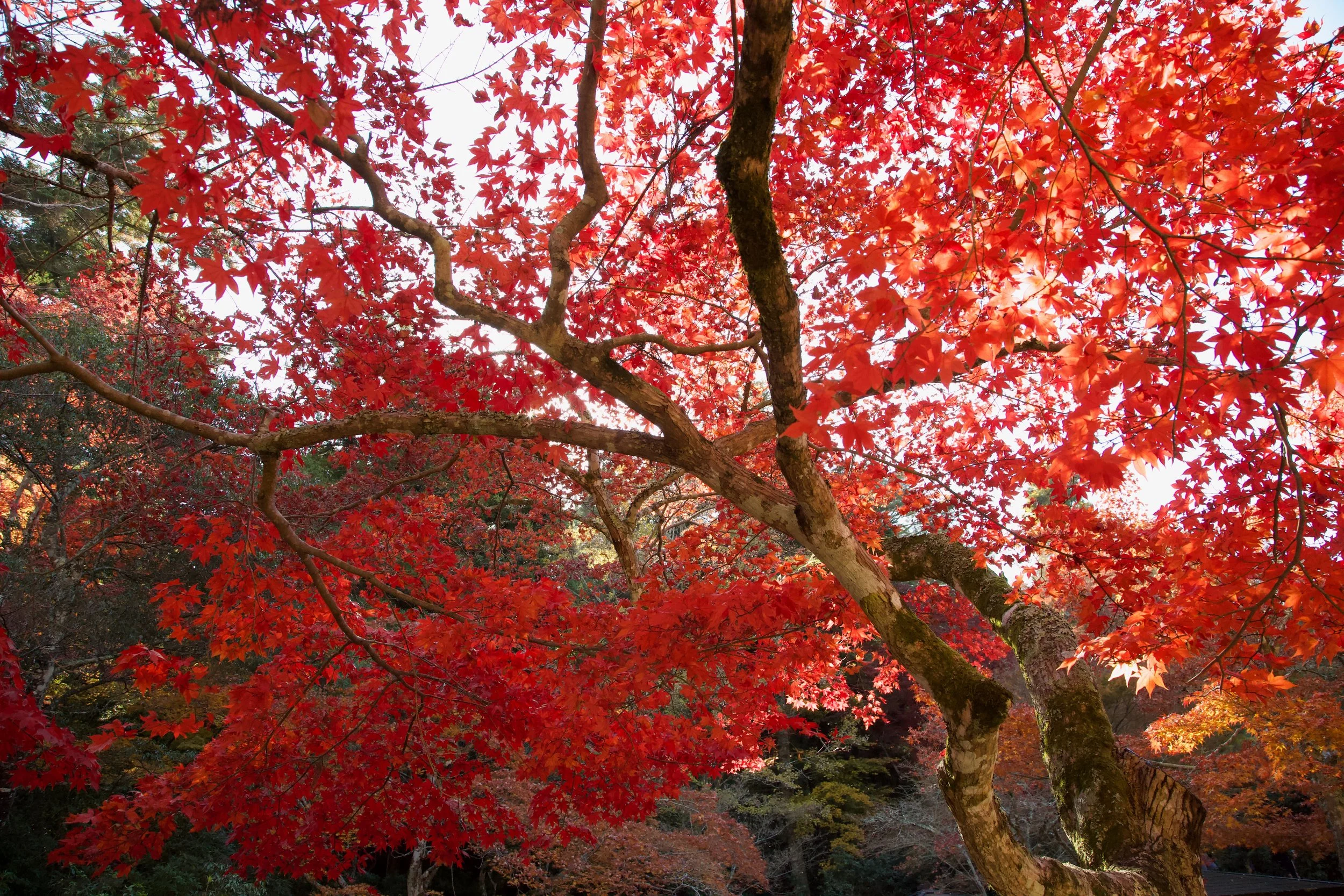
It is no surprise that Japan boasts an impressive array of natural landmarks as well as cultural entities that span centuries. What I really love about the country is its wide array of colors, whether that is the blooming cherry blossom trees, the japanese maple trees during autumn, and even the colors of their castles, temples, and shrines.

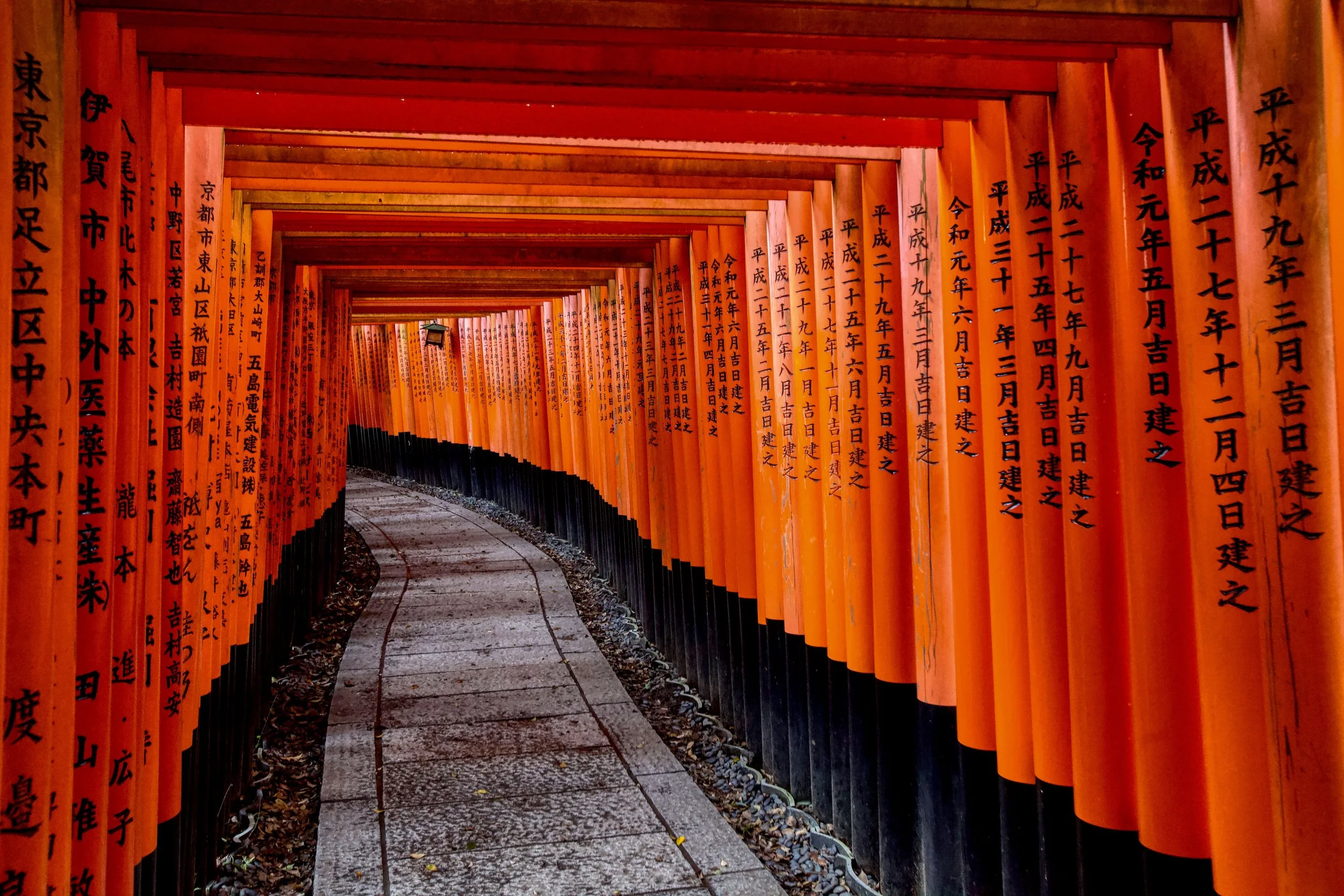
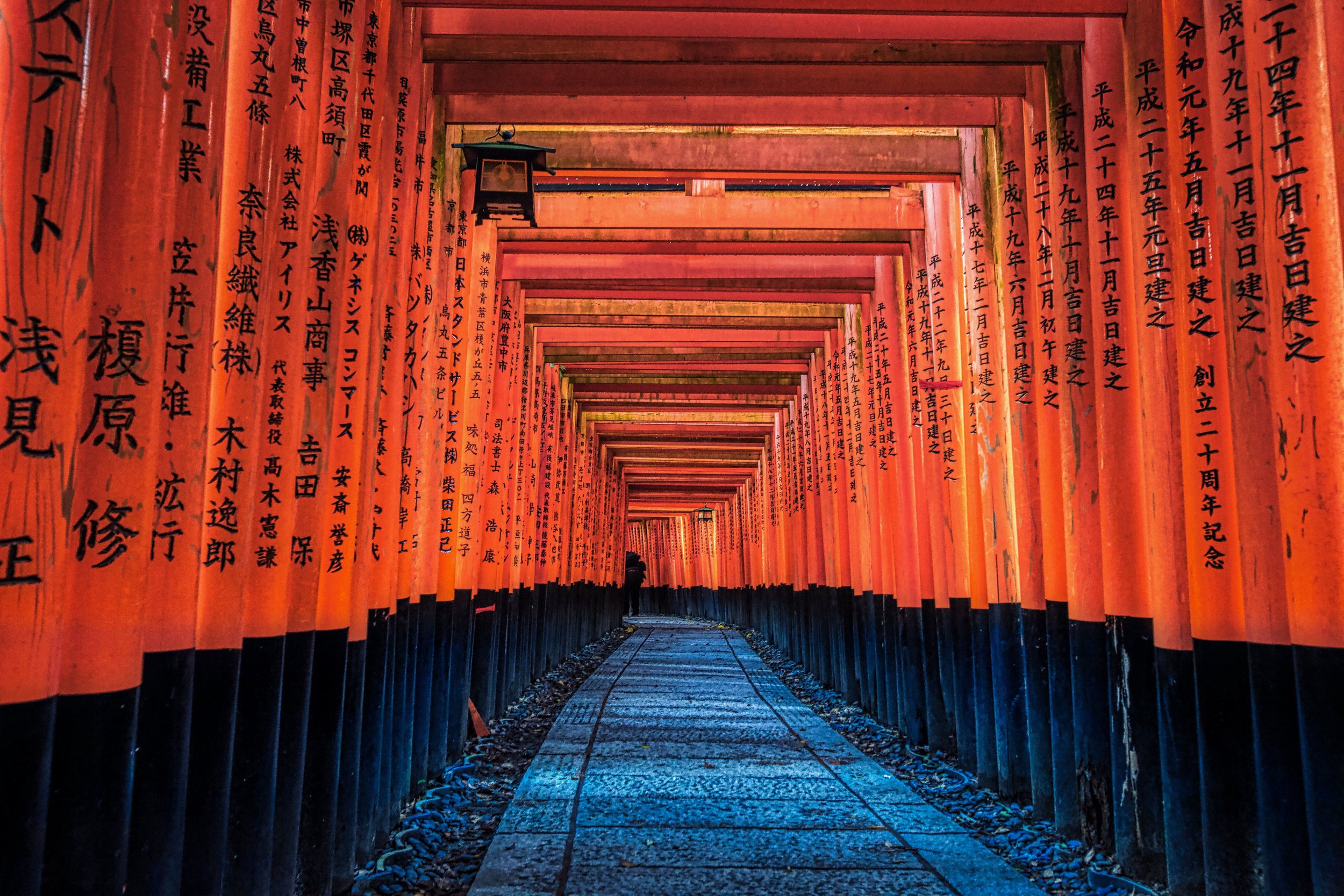
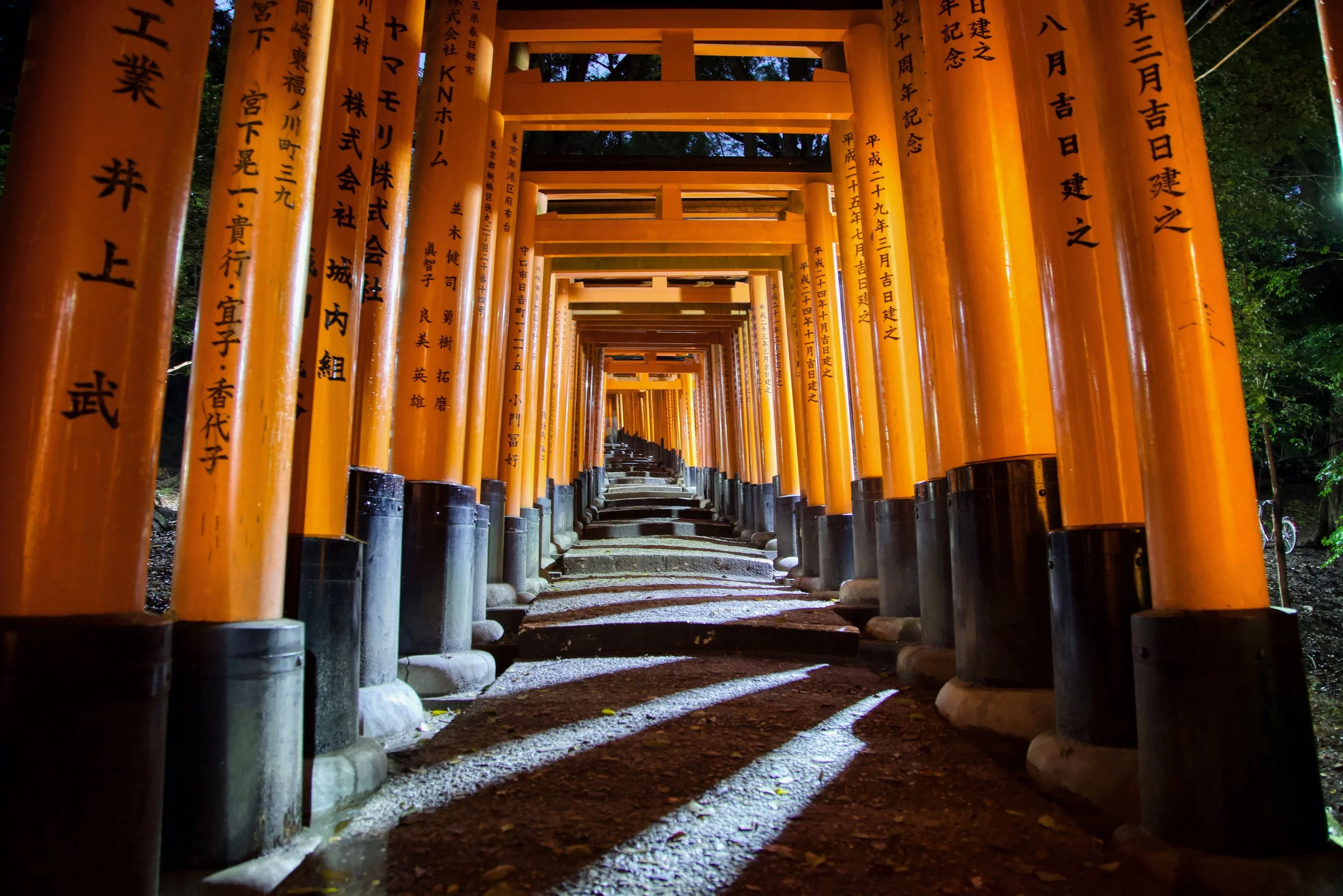
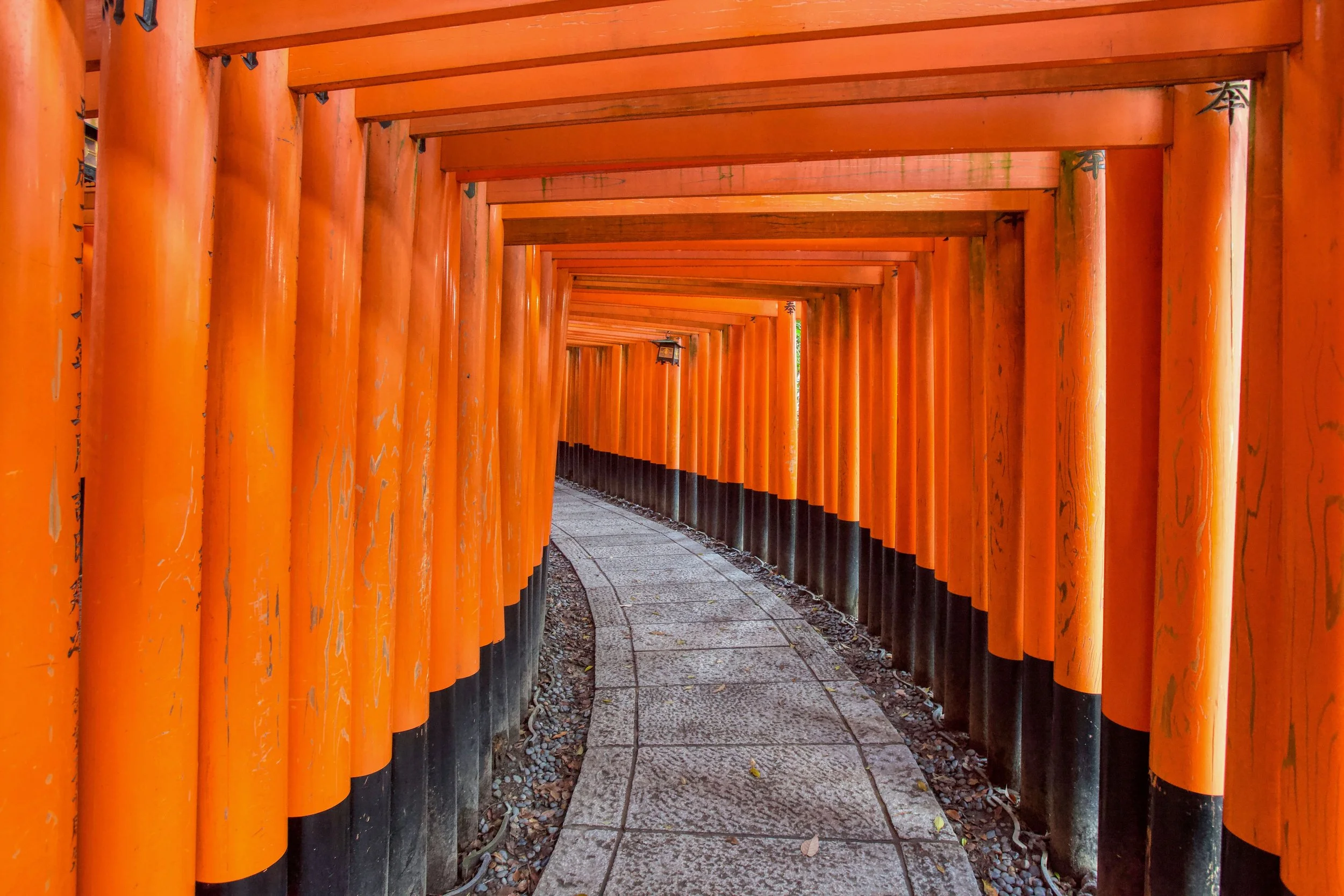
The Fushimi Inari-Taisha shrine in Kyoto, Japan has to be one of the most visually stunning I have ever seen. Adorned with over a thousand inscribed orange torii gates, this place is unlike any you have ever seen. It is not to be missed on your trip to Japan.

In this post, you’ll see my latest photos from this spot and tips on how to get there.

Fushimi Inari-Taisha Shrine, A Brief History

Kyoto is full of amazing temples to see. Let’s cut to the chase: the most popular one with its famous orange torii gates lining the pathway is the Fushimi-Inari Taisha Shrine. As the name would suggest, it’s more of a shrine than a temple, but let’s not split hairs over it. This shrine is amazing for photographs, but even better for just peace of mind.

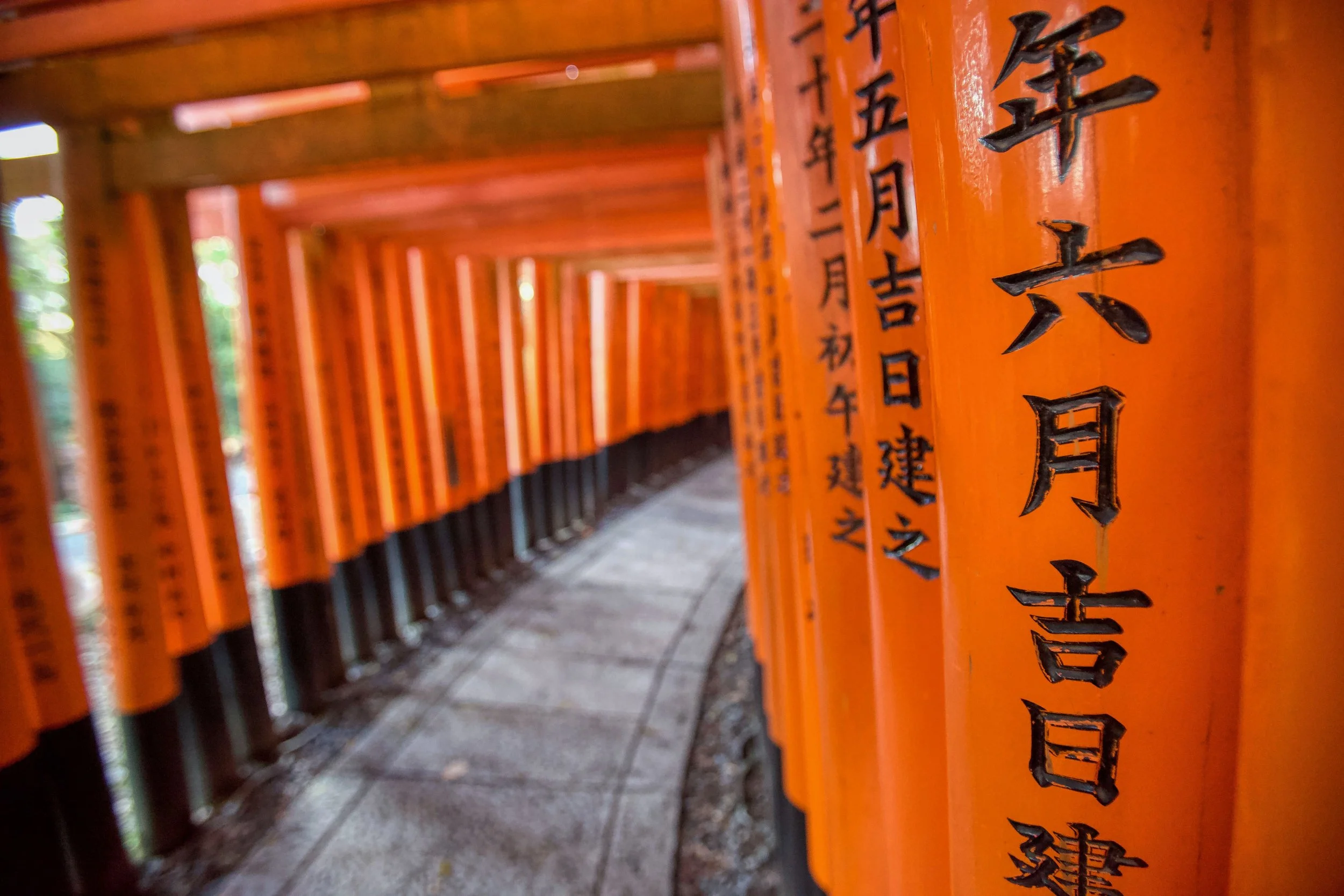
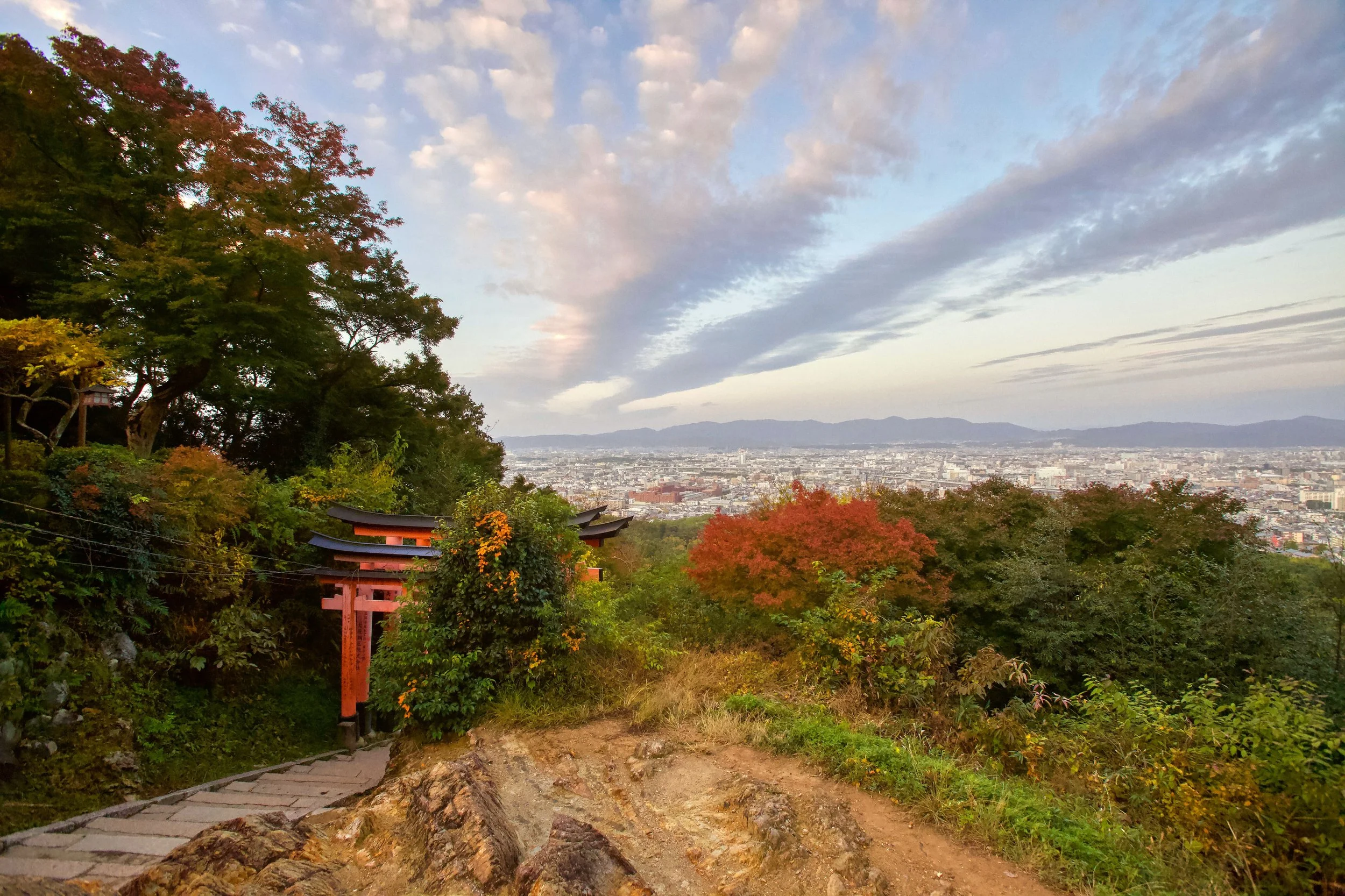
As you walk through each gate, especially early in the morning where there isn’t so many people around, you really feel the significance of this place. Each gate has chinese writing inscribed on it and there are well over a thousand of them. As you venture further up Mt. Inari, the concentration of gates gets less and less. But the view from the top is worth seeing. 

(PROTIP: If you intend on taking some photographs here, get here right before sunrise, it was full of people by 8:30am)

Fushimi Inari-Taisha Photos
How to get Fushimi Inari-Taisha

To get to Kyoto, first you must get to Japan. You can fly into the capital city of Tokyo via two airports, Tokyo Haneda (Airport Code: HND) and Tokyo Narita (Airport Code: NRT). Public transit is the best way to go from these airports and Japan excels at it. You can then take a Shinkansen train to Kyoto, with multiple departures a day, the fastest train of which gets you there in 2 hours.

The closest airport to Kyoto is in fact in Osaka. The Kansai International Airport (Airport Code: KIX) serves the whole region and sits just 36 kilometers away from Kyoto. From there, take your train to Kyoto and use Google Maps to make your way to the Fushimi Inari-Taisha Shrine.

If you plan on staying in Japan for at least a week and want to take the train everyone, the Japan Rail Pass makes the entire experience incredibly easy, not to mention a cost saver. I cannot recommend getting the JR Pass enough for your trip to Japan. It greatly simplifies your intercity travel (regional ones are also available), is easy to use, and gives you the most flexibility for your trip. To order one yourself, click on these links below and choose between 7, 14, or 21 day pass in 1st or 2nd class. 

I will say that the public transport in Kyoto isn’t as convenient as Tokyo as it is more reliant on buses and just a few subway lines. You can get a two day subway and bus pass for 1700 Yen for an adult. You can also rent a bike. Here is a handy guide for riding bikes in Kyoto

When to see Fushimi Inari-Taisha

Well as I alluded to in the introduction to this page, getting here the earliest you can is best. I was pretty jet-lagged during my first week in Japan. I was sleeping four hours at a time, twice a day, with a nap or two in between, it was exhausting. This also meant that I was wide awake around 4am. Luckily I booked my accommodation about a 20 minute walk away from this shrine. So off I went.

When I got there, there was only one other person, but there is no gated entrance nor entrance fee to the shrine, you just walk in. It was pretty amazing to have the place nearly all to myself. I remember going further into the shrine, much further than most people usually do. The highest concentration of orange torii gates are right at the entrance of the shrine, and they eventually get less and less as you ascend, so this is where people typically stay at.

You have to balance the morning light with your time of arrival and the arrival of everyone else. There is about an hour time period where you start getting decent light for your photos, before the shrine gets overrun by everyone else. I would say this was between 6-7am for me, with 9am as the time when the shrine gets SUPER full.

As far as time of the year, I would say any season. In the fall, you can juxtapose the gorgeous autumn foliage with the orange torii gates. In winter, you can do the same, but with the snow instead. Spring and summer will be nice in terms of warmth while taking your photos and who doesn’t appreciate that. Sometimes getting the shot means you brave the conditions for it, but isn’t it nice every once in awhile where the conditions are comfortable too?

How to Photograph Fushimi Inari-Taisha

The best gear to take with you to the Fushimi Inari-Taisha shrine in Kyoto, Japan has to be of course your DSLR and a 50 mm prime lens, and a wide angle lens (along with your normal lens kit too). This is because given how close the gates are to each other and their brilliant orange colors, you can get some amazing shots with high amounts of bokeh with your 50 mm prime lens. The blurry orange background will pop in your photos.

Also, with how the gates are situated, you can get some cool shots with a wide angle lens. You can capture many more of the orange torii gates, making the whole scene seem so surreal. Of course, using this lens will be the most difficult to use when there are so many people around.

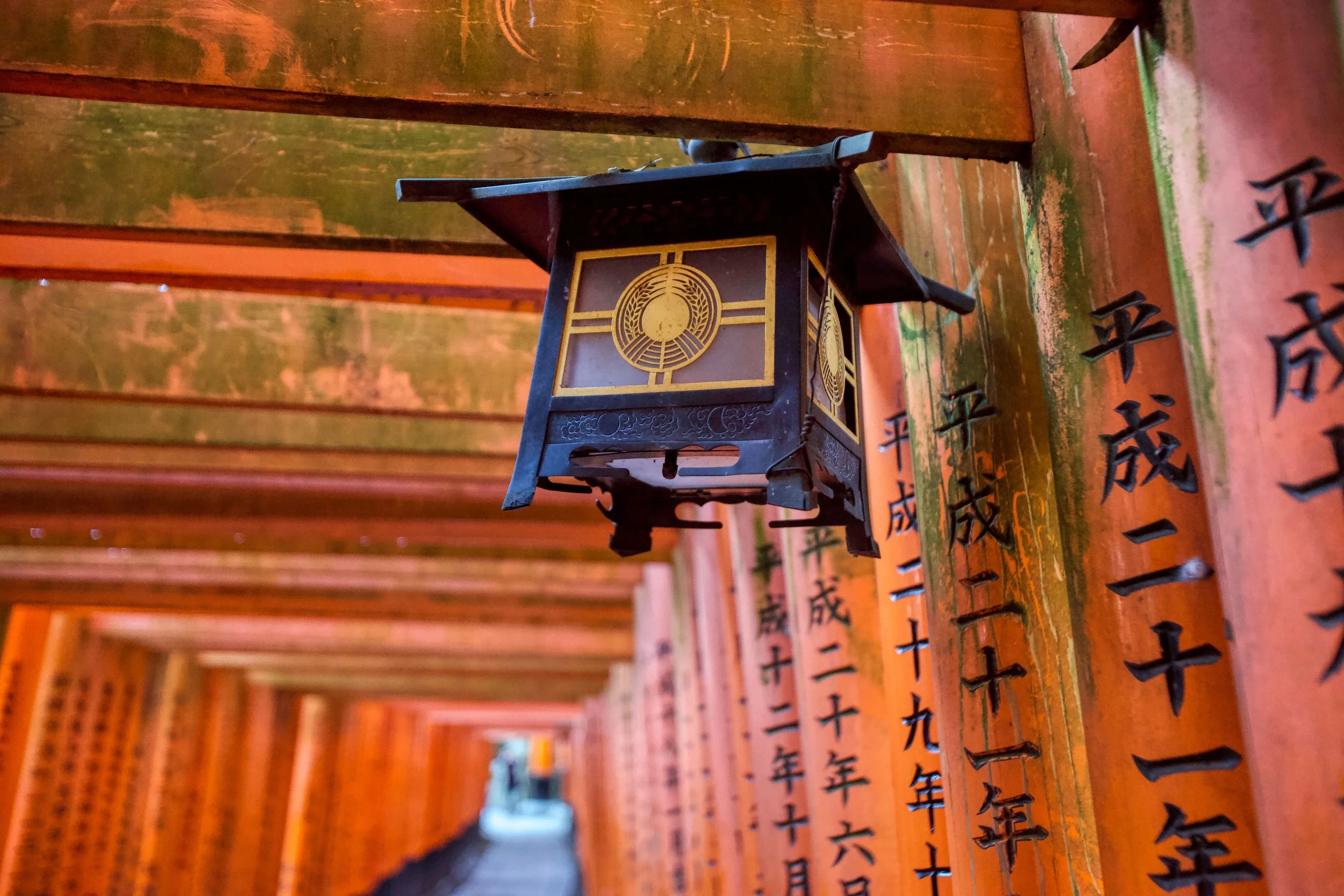
There are also number of inscriptions on each torii gate and hanging lanterns that make for great subjects in your photos, while having blurry backgrounds of orange. I think when you work the scene for your photos, it will be very easy to see which shots are worth taking.

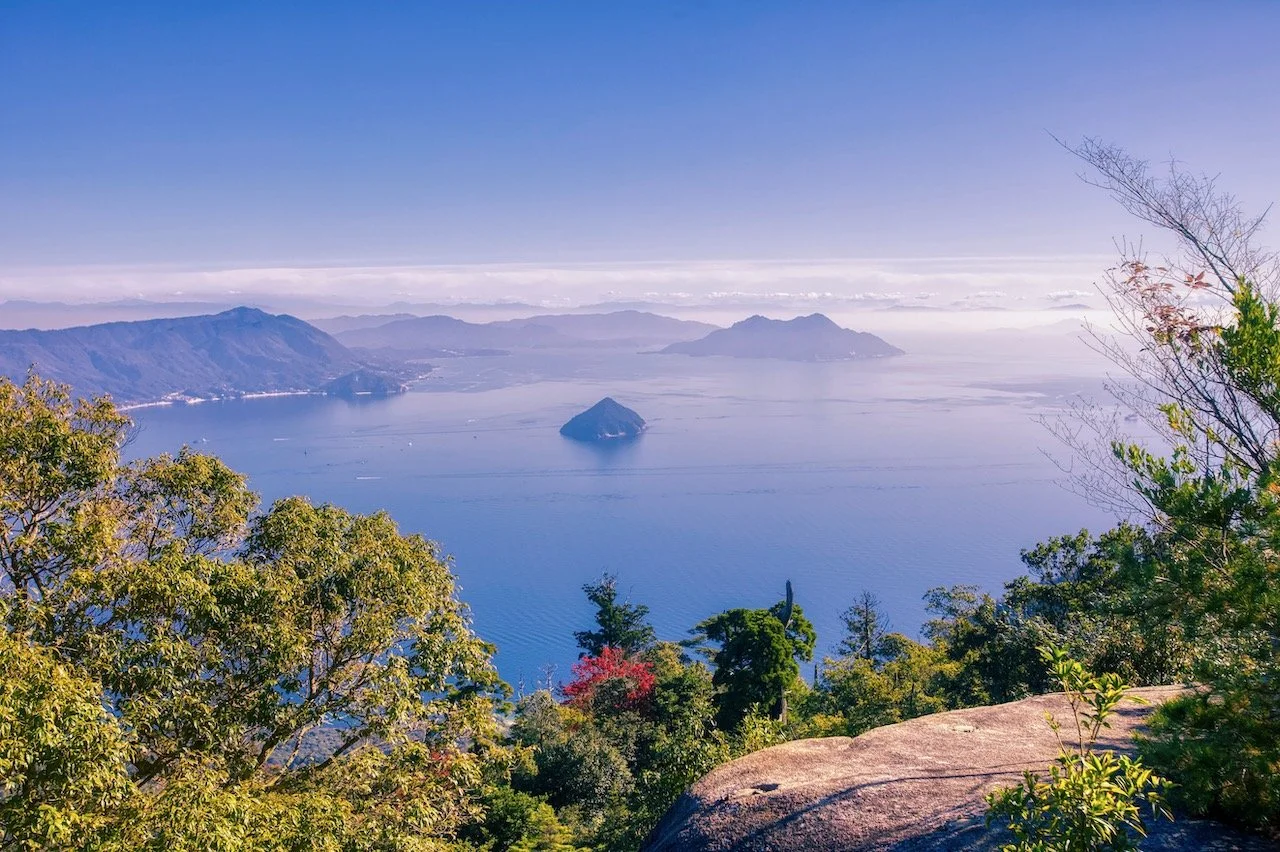
Most people do not walk all the way up to the top of Mt. Inari, but this is a mistake. The round trip take 2-3 hours depending on your level of fitness but you can imagine the views of Kyoto on the top. So best bring your telephoto lens for this part of your trip to get some places all over Kyoto.

Purchasing Photos

Conclusion and Further Resources

This temple is one of the most popular and well-known in all of Japan. But make no mistake, it is definitely worth the hype, just be sure to time your arrival there to coincide with the least amount of visitors possible. I not only loved the first part of the shrine, with all the orange gates stacked up against one another, but further up on the mountain where there were more cats than people.

If you like other destinations in Asia, as well as Japan, feel free to check out my blog posts below on other destinations in this part of the world.

Related

You May Also Like…

Previous
Previous

Jökulsárlón Glacier Lagoon in Iceland