Do not go to Lisbon without seeing Sintra: a day trip guide
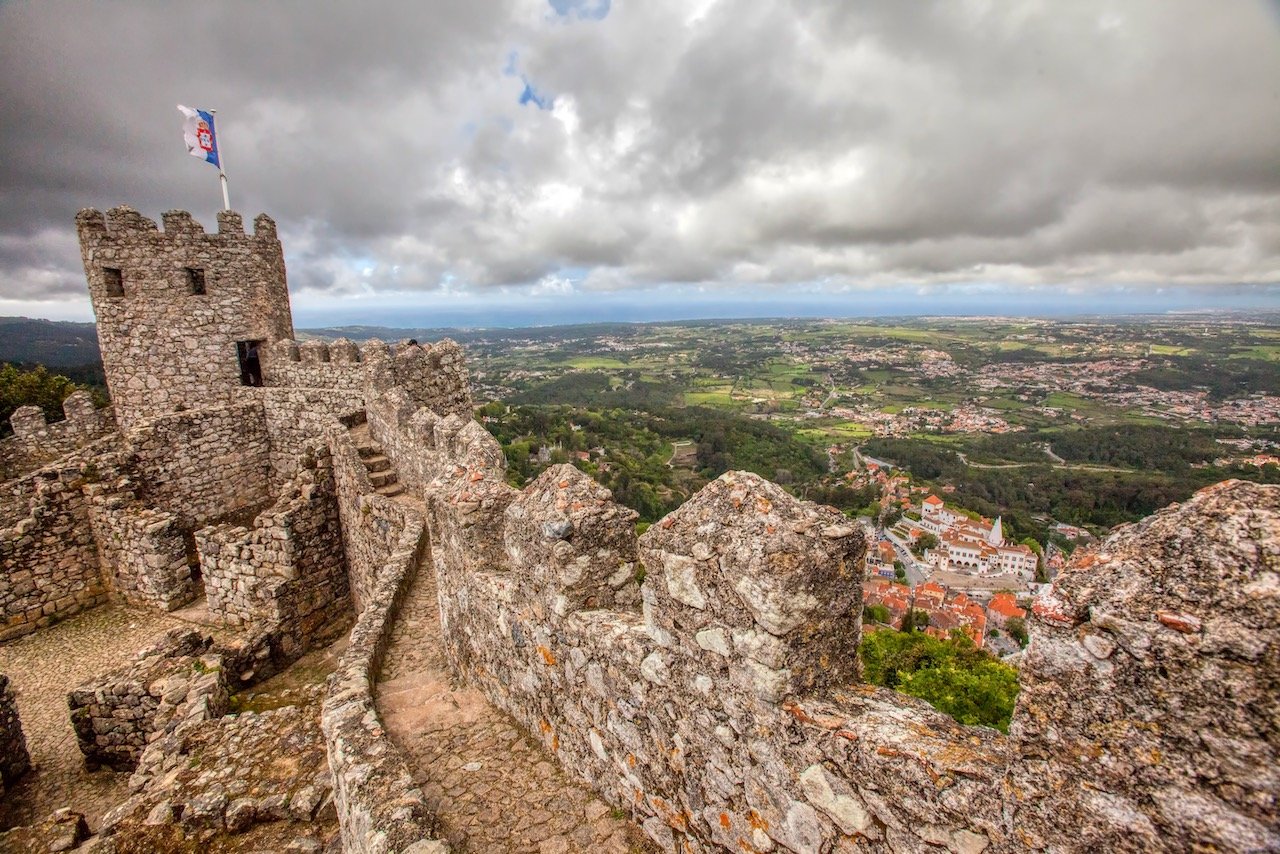
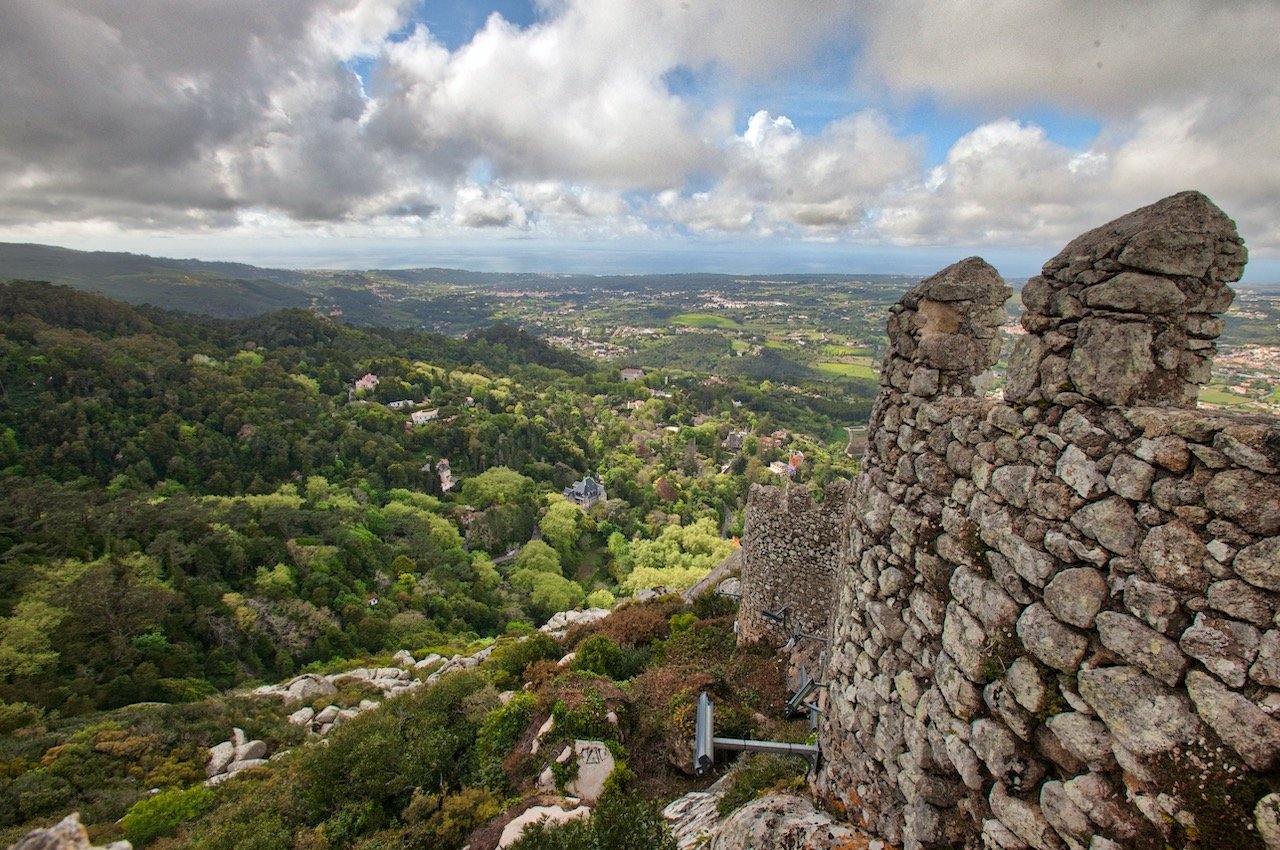
Castelo dos Mouros, Sintra, Portugal (ISO 3200, 16 mm, f/10, 1/2500 s)
(Some links in this post are affiliate links. If you click through and take action, I'll be compensated.) If you are also interested in any PRINTS from any of my posts, be sure to check out my store where you can buy prints as posters, in metal/wooden frames or on canvas.
Sintra is located in the Portuguese Riviera and about an hour’s train ride away from Lisbon city center itself. If you have some extra time during your stay in Lisbon (blog post here), it is highly recommended you spend a day taking in the sights around Sintra. Here you can find ornate gardens, mountain views, intact castles, and lush forests. To get there, take the train from Rossio-Lisboa station on the Linha de Sintra line and get off at Sintra station (14 stops, about 40 minutes). There are usually trains every 30 minutes. You can find a Google map of the places I will discuss at the end of this post.
Also, For a more relaxed start to the day, you can consider the option of booking a private day trip with a local driver. It’s a comfortable door-to-door option that lets you skip the crowds at the train station and even stop at interesting places on the way to Sintra, if time allows.
Given the elevation of many of these attractions, there are taxis and buses everywhere to take people up and down the mountain for a fee. Furthermore, the 434 Sintra bus offers service from the train station, town center, Castelo dos mouros, and Pena Palace. If you have the time and the fitness, this can be done entirely on foot (expect at least 10,000 steps!).
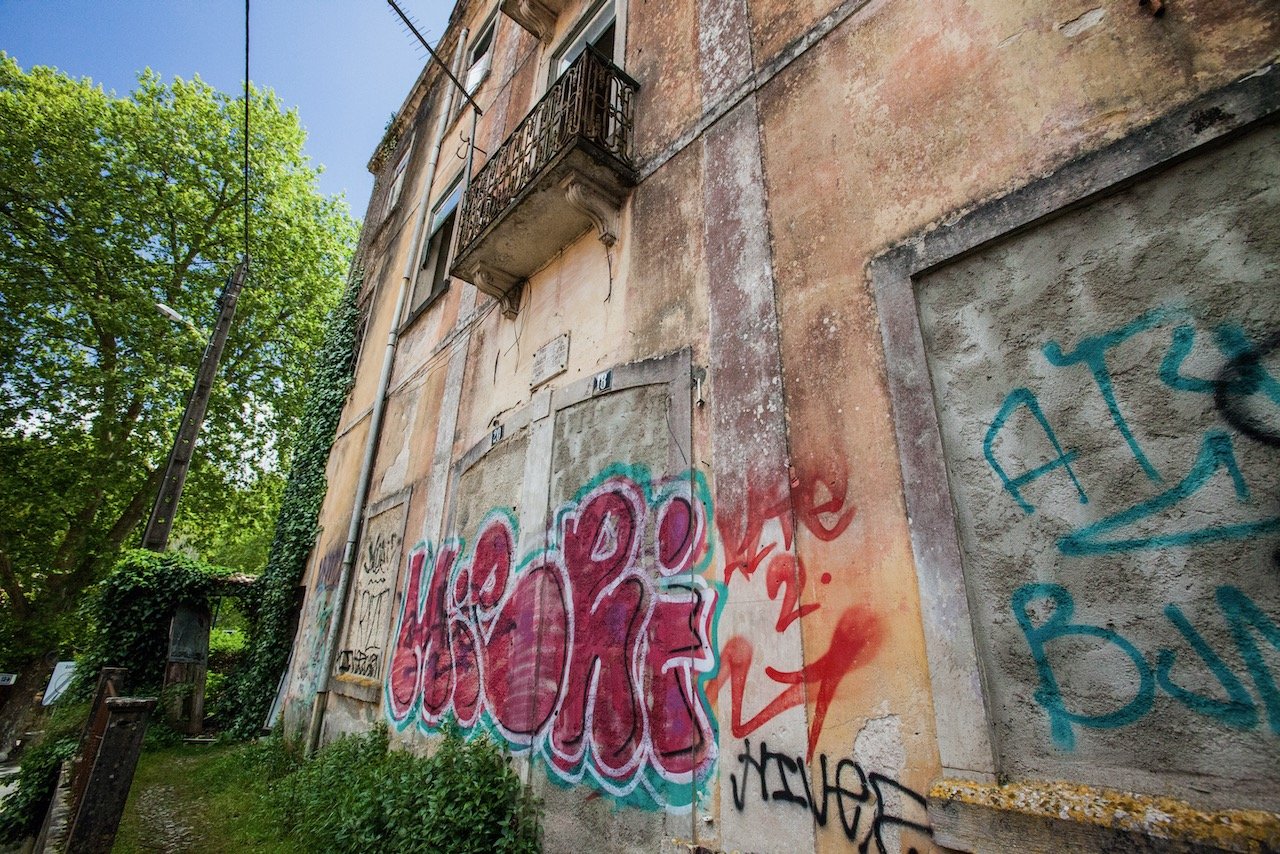
Upon arrival to Sintra station, head down Avenue Dr. Miguel Bombarda (southwest direction), there will be signs pointing you towards Sintra National Palace. Try to take some of the small alleyways off the beaten path to get there to get a good look at the architecture and stunning displays in this area. The Town Palace as it is called is a royal residence and currently a museum. The palace is representative of Gothic, Manueline, Moorish, and Mudéjar architectures and was damanged during the 1755 Lisbon earthquake, but restored to it’s original memory.
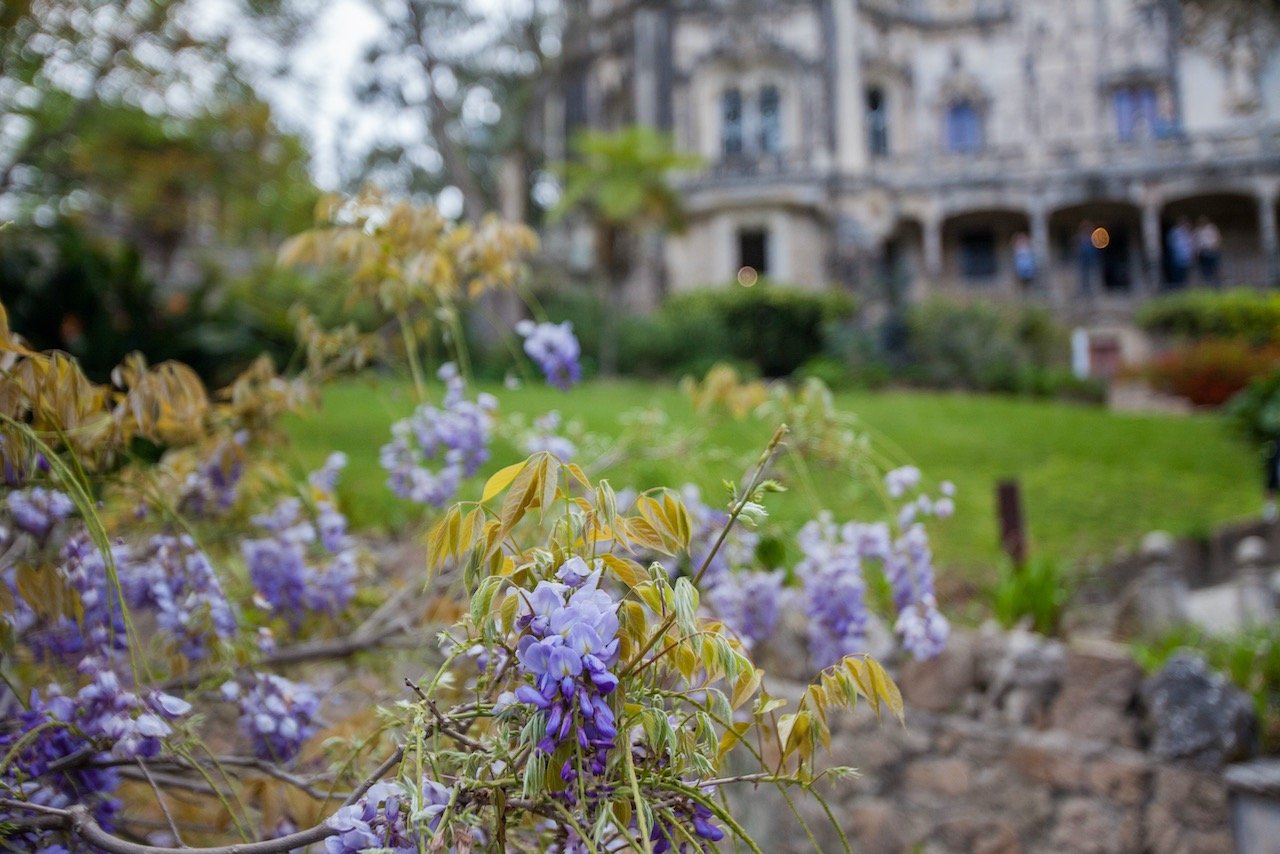
Quinta da Regaleira, Sintra, Portugal (ISO 1000, 35 mm, f/2.8, 1/1600 s)
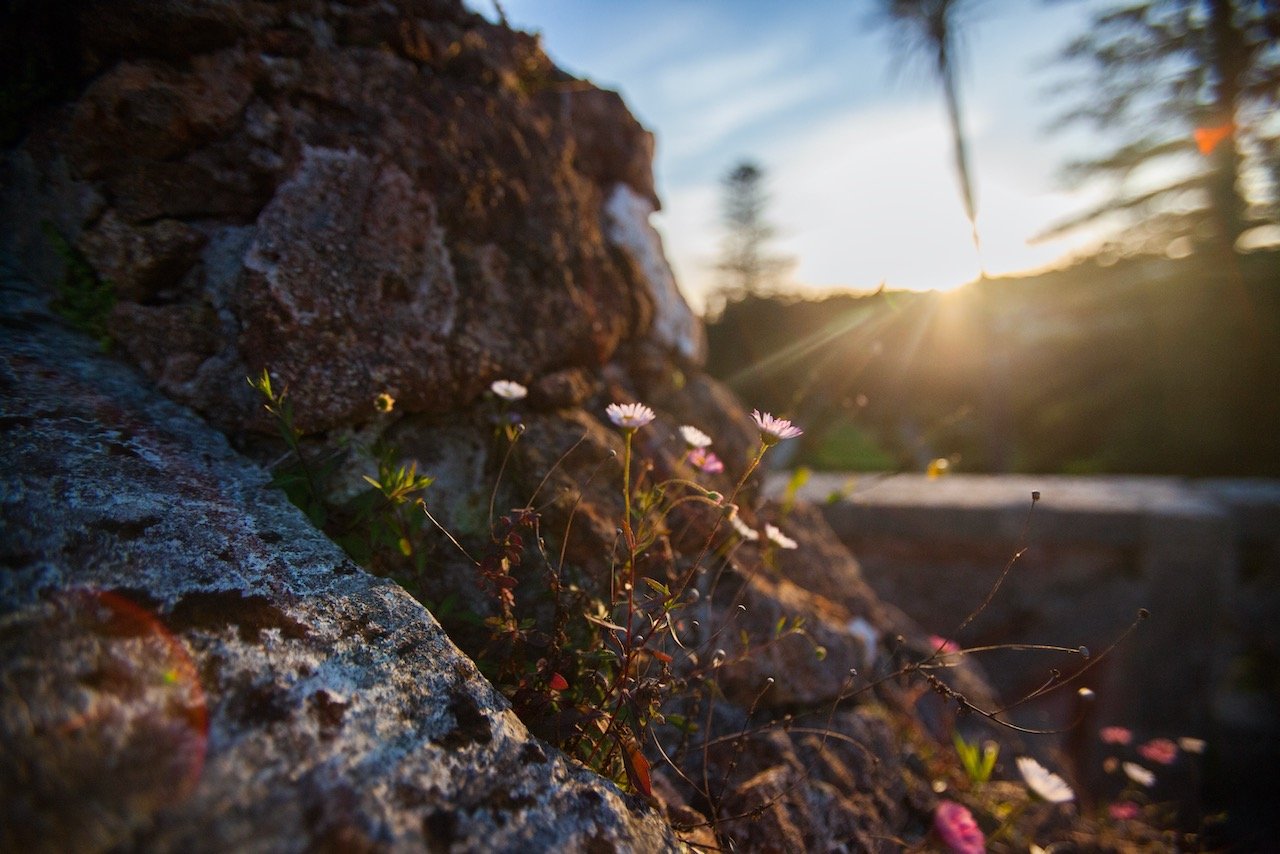
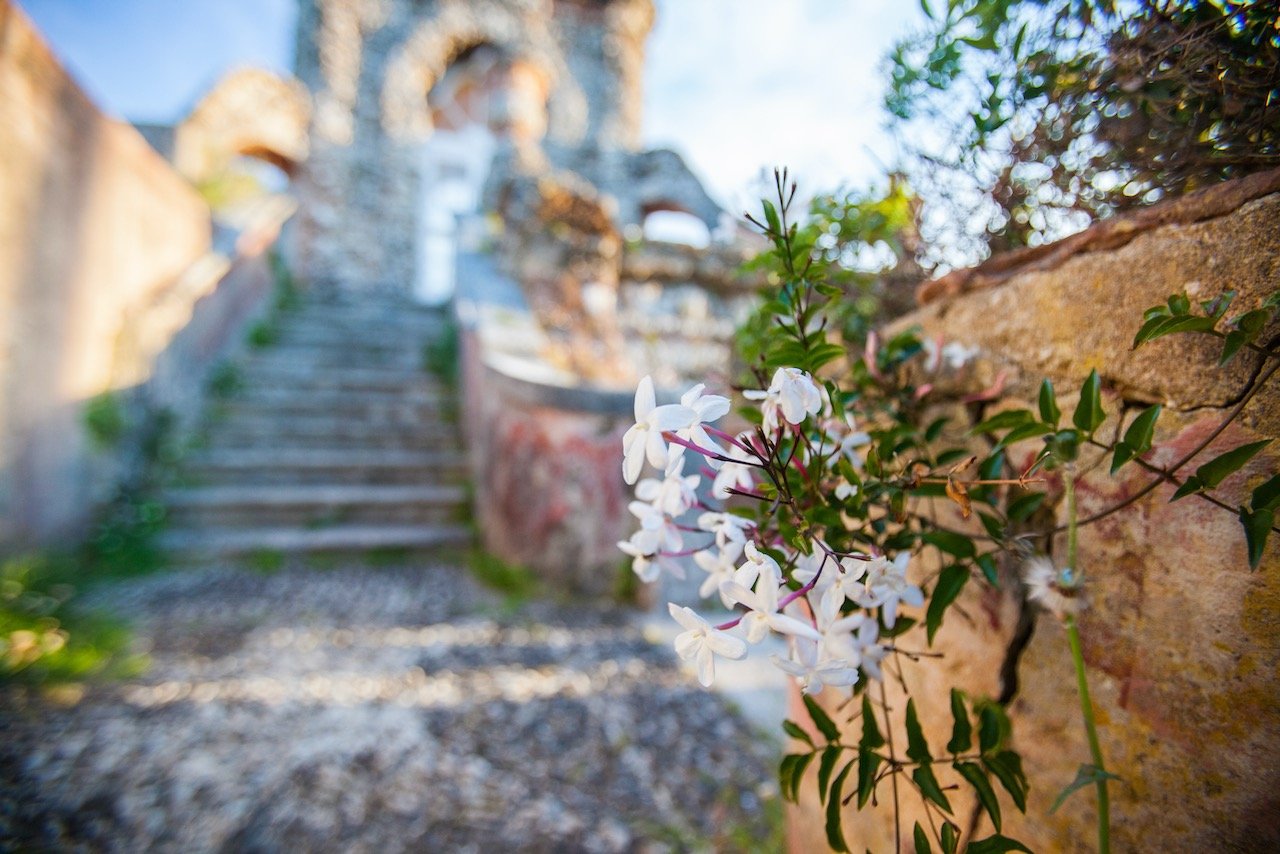
Just down the way is a UNESCO World Heritage Site, Quinta da Regaleira. Though it contains a palace, it is most known for its maze of lavish gardens, ponds, waterfalls, and grottos. Give yourself enough time to explore all of the footpaths throughout the gardens and admire the ornate structures that are dispersed everywhere. Make sure you don’t miss the Initiation Wells, one of which possesses a 27-meter long spiral staircase. The entire well possesses markings that are linked to Tarot mysticism.
Quinta da Regaleira, Sintra, Portugal (ISO 2000, 23 mm, f/11, 1/25 s)
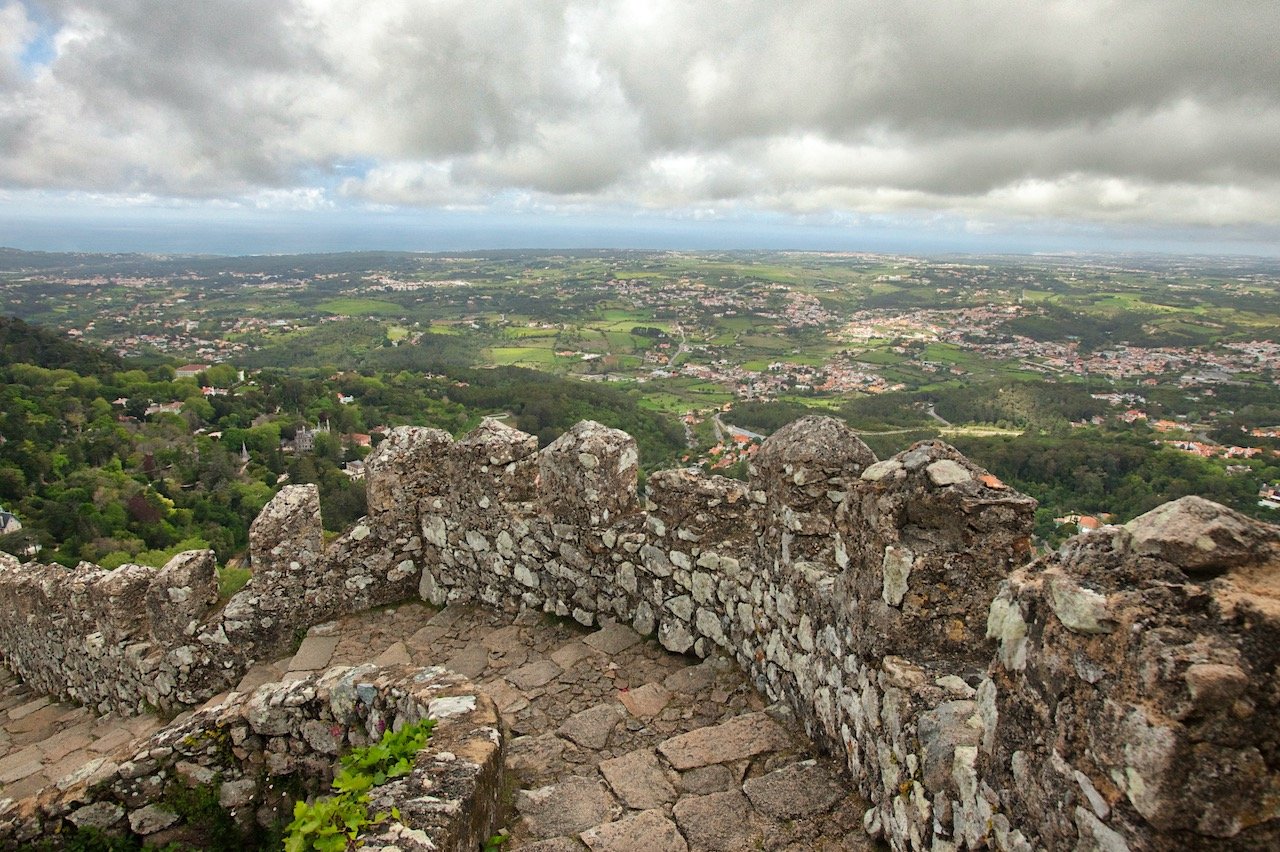
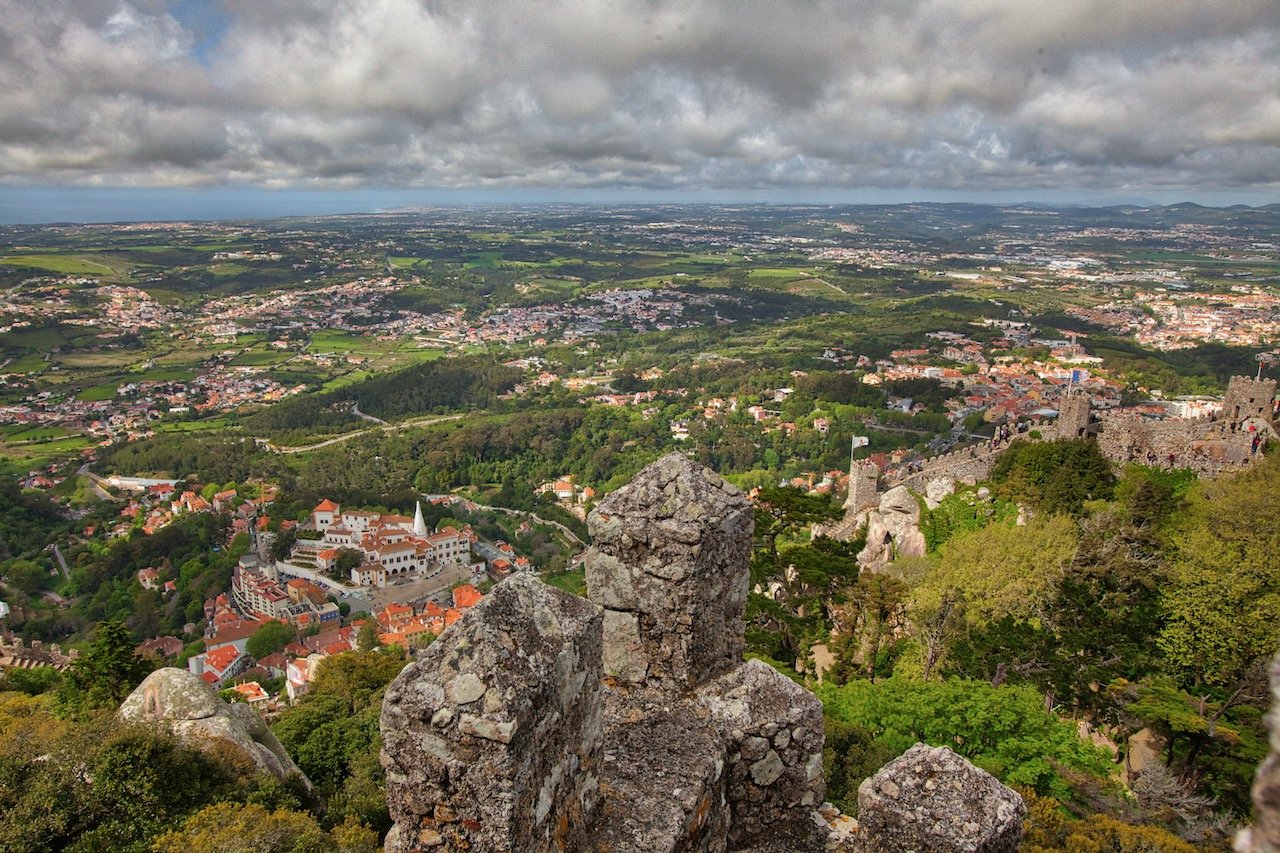
Head back towards Sintra station, but look for signs towards Castelo dos Mouros (Castle of the Moors), a 10th century castle built by the Moors. The view from the inner walls is stunning where you can see all of Sinta, and even the distant cities of Mafra and Ericeira. The castle itself is in excellent condition, as it has been rebuilt a few times following conquests and the 1755 earthquake of Lisbon (once again). The perimeter of the castle measures half a kilometer and is 412 meters above sea level. Make sure you walk the entire wall to get 360 degree views of the entire area.
Perhaps the most known attraction in this area is the National Palace of Pena, a Romanticist Castle and one of the Portugal’s Seven Wonders.
Its mix of architecture includes elements from Neo-Gothic, Neo-Manueline, Neo-Islamic, and Neo-Renaissance. It was formerly a monastery but then transformed into a palace for the Portuguese Royal family. It is mostly known for it’s bright red and yellow exterior colors for which it had been restored to, after featuring a mostly gray façade for years.
There are numerous other viewpoints within this area but these are the general highlights of Sinta itself. After this entire day, you’ll be sure to sleep easy on the train ride back, and be proud that you tackled this excursion (mostly) by foot.
PROTIP: If time allows, try to stay a night in Sintra itself, then start the next day early to see the sights and beat the crowds.
Related Posts
Italy is located in Southern/Western Europe, in the middle of the Mediterranean Sea and sharing borders with France, Switzerland, Slovenia, and Austria. A country with such a rich history is surely to be at the top of most peoples' travel lists. This is a guide to my trips in Italy that have taken me to Venice, Rome, Florence, Trieste, Cinque Terre, the Amalfi Coast, and even to Vatican City.
Pompeii is an ancient Roman city, located near Naples in Italy, at the foot of volcano Mt. Vesuvius dating back to 8th century BC. It is most known for its demise by the eruption of Mt. Vesuvius in 79 AD. Currently a UNESCO World Heritage Site, it was once a city of 11,000 before the eruption. Serious excavations of the city started in the 1920s and work is ongoing for preserving the site.
The island of Capri is located just off the Amalfi Coast on the Sorrentine Peninsula in Southern Italy. It is a part of the Naples municipality and has been known to be a resort town since its founding. Popular spots include the town of Anacapri, the Blue Grotto, the Belvedere of Tragara, and the Marina Piccola.
The island of Procida is located among the Phlegraean Island archipelago, off the coast of Naples, Italy, along with Ischia, Vivara, and Nisida. Created by the eruption of four volcanoes, it was visited by Greek settlers back in 8th century BC. Winner of the Italian Capital of Culture in 2022, it is best known for its colorful building facade on the southeastern side of the island.
The Amalfi Coast is located on the Sorrentine Peninsula in Southern Italy. As a UNESCO World Heritage Site, it is known for its gorgeous vistas and natural landscapes. Some of the notable towns on the Amalfi coast include Positano, Sorrento, Ravello, Minori, Maiori, Atrani, Praiano, Furore, Capri, as well as the town of Amalfi itself.
The town of Positano is located on the Amalfi Coast on the Sorrentine Peninsula in Southern Italy. Archaeological evidence of the town dates back to the 1st Century BC. Known for its market port in the 15th to 17th centuries, it was a poor fishing village in the mid 1900s, then roared in popularity thereafter. Notable sites to see are the Church of Santa Maria Assunta and the Marina Grande beach.
The beach of Fiordo di Furore is located on the Amalfi Coast on the Sorrentine Peninsula in Southern Italy. The village of Furore is located higher up on the cliffside, but the beach is the most notable attraction of the town. The beach is a ria, or coastal inlet, created by the Schiato torrent. It is a popular destination for swimmers with its aqua water and arched bridge facade.
The town of Atrani is located on the Amalfi Coast on the Sorrentine Peninsula in Southern Italy. It is the smallest municipality in Italy, located just East of Amalfi. It bears the designation of 'I Borghi più belli d'Italia', given to beautiful towns in Italy. Its traditional characteristics are well preserved and its most notable attraction is the Collegiate Church of St Mary Magdalena.
The town of Amalfi is located on the Amalfi Coast on the Sorrentine Peninsula in Southern Italy. As a famous former trading post, it is known today for its Limoncello liquor and central location along the coastline, providing port access to other coastal towns. It is a UNESCO World Heritage Site and is famous for its Cathedral, the Duomo di Amalfi.
The town of Maiori is located on the Amalfi Coast on the Sorrentine Peninsula in Southern Italy. Founded by the Etruscans, it was conquered by the Romans in the 3rd century BC. It was originally called Rheginna Maior by the Romans in relation to the river that runs through the town. It is located close to the neighboring town of Minori on the Amalfi Coast.
The town of Minori is located on the Amalfi Coast on the Sorrentine Peninsula in Southern Italy. It is known as the 'City of Taste' for its culinary tradition. Minori means 'small' in latin, referring to the La Rheginna river running through it. It is the oldest inhabited site on the Amalfi Coast, dating back to the 1st century.
The town of Ravello is located on the Amalfi Coast on the Sorrentine Peninsula in Southern Italy. It was founded in the 5th Century as a shelter against barbarian incursions at the end of the Roman Empire. The town is nestled in the Amalfi Coast cliffside and has been a popular destination for artists. Its most popular attraction is certainly the historic Villa Cimbroni.
Rome is the capital city of Italy whose history spans over 28 centuries. The historical center of Rome is a UNESCO World Heritage site and its name comes from its founder, Romulus. Referred to as the 'City of Seven Hills', some notable attractions in Rome include the Colosseum, the Pantheon, Castel Sant'Angelo, the Trevi Fountain, Spanish Steps, and the Roman Forum.
The Sahara is the largest hot desert in the world comprising much of Northern Africa near the Mediterranean Sea. One of the best places to see it is in Morocco, specifically in the village of Merzouga. The village sits near the famous Erg Chebbi, a large area of sand dunes. Merzouga can be seen on a 2 day trip from either Fez or Marrakech.
Chefchaouen is located in the north of Morocco and is most known for its nearly entirely blue facade of its buildings. Initially founded as a military outpost, it is known as the 'Blue Pearl' of Morocco and its name roughly translates to 'look at the horns', referring to the two mountains on its perimeter. The highlight of the city is its medina, where the alleyways are too narrow for cars to pass.
Essaouira is a port city on the western coast of Morocco. Originally called 'Mogador' until the 1960s, it is characterized as a late 18th century fortified town and therefore listed as a UNESCO World Heritage city. The abundance of blue fishing boats makes it quite obvious that this industry dominates the city. The abundant winds the city receives is perfect for windsurfing and kite surfing.
Marrakech is the fourth largest city in Morocco, situated west of the Atlas Mountains. The city was founded in 1070 and is called the "Red City" due to the red sandstone material used in the construction of its early buildings. The city is a UNESCO world heritage site and has plenty of great sites to check out such as Jemaa Al-Fna, Koutoubia Mosque, Souk Semmarine, Bab Agnaou, and Bahia Palace.
Madeira is an autonomous zone owned by Portugal, situated off the coast of Morocco. Its population is nearly 250,000 with most situated in the city of Funchal. The entire zone is actually an archipelago, which also includes Porto Santo, the Desertas, and the Savage Islands. Great places to see include Ponta de São Lourenço, Pico do Arieiro, Ponta do Sol, Achadas da Cruz, Ponte Moniz, and Seixal.
Funchal is the capital city of the autonomous zone of Madeira, owned by Portugal. With a population just north of 100,000, it is the 6th largest city in all of Portugal. Some great places to check out include the Funchal-Monte Teleférico, Forte de São Tiago, the Cristiano Ronaldo Museum, Jardim Quinta Magnólia, Palácio de São Lourenço, and Fuerte De Madeira.
The Azores islands consist of 9 islands and are owned by Portugal. The islands of the Azores are Flores, Corvo, Graciosa, Terceira, São Jorge, Pico, Faial, São Miguel, and Santa Maria. Created by volcanic activity, they boast incredible geographical landscapes and biomes. Considered the "Hawaii of Europe", it is one of two autonomous zones of Portugal, the other being Madeira.
Madalena is the largest city on the island of Pico, in the Azores (an autonomous region owned by Portugal). Mount Pico is the most recognizable backdrop that accompanies the city. It is home to 6000 inhabitants and sits on the Faial channel, just 7 kilometers away from Faial island. The city is small but exceptionally quaint and is worth seeing while being in this part of the Azores.
Horta is the largest city on the island of Faial in the Azores (an autonomous region owned by Portugal). It is home to 7000 inhabitants and sits on the Faial channel, just 7 kilometers away from Picol island. The city is known for being a usual stop for transatlantic voyages where all sailors are known to commemorate their journeys with murals presented on the Horta Pier.
Ponta Delgada (meaning "Thin Cape") is the largest city in the Azores (an autonomous region owned by Portugal), situated on the island of São Miguel. It was established in 1450 and is essentially the heart of the Azores islands economically, politically, and socially. Some notable places to check out include Igreja Matriz de São Sebastião, Forte de São Brás, and Plantação de Ananás dos Açores.
Pico (Ilha Preta) is just one of the islands that make up the Azores Islands, formally owned by Portugal. Known as the "Black Island", it is one of three islands that make up the central Azores islands. Formed about 300,000 years ago, it is known for its volcanic history and its emerging wine industry. Places to check out include São Mateus, Madalena, Lajes do Pico, and Lagoa do Capitão.
Faial (Ilha Azul) is just one of the islands that make up the Azores Islands, formally owned by Portugal. Known as the "Blue Island", it is one of three islands that make up the central Azores islands. The island's geography is remarkable with notable sites to see such as the Caldeira do Cabeço Gordo, the Lighthouse of Ponta dos Capelinhos, and the town of Horta.
São Miguel (Ilha Verde) is just one of the islands that make up the Azores Islands, formally owned by Portugal. Known as the "Green Island", it is the largest and most populated island in the Azores . The geography and biome of the island make it an amazing place to visit. Great places to check out include Sete Cidades, Mosteiros, Povoação, Furnas, Vila Franca do Campo, and Ponta Delgada.
Vatican City is a landlocked country, located within the confines of Rome, Italy. It is the smallest country in the world with a population of 453 and size of 49 hectares. It officially came into existence in 1929 with the Pope as its ruler. Some notable landmarks to check out include St. Peter's Basilica, the Sistine Chapel, the Vatican Apostolic Library, and the Vatican Museums.
Trieste is a city and seaport in the Northeast corner of Italy, sitting near the border with Slovenia. It is described as the 'Vienna by the sea' and its location has given is such a rich medieval and modern history. Some great places to see was the Palazzo Gopcevich and Carciotti, Castello di San Guisto, Miramare Castle, the Roman Theater, and the Serbian Orthodox Church of Saint Spyridon.
The five villages that comprise Cinque Terre on the Italian coast are: Riomaggiore, Manarola, Corniglia, Vernazza, and Monterosso al Mare. On your journey here, you'll want to see each village in its entirety since they all have something unique to offer. From cooking classes, great swimmings spots, countless restaurants and gelato shops, use this guide to figure out what to see in each place.
Seixal is a small town on the Northern Coast of Madeira, an autonomous region of Portugal. The seaside village is perched on a peninsula that juts out into the Atlantic Ocean. Home to a population of just 656, its beach, Porto de Abrigo do Seixal beach, is well known. Natural swimming pools can also be found here and kayaks are able to be rented out.