Working with Crowds and Light When Photographing a Family in Rome
Rome is a major global tourist destination that is essentially a gigantic, open-air museum packed with about 3,000 years of history. There are several distinct areas that visitors can observe: the Antiquity, Middle Ages, the Renaissance to Neoclassical eras, and the modern to contemporary period, beginning in the 19th century and continuing all the way to today. Countless layers of architecture can be seen here, from historical ruins to newly built spaces, but apart from the art and architecture the city is also famous for its cuisine, walkable neighborhoods, and mild weather throughout the year.
In 2025, Rome welcomed close to 23 million visitors and had a total of 52.92 million overnight stays. Rome is very popular among those traveling as a family too, featuring a mix of interactive museums, parks and open spaces where you can relax, and a general family-oriented culture, with locals being welcoming to children and snacks and treats like pizza, gelato, and supplì at every corner. Since Rome is also well-known for its scenic beauty you will also want to take plenty of pictures here.
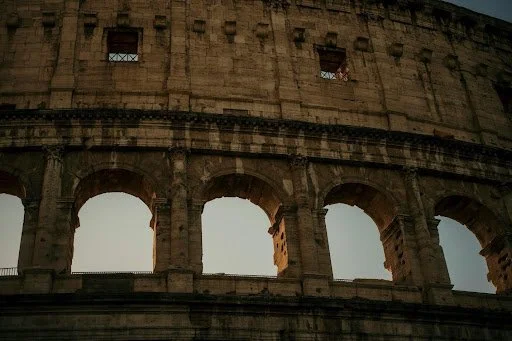
Rome offers an almost endless supply of iconic backdrops, from ancient wonders to quiet alleys, so you have plenty of options when choosing where to take the photos. The Colosseum is one of the best-known spots and if you want an elevated, clean angle you can take the picture from Via Nicola Salvi or a close-up with a wide-angle, upward shot. Since this spot gets particularly busy and crowded, going within 30 minutes after sunrise will help you avoid all the tour buses. Palatine Hill offers a sweeping, cinematic panorama that looks down on the ancient ruins if you want to capture all of them in a single frame.
The Fontana di Trevi is best avoided during midday since that is when the crowds are at their peak. A wide-angle lens will capture the scale of the façade, making for a more dramatic picture overall. The Orange Trees Garden on Aventine Hill also offers incredible views of the city, so you have a 180-degree view over the Tiber River, St. Peter’s Dome, and countless rooftops. It’s a favorite at sunset or during golden hour. Janiculum, a hill in the western part of the city, is the second-tallest in the contemporary city but not considered among the Seven Hills of Rome as it is outside of the boundaries of the city as it was during ancient times.
The crest is home to the 1895 equestrian Monument to Garibaldi, chosen for its proximity to the Villa Doria Pamphili, a 17th-century building and the largest landscaped public park in all of Rome. The view from here is a stunning, 360-degree panorama of the entire city skyline. You can either visit shortly before sunset or time your visit around noon to catch the traditional daily cannon firing. It takes place at exactly 12:00 PM every day and is free and open to the public, but since it is also a very loud event you and your family should wear earplugs when you visit or at least cover your ears.
The Castel Sant'Angelo and Ponte Sant'Angelo (a name earned because the bridge is lined with statues of angels) are best captured during blue hour as the night reflections really make the space stand out even more and become even more scenic. St. Peter’s Basilica will show up in the background, adding an additional architectural landmark and giving further depth to the pictures.
Timing and accessibility
Popular spots should be visited at dawn if you want to have an empty background. Having a professional photographer with you can help too, since they can provide you with valuable tips. Irina Taranova, a professional photographer at Smiler, says that “I always prefer to schedule sessions early in the morning. The light is usually softer and more flattering, the popular locations are less crowded, and, most importantly, children are still fresh and full of energy rather than tired from a long day of sightseeing.”
She also seeks to create a playful, low-pressure environment that will yield better results than rigid posing and switches things up throughout the session. That means that the photoshoot can begin with a classic family portrait, then move on to photographs of the parents together and the whole family, keeping things more dynamic. She also outlines the importance of having the locations close to each other to avoid unnecessary walking as it can be too tiring for the children.
“I always bring soap bubbles with me because children love them! They keep the little ones entertained and create beautiful, spontaneous photographs,” Taranova says, adding that she always encourages the parents to lift their children in the air, play with them, and hold their hands as the natural interactions create truly beautiful memories. From a technical perspective, photographs that involve kids require faster shutter speeds, so a 1/1000 is usually preferred. This is why the location and timing are so important because you need plenty of natural light to achieve well-exposed, sharp images.
If grandparents or family members who have difficulty walking are present, “I choose locations with nearby places to sit and organise the session around them, so everyone can participate comfortably without feeling rushed.” Ensuring everyone’s comfort means that the whole thing will feel more like a funny group activity instead of a formal occasion.
Select some child-friendly backdrops too, like the Villa Borghese Gardens (lush greenery, gravel paths, playgrounds, and plenty of room for playing) and the Monti or Trastevere alleyways (charming neighborhoods, quiet streets, and local squares filled with pigeons) in order to keep them entertained. Make sure that everybody’s wearing comfortable, broken-in shoes since Rome’s cobblestone streets are notoriously uneven and pack a change of clothes to be ready for spills or stains.
Don’t forget the shade
Rome’s intense sun isn’t good for either the skin or your general well-being, so you don’t want to spend an excessive amount of time outside during the hottest hours. On top of that, the sunlight can also cause overexposure and harsh shadows, another reason why you must find the shade. In the Piazza della Rotonda, photograph from the northern or eastern porticos, under the colonnade. Some alleyways can be explored during the afternoon as well since they’re protected by tall, ivy-covered residential buildings that block the sun and create indirect light. The Via Margutta and Trastevere are both like this.
When visiting Rome, you must make sure to have an itinerary in order to see as many beautiful sights as possible. It’s a good idea to have a plan for the photos you’ll take too, so that you make the most of what the city has to offer.