The Role of Young Players in Spain’s Championship Success
Spain’s triumph in the 2024 European Championship highlighted the possible outcome when a country invests in youth in major tournaments. Luis de la Fuente’s team broke records by scoring 15 goals and winning all seven of their matches in Germany.
Some Pakistani football fans may see parallels between the Spanish style and their own. Users of the Pakistan legal betting app research the teams, read up on the matches, and look at past results and trends before each battle. The Spanish campaign demonstrated that chronological age is insufficient. The offensive game may be turned upside down by a self-assured and gifted youngster.

The Spanish Gave Young Talent Real Responsibility
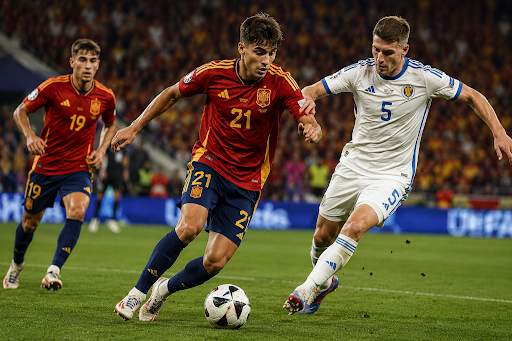
Yamal Lamine left his mark. The teenager, at only 16 years old, played in the youth tournament as the youngest player ever, assisting in the opening game against Croatia and setting up the goal for Dani Carvajal in the 3-0 victory for Spain.
Statistics show just how much Lamine Yamal did for the team. He participated in all the games; he was the top assist man with four assists, and also scored a spectacular goal in the semifinal. A straightforward guide to team comparison is available on the Melbet app Android. The role that a young star plays has a significant influence on their value.
A standout on the night was Nico Williams. The Athletic left winger outmaneuvered England’s defense, scored Spain’s first goal, and was named Player of the Final — evidence that youth may indeed win the day in a final match.
The duo Dani Olmo and Fabian Ruiz helped the young forwards to improve their game, while Pedri brought experience in major tournaments. This combination proved crucial because every forward of Spain was assigned a specific job.
What Made Spain's Youth Work
These young players required specific roles, and in Spain, they had exactly that. Yamal was supposed to stay out wide, dribble past defenders, and manufacture chances, while Williams used his speed to run past the opposing team’s backline. These were difficult tasks, but both players knew what they were supposed to do.
Multiple reasons backed the approach:
Experienced players handled difficult moments.
The midfield gave attackers regular access to the ball.
Coaches allowed young players to use their strengths.
Lack of skill is no guarantee of failure. When his role is altered with every mistake, a young winger could start to doubt himself. The younger Spanish players were given room to express themselves while yet being disciplined by the coach.
Working Together, Youth and Experience
Bringing in fresh teams to replace older ones did not lead to Spanish triumph. Skills were also required of the group. Center field belonged to tournament MVP Rodri. The campaign also included Jesús Navas, who was 38 years old. A seasoned international footballer named Álvaro Morata headed the squad.
When Yamal or Williams launched an assault, Spain's more seasoned players could step in and regain control. A younger contestant’s focus may be on honing their skills. It was a powerful tool for the development of young athletes.
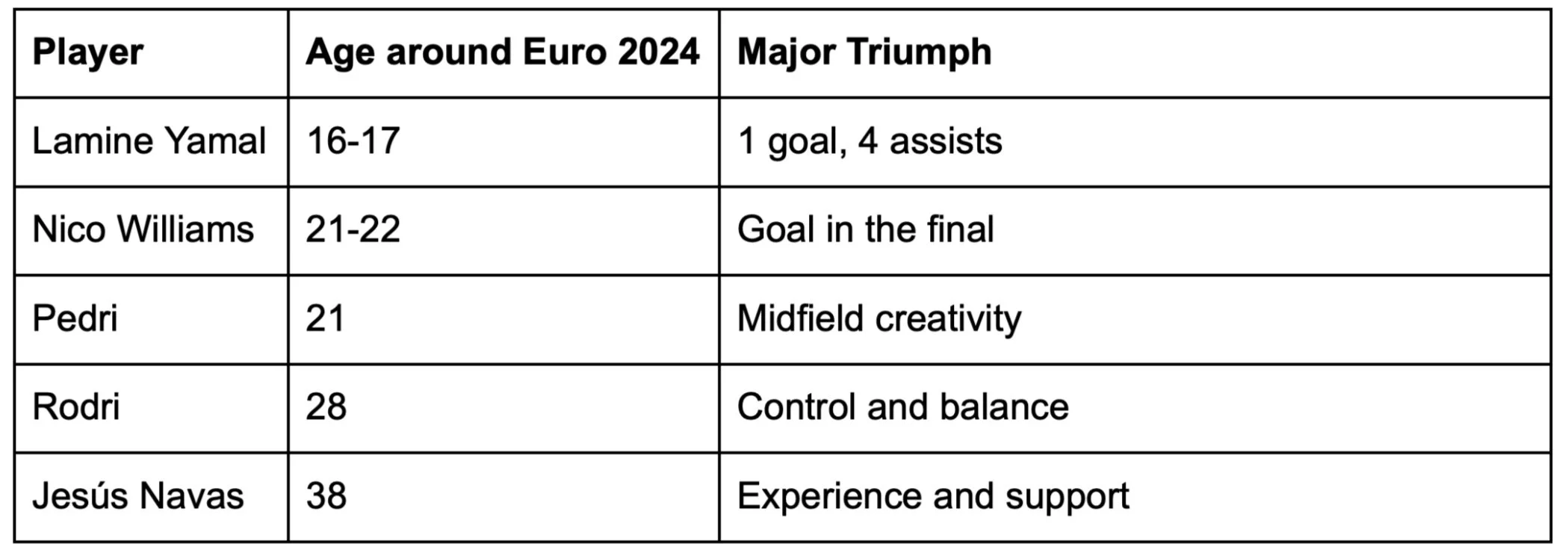
The table depicts Spain's mixed-age team. Young players were fast and creative, while seniors stabilized the club.
Effects of Spain's Approach on Upcoming Teams
The lesson's central idea is opportunity. Prior to their veteran status, Spain entrusted its youthful stars with worldwide duties. Yamal had four assists while starting six of seven games. He proved how quickly a young player can make an impact with his goal in the semi-final match against France.
Football enthusiasts in Pakistan can take a page out of this model's book. Academy education, competitive minutes, clear coaching, and trust are essential for youth progress.
If you want to emulate Spain, focus on the following:
Give promising players meaningful senior minutes.
Define their roles before asking them to take risks.
Maintain the presence of seasoned leaders during challenging matches.