Pros and Cons of Walking with a Weighted Vest: Is It Worth It?
If you’ve spent any time on local walking trails or scrolled through fitness social media lately, you’ve likely noticed a growing trend: everyday walkers and hikers strapping on weighted vests.What used to be a niche training tool reserved for military conditioning or CrossFit athletes has officially gone mainstream. Walkers, casual hikers, and fitness enthusiasts are turning to weighted vests as an easy, low-impact way to supercharge an activity they’re already doing. But is adding extra resistance to your daily walk actually worth it—or does it put unnecessary strain on your body?
What Is a Weighted Vest?
A weighted vest is a fitted garment worn over your torso equipped with built-in weights. Unlike holding dumbbells or wearing ankle weights—which can throw off your natural gait and strain your joints—a vest positions resistance close to your center of gravity.
How a Weighted Vest Works
Distributes Weight Evenly: By loading weight balanced across your chest, upper back, and shoulders, the vest forces your body to carry extra mass without altering your natural biomechanics.
Available Styles: Vests come in fixed-weight models (set at a specific weight like 10 lbs) and adjustable-weight models (equipped with small pockets where you can add or remove individual iron or sand weights).
Who Uses Weighted Vests?
Daily Walkers: Looking to increase calorie burn without having to jog. Hikers: Conditioning their legs and core for steep trails with heavy packs. Runners & Athletes: Building leg power and cardiovascular stamina. Strength Trainers: Adding progressive overload to bodyweight exercises like push-ups, pull-ups, and squats.
Pros of Walking with a Weighted Vest
Adding resistance to your stride offers several science-backed advantages:
1. Increases Calorie Burn
Carrying more body mass requires your heart and muscles to exert more energy to move you forward. Adding just 10% of your body weight in vest resistance can increase your caloric expenditure by 12% to 15% at a normal walking pace.
2. Builds Muscular Endurance
Every step against extra weight engages your quads, hamstrings, glutes, and calves. Over time, this builds functional leg endurance that transfers directly into easier regular walks and runs.
3. Supports Bone Health
Bone is living tissue that responds to stress. Weight-bearing activities trigger bone-rebuilding processes—known as Wolff’s Law. Walking with aweighted walking vest for women creates mild, beneficial stress on your hips, spine, and legs, helping preserve bone mineral density as you age.
4. Improves Cardiovascular Fitness
If brisk walking no longer gets your heart rate into your target zone, a vest raises cardiovascular intensity without requiring you to run or walk at uncomfortable speeds.
5. Strengthens Core and Improves Posture
When fitted correctly, a vest forces you to engage your core, lower back, and shoulder stabilizers to stay upright. This active trunk stabilization discourages slouching during long walks.
6. Makes Everyday Activities Feel Easier
Training with extra load builds real-world functional strength. Carrying groceries, climbing stairs, and lifting heavy boxes feel significantly easier once your body adapts to carrying additional weight.
7. Time-Efficient Workouts
If you only have 30 minutes for a walk, wearing a vest allows you to get a higher-intensity metabolic workout in the exact same time frame.
Cons of Walking with a Weighted Vest
While weighted vest walking offers huge upside, it isn't without risks:
1. Increased Joint Stress
Extra weight means extra force landing on your knees, hips, ankles, and feet with every footstrike. If you jump straight into heavy loads, you risk joint inflammation or stress injuries.
2. Can Cause Poor Walking Form
If the vest is too heavy, your body will compensate by leaning forward at the waist or rounding your shoulders. This poor alignment transfers stress directly to your lower back.
3. Risk of Muscle Fatigue & Overtraining
Using a vest on every single walk without adequate rest can lead to tight hip flexors, calf strains, or lower back soreness.
4. Heat and Comfort Issues
Vests trap body heat. During warm weather, wearing a neoprene or heavy canvas vest can lead to excessive sweating, overheating, or skin chafing under the arms and shoulders.
5. Choosing the Wrong Weight Leads to Injury
More isn't better. Slapping on a 30 lb vest when your body isn't conditioned for it significantly increases your risk of plantar fasciitis, shin splints, or lumbar strain.
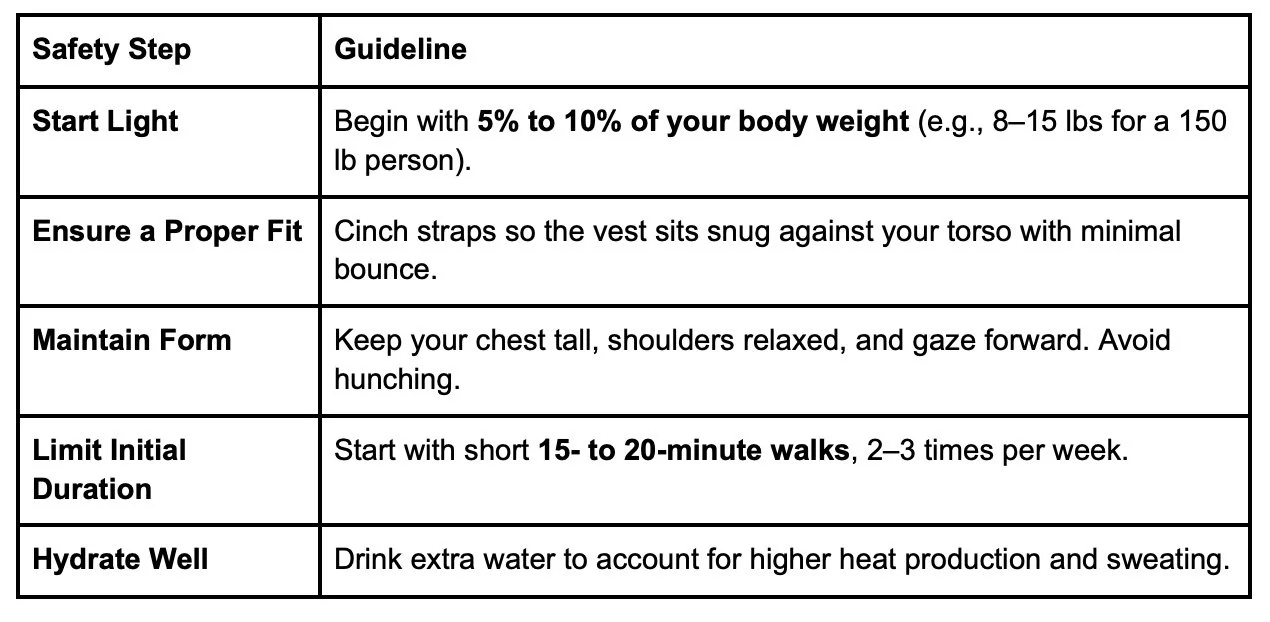
How to Walk Safely with a Weighted Vest
To maximize benefits while minimizing injury risk, follow these key safety guidelines:
How to Choose the Right Weighted Vest
When shopping for a vest, look for these features:
Fixed vs. Adjustable: Adjustable vests cost slightly more but allow you to increase weight in small increments as you build strength.
Breathability: Look for moisture-wicking lining, mesh panels, or slim cutouts that allow airflow during summer walks.
Secure Straps: Dual Velcro or quick-release buckle straps prevent shifting and chafing.
Reflective Trim: Essential if you walk early in the morning or near dusk along roadways.
Who Should (and Shouldn't) Use One?
Ideal For:
Healthy adults looking to burn more calories without running.
Hikers preparing for backpacking trips.
Anyone looking to improve functional strength, posture, and bone density.
May Want to Avoid or Consult a Doctor First:
Individuals with active knee, hip, or lower back pain.
People diagnosed with severe osteoporosis or spinal disc issues.
Anyone recovering from recent joint surgery or dealing with acute balance issues.
Frequently Asked Questions
Is walking with a weighted vest good for weight loss?
Yes. By increasing the energy cost of movement, a weighted vest burns more calories per minute than unweighted walking, helping support a calorie deficit.
How heavy should a walking weighted vest be?
A safe starting point for walking is 5% to 10% of your total body weight. Beginners should rarely exceed 10% until they have built baseline endurance over several weeks.
How long should you wear a weighted vest while walking?
Begin with 15 to 20 minutes per session. Once comfortable, you can gradually extend your walks to 30 to 45 minutes.
Can you wear a weighted vest every day?
It's best to treat vest walking like strength training. Start with 2 to 3 days per week with rest days in between to let your joints and stabilizing muscles recover.
Is it better to walk faster or wear a weighted vest?
Both are effective! Increasing speed improves cardiovascular conditioning, while wearing a weighted vest places more demand on muscle strength and bone density. Combining both in moderation offers balanced fitness benefits.
Does walking with a weighted vest build muscle?
While it won't build large muscle mass like heavy weightlifting, it does build muscular endurance and tone in the glutes, quads, calves, and core.
Can seniors safely use a weighted vest?
Yes, under medical guidance! Light weighted vests (3 to 8 lbs) can be very beneficial for seniors looking to support bone density and balance, provided there are no pre-existing joint or spinal issues.
Final Thoughts: Is It Worth It?
Yes—walking with a weighted vest is absolutely worth it for most healthy adults. It turns standard daily walks into efficient, calorie-burning, bone-strengthening workouts without requiring high-impact exercise like running.
The secret to success comes down to three things: proper weight selection, a snug fit, and gradual progression. Start light, keep your walks short at first, and let your body adapt to the extra load safely.