
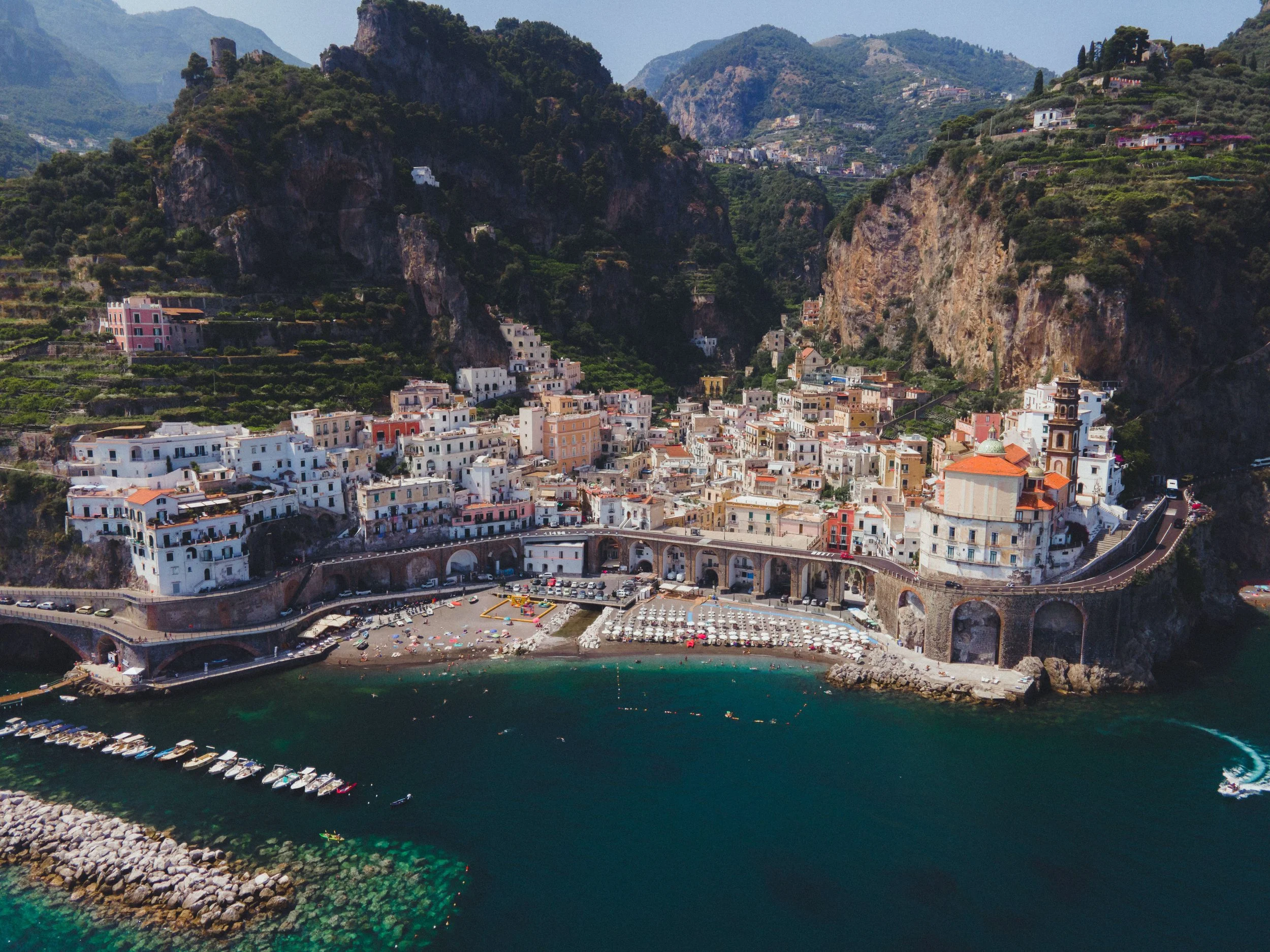
Amalfi Coast in Italy
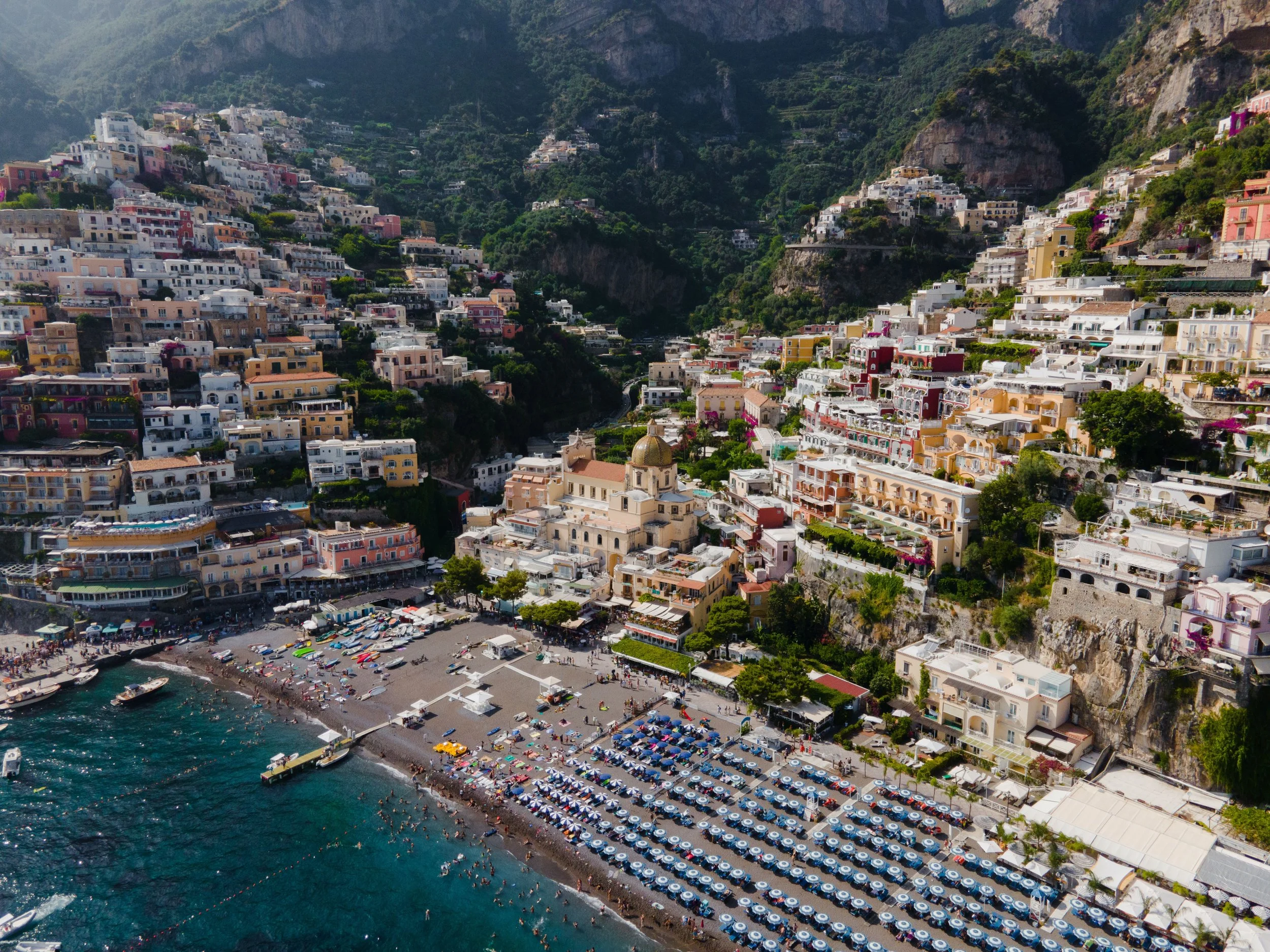
The Amalfi Coast is one of the premier destinations in not just Italy, but the whole of Europe. Situated on the South side of the Sorrentine Peninsula, it is a collection of village towns that bear fine churches, plentiful beaches, and stunning coastlines. The entire area is named after the town of Amalfi which is the main historical and political center, and is a UNESCO World Heritage Site.
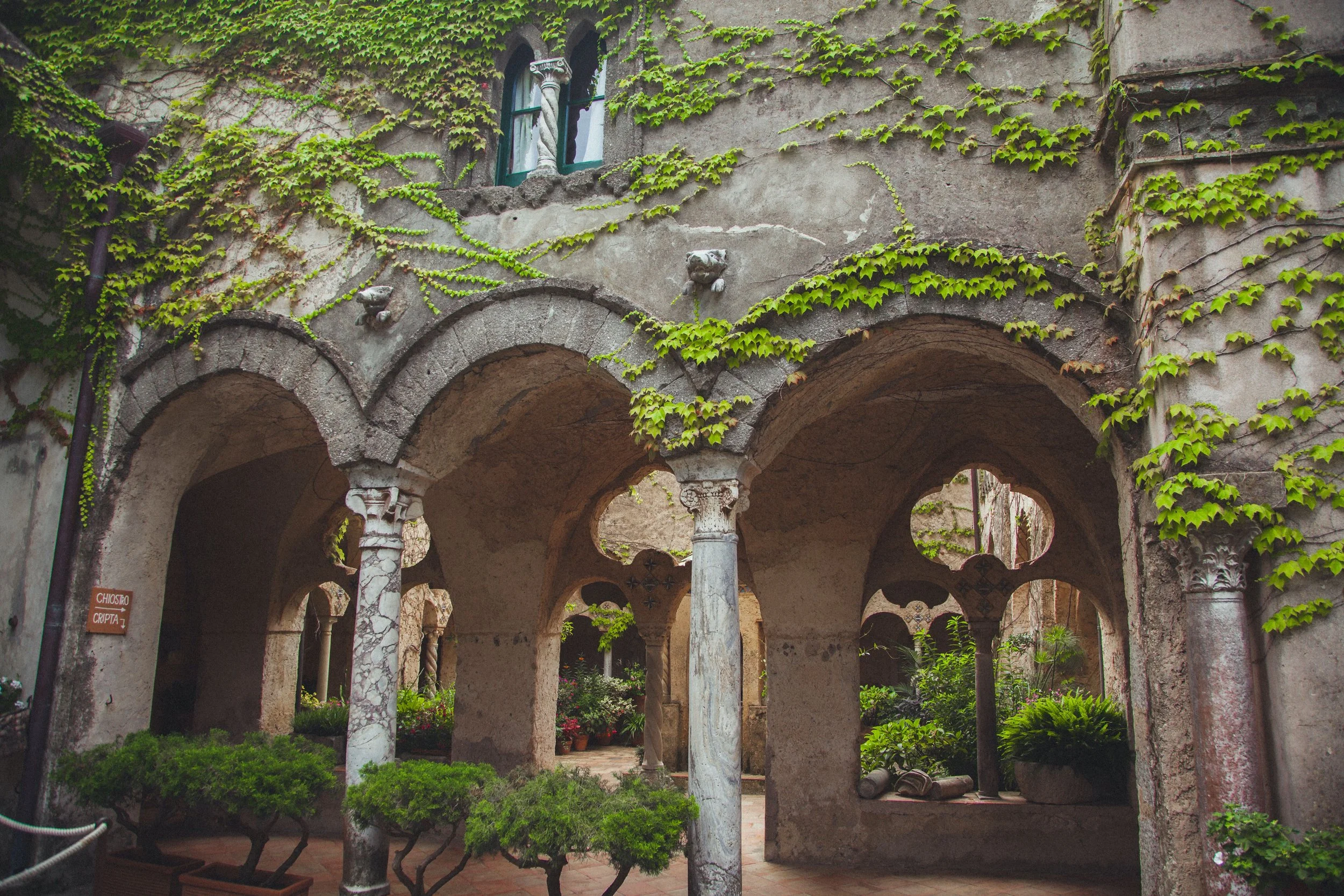
Each town has a different vibe so it worth checking out multiple ones on your visit. I personally was able to see Ravello, Minori, Maiori, Amalfi, Atrani, Fiordo di Furore (the beach), and Positano, but I hope to come back someday to also check out Praiano and Conca dei Marini.
The Amalfi Coast, A Brief History
The Amalfi Coast, nestled along Italy’s southern Sorrentine Peninsula, is one of Europe’s most breathtaking coastal destinations, famed for its steep cliffs, colorful seaside towns, and stunning Mediterranean vistas. But beyond its beauty, the region has a long and fascinating history that dates back over two millennia. In ancient times, the area was part of the Roman Empire, with emperors and patricians building grand villas along the coastline. The strategic location of the coast made it a critical hub for trade, communication, and cultural exchange across the Mediterranean basin.
During the early Middle Ages, Amalfi emerged as one of Italy’s first independent maritime republics, alongside Genoa, Pisa, and Venice. By the 9th and 10th centuries, the Duchy of Amalfi had grown into a thriving center of commerce, rivaling the great trading powers of the era. Amalfi’s merchants sailed as far as North Africa and the Middle East, bringing back spices, silks, and scientific knowledge. The Tabula Amalphitana, an early code of maritime law, became a foundational reference in the Mediterranean world. Although the republic fell to Norman forces in 1137, the region’s legacy of innovation and maritime prowess remains embedded in its historic churches, watchtowers, and coastal fortifications.
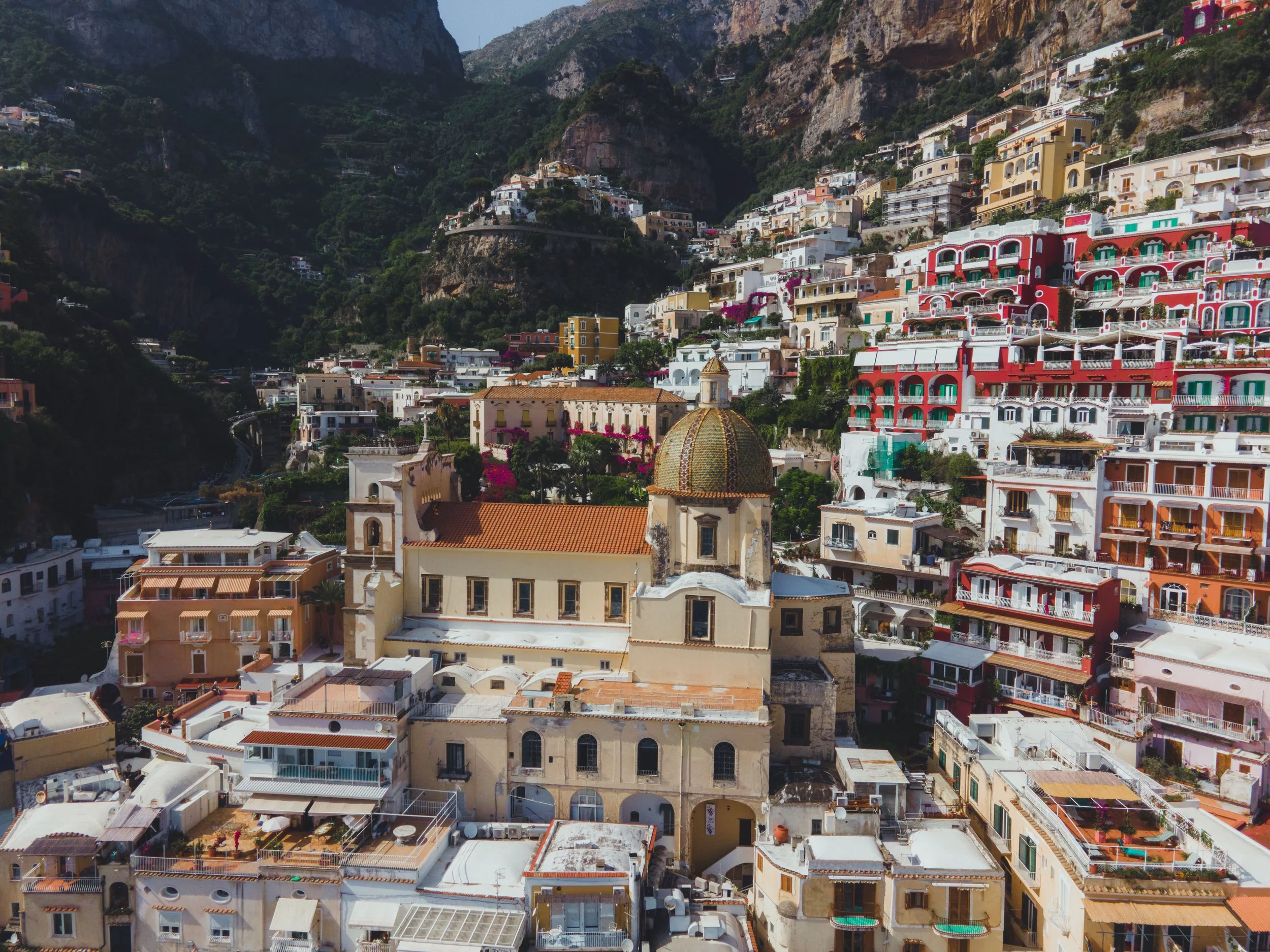
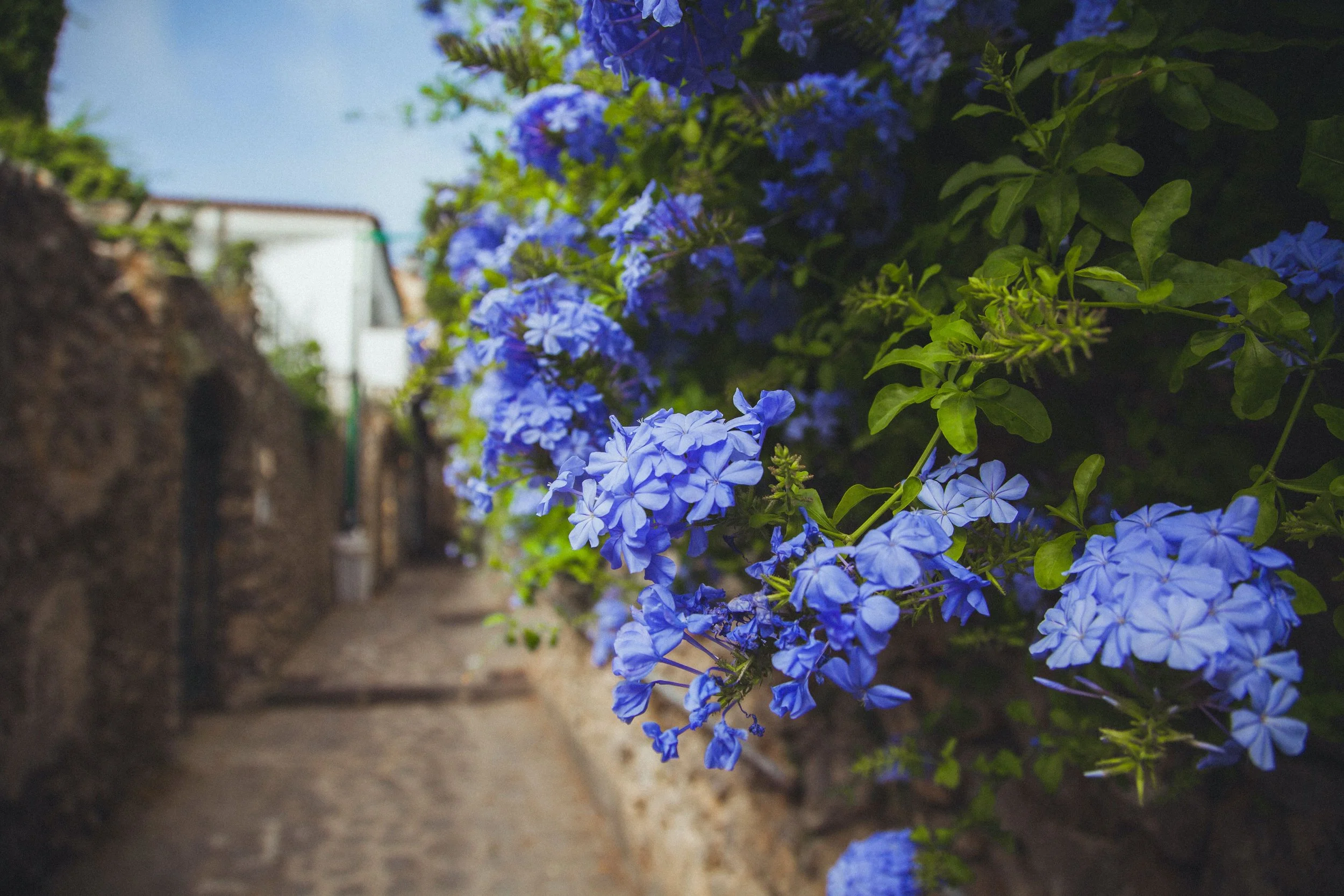
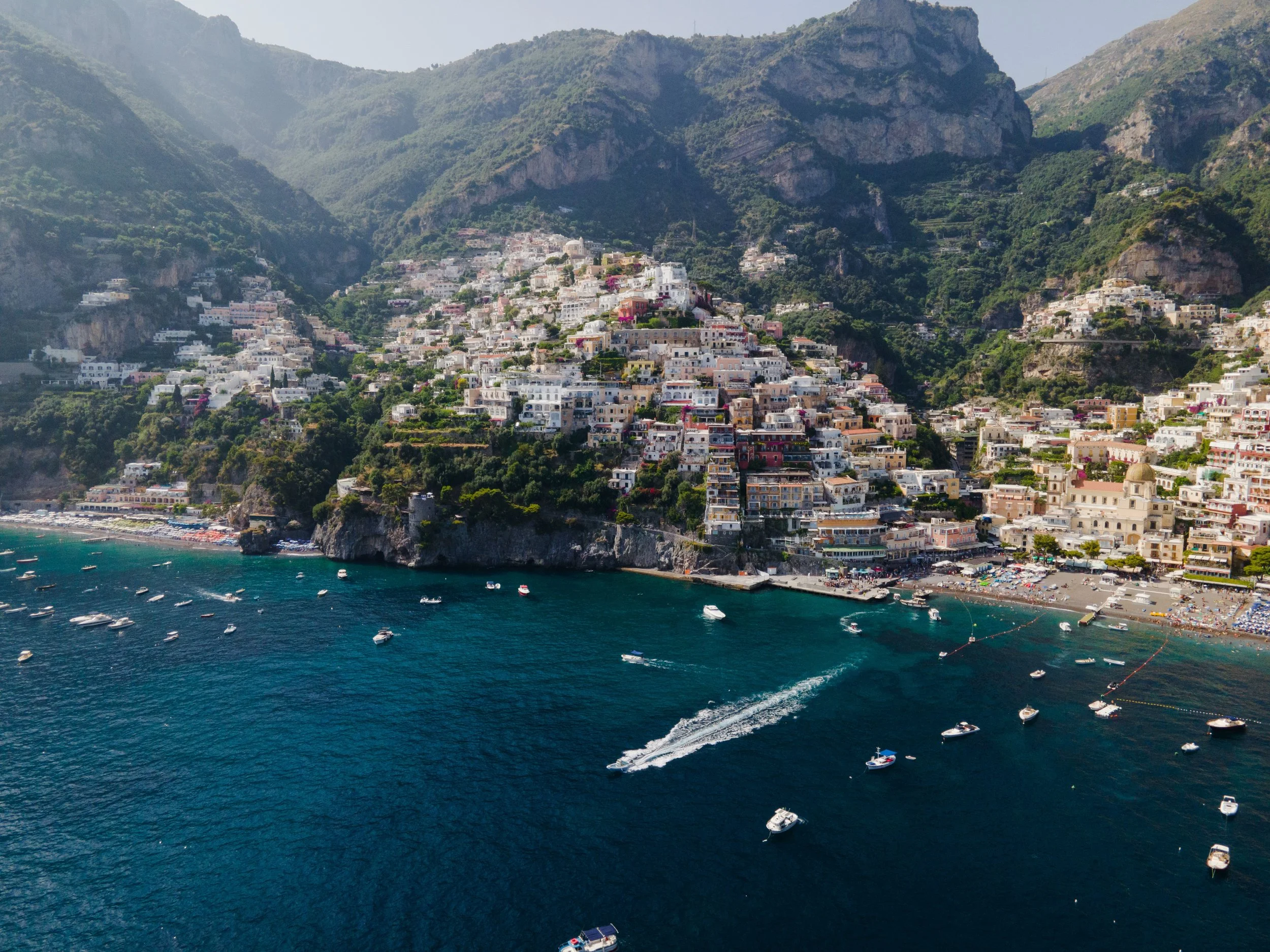
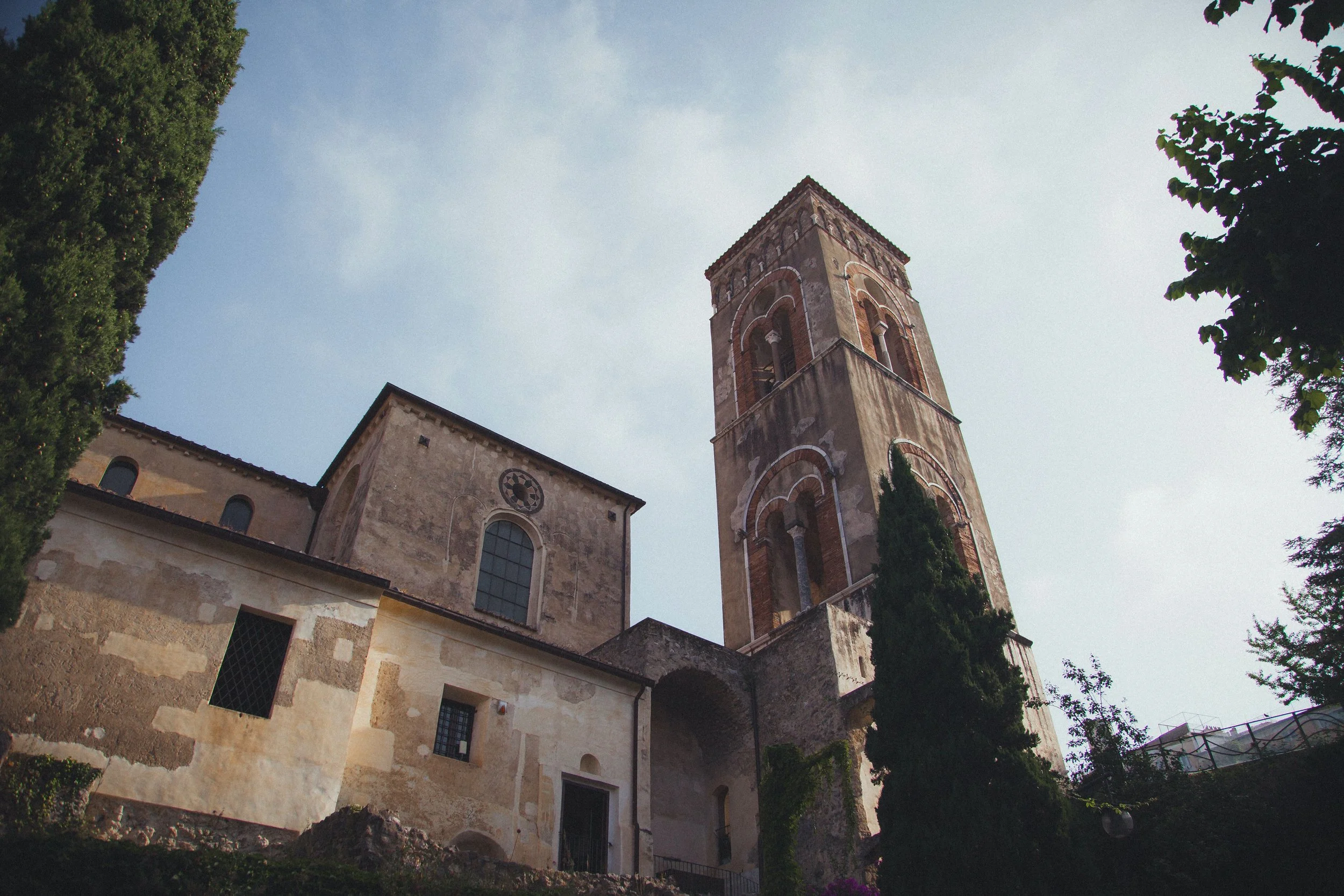
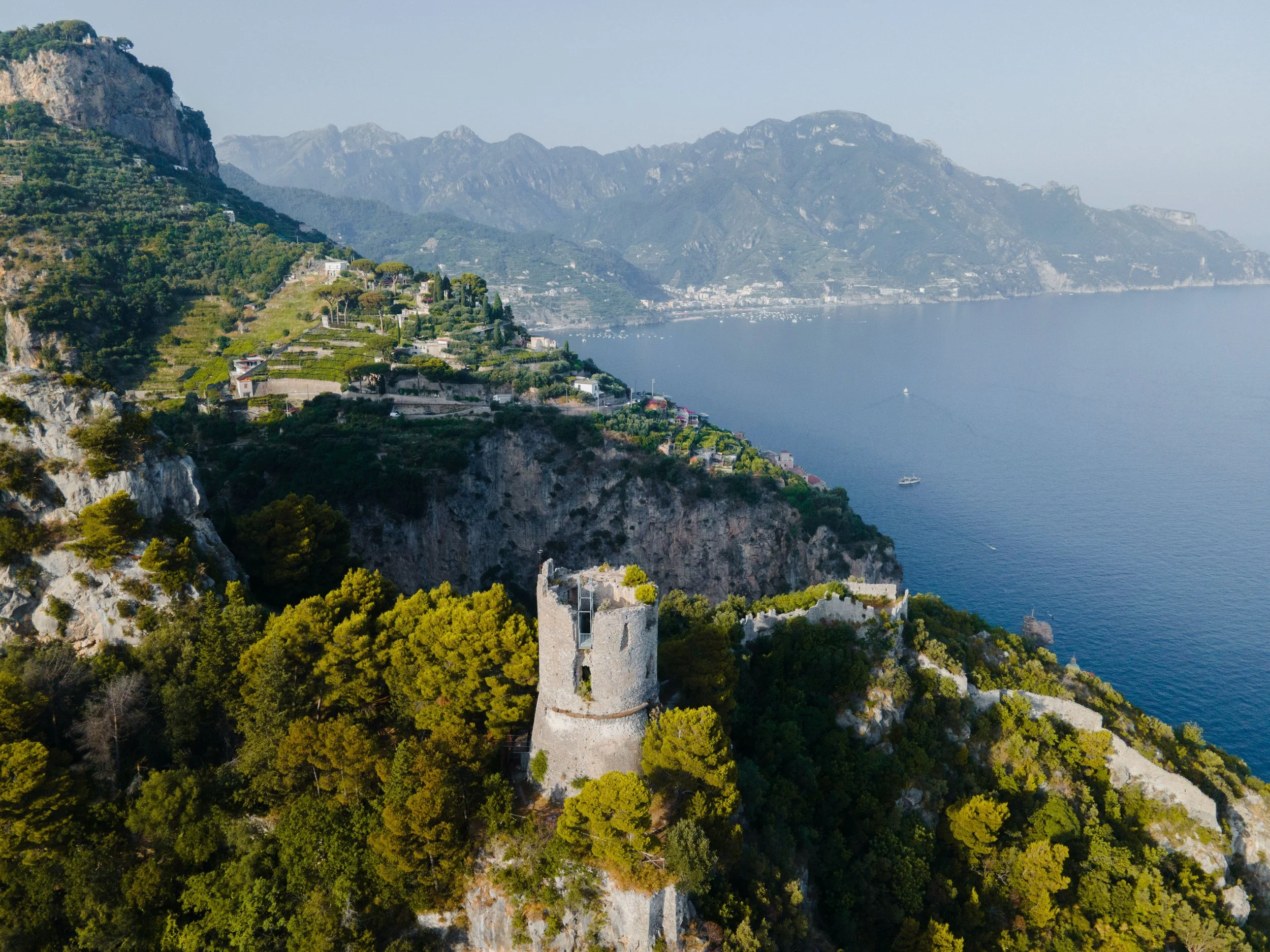
Amalfi Coast Photos
How to get to the Amalfi Coast
In order to get to the Amalfi Coast, you will have to get yourself to Italy. The best airport to fly into is Naples Airport (NAP), followed by taking a train to the city of Salerno. If you want a cheaper option, you can go by bus.
Take the SITA 5000 bus to Salerno from Naples City Center
Take the SITA 5003 bus to Salerno from Naples Airport
Then from Salerno, you can:
Take a ferry from Salerno to most villages on the Amalfi Coast (the ferry stops at Vietri Sul Mare, Cetara, Minori, Maiori, and Positano).
Take SITA bus number 5120 from Salerno bus station to Amalfi Coast villages. [If you want to go beyond Amalfi (such as Positano), you will have to get off at Amalfi to transfer to another bus]
Take a taxi direct from Salerno.
Option #2 is the cheapest option and the one we ended up doing. We rarely take taxis if public transport is available. You can get bus tickets at any Tabacchi in Italy, but usually only with cash.
*There is also a Direct Bus that goes from Naples to Amalfi, however it runs 1-2 times daily and takes 2 hours. Just look for SITA bus 5020.*
When to see the Amalfi Coast
The best time of the year to visit the Amalfi Coast has to be Late April to Early June (Spring). This is because of the pleasant temperatures (18–25°C / 64–77°F), fewer crowds, blooming flowers, and clear skies. For photography, you are afforded lush greenery, vibrant spring blooms in Ravello and Positano, and soft golden light throughout the day.
You can also go in September to Early October (Early Autumn). This gives you warm weather without the summer heat (22–28°C / 71–82°F), and the sea is still warm for swimming, and the crowds begin to thin. For photos, the sunset tones are warmer and more golden, and the vineyards and lemon groves look full and rich. Overall, the towns feel more relaxed and authentic, especially in Minori, Maiori, and Atrani.
You will definitely want to avoid July-August if possible. This is because the Amalfi Coast, while beautiful, is packed with tourists, the prices surge, and it can be uncomfortably hot (30°C+ / 86°F+), especially on stairs and hiking trails.
As far as time of day for photography, definitely shoot for Golden hour and blue hours. Always try to find a great place to be during sunset and sunrise if you are early risers. Of course, with good weather, a photo during the day will be fine but due to the harsh and abundant sun, your pics could become washed out and you will never get that soft light glow like you could from golden hour.
Photographing the Amalfi Coast
You don’t need such a special or expensive kit to take some amazing photos of the Amalfi Coast. All you need to have with you is some standard lenses and comfortable clothes and shoes since you will probably be doing a lot of walking at many different elevations to reach very reliable vantage points.
Take with you your camera body (obviously) along with a standard lens (24-70 mm focal length) as well as a wide angle (10 mm focal length) and a 50 mm prime lens if you have one. These three will give you such a wide berth in regards to what you want to get out of your photos.
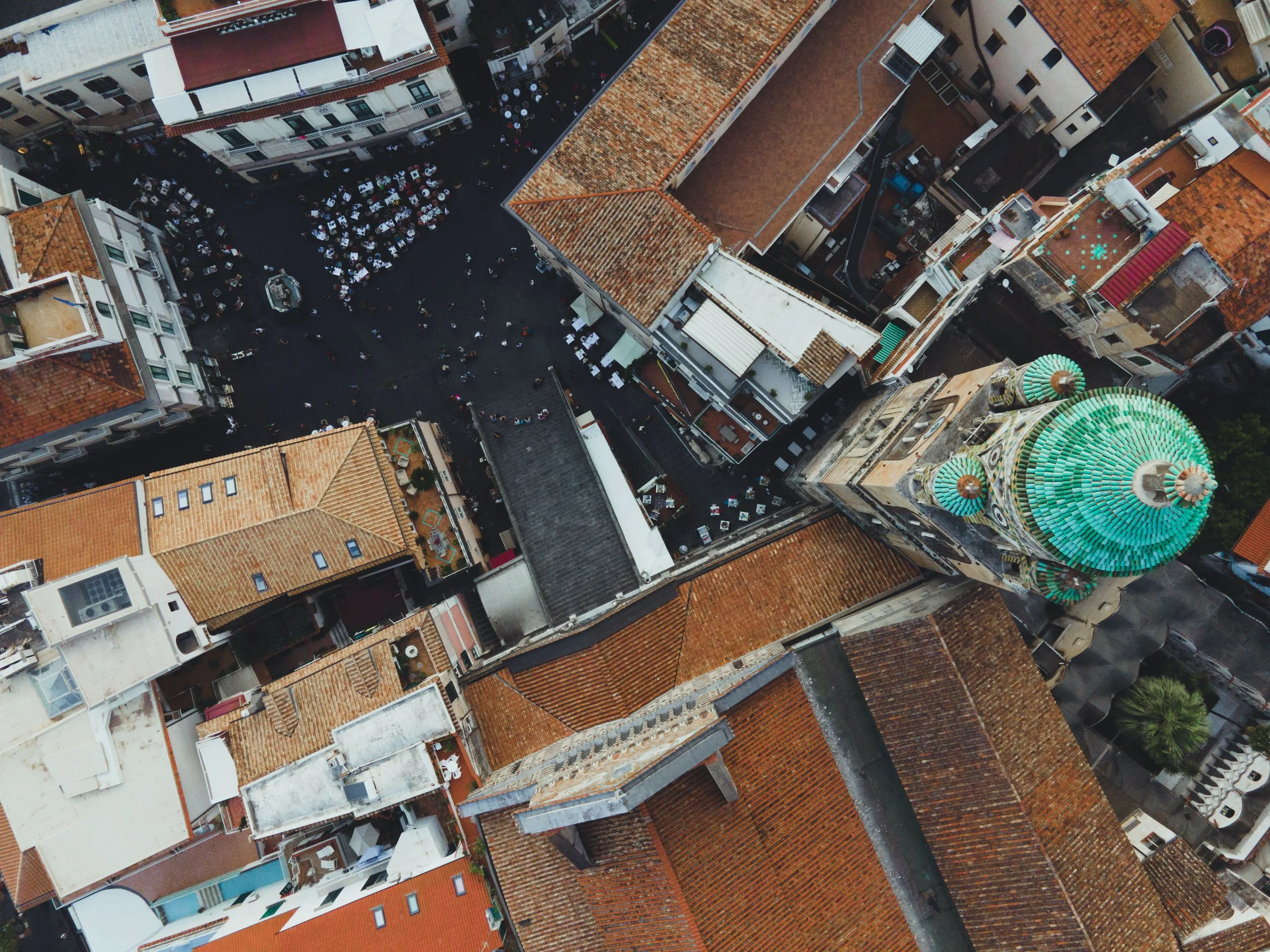
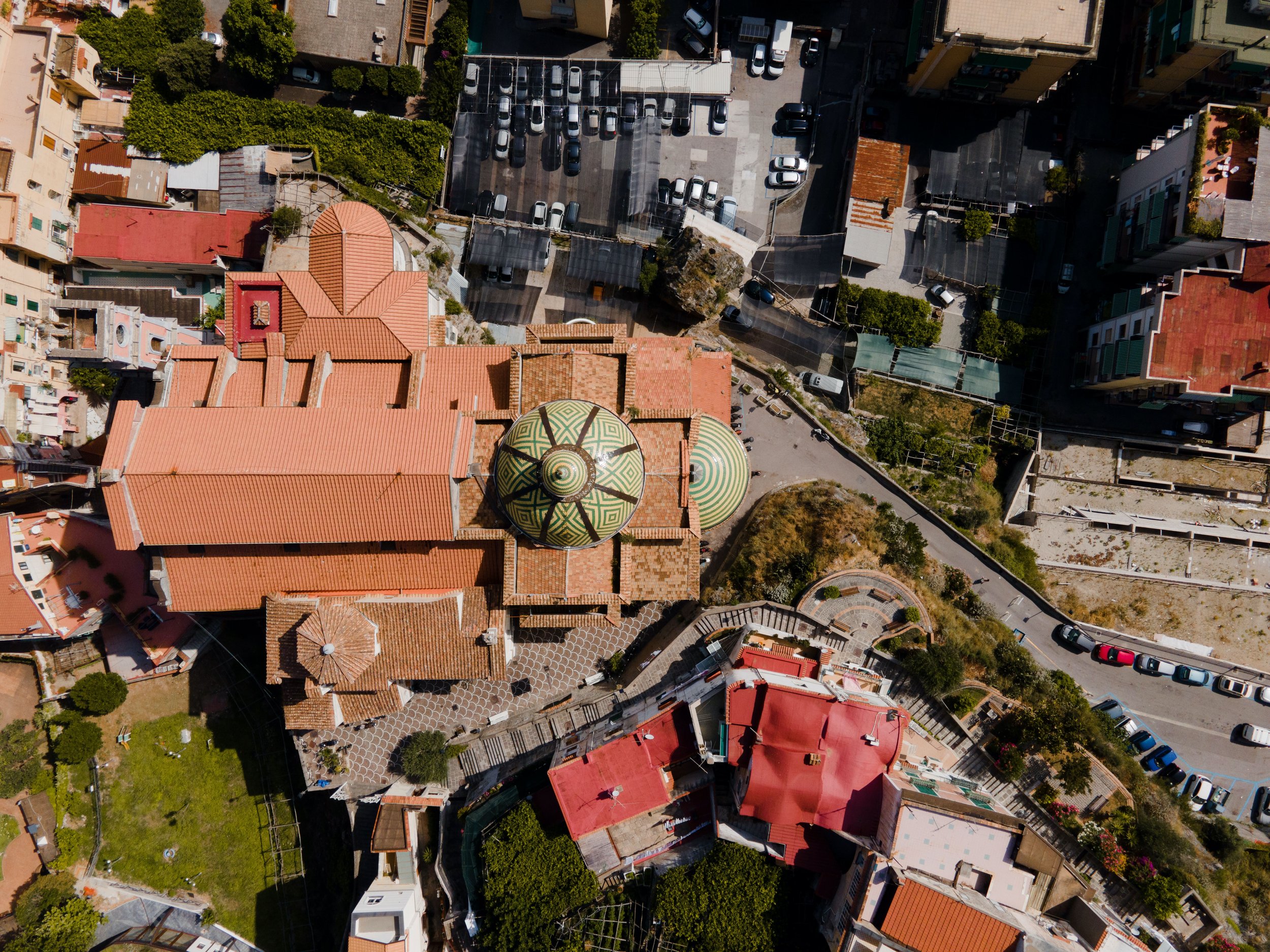
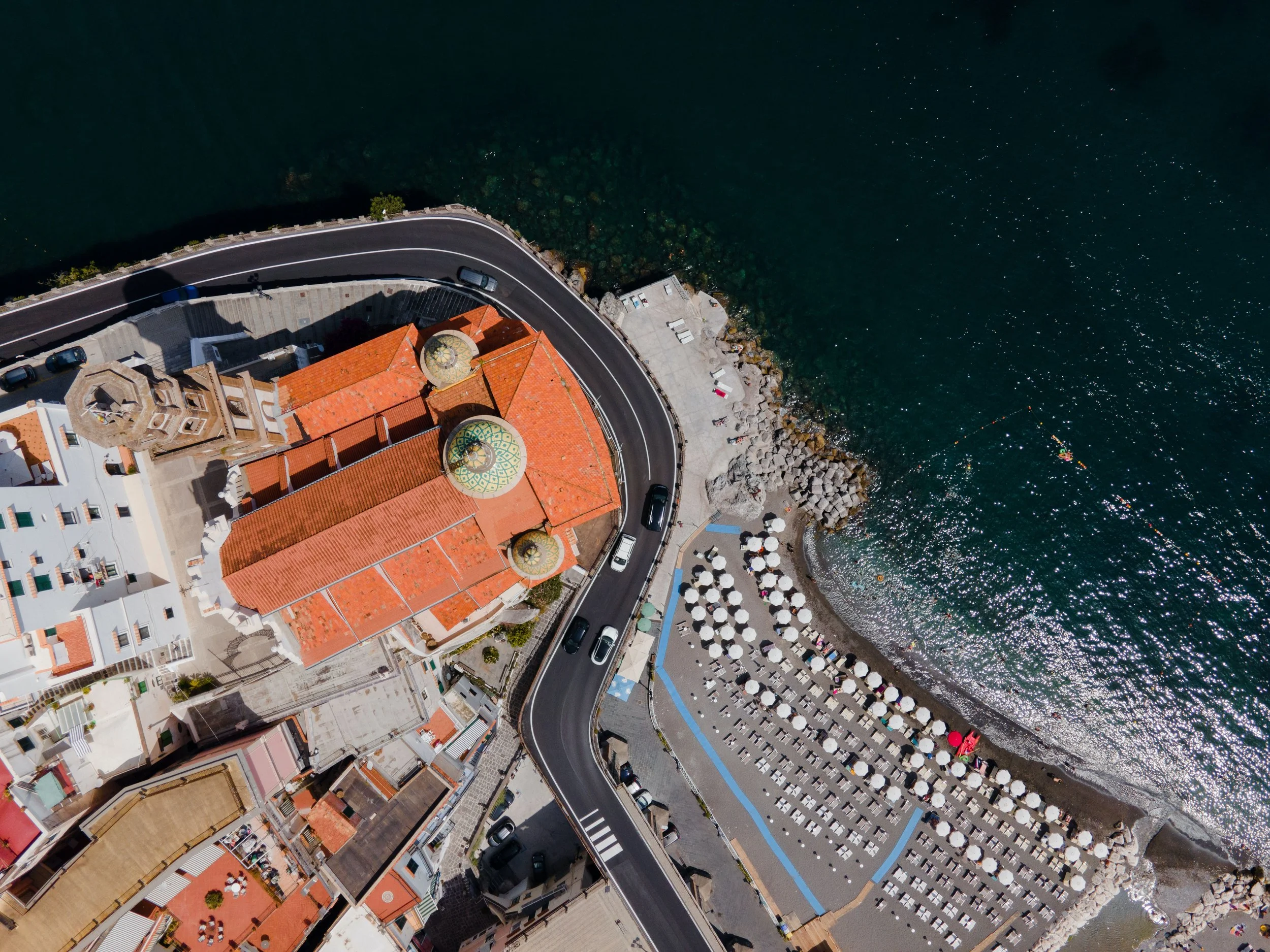
You can also do some drone flying and get some amazing shots from the air as well. Italy is notorious for having very strict drone laws so I was surprised when I saw that they allow drones in the Amalfi Coast. You need to make sure you are registered with ENAC, the drone authority in Italy, and to have your own QR code somewhere on your drone before you can fly it.
As far as some of the best places to take your photos at in each village, here are my favorites below:
Ravello
Terrace of Infinity at Villa Cimbrone: One of the most breathtaking views on the Amalfi Coast. This terrace features marble busts along a stone balustrade, framing expansive sea views that seem to stretch forever.
Villa Rufolo Gardens: These cliffside gardens combine manicured flower beds, medieval towers, and panoramic sea vistas, often with live classical music performances in the summer.
Piazza del Vescovado (Ravello Cathedral Square): The main square is a picture-perfect mix of cobblestones, outdoor cafes, and the imposing white façade of the Duomo di Ravello.
Belvedere Principessa di Piemonte: A small but scenic park known for its flower-filled terraces and romantic ocean views—ideal for a peaceful, lesser-known shot.
Minori
Lungomare California (Seafront Promenade): A quiet, charming walkway along the sea, great for sunrise shots with reflections on the water and silhouettes of fishermen.
Roman Villa Marittima (Villa Romana): This 1st-century ruin is great for artistic shots of mosaics, crumbling walls, and moody light streaming through arches.
Staircase to Ravello Trailhead (Sentiero dei Limoni): Begin this lemon path hike from Minori and capture wide views of the town nestled between sea and hill.
Minori Harbor Wall: A lesser-known angle for shooting back toward the beach and town, especially beautiful at dusk with the lights just turning on.
Maiori
Santa Maria a Mare Church Terrace: The viewpoint from this church above town offers one of the best elevated photos of Maiori’s long beach and pastel buildings.
Maiori Seafront Promenade: Wide and spacious, this stretch is ideal for sunset shots with the sun dipping below the cliffs and gentle waves along the sand.
Torre Normanna (Norman Tower): A fortress built directly on a coastal rock outcrop—great for moody photos with crashing waves and stone textures.
Cave of Pandora (Grotta Pandora): Accessible by boat or kayak, this sea cave near Maiori creates magical light reflections and dramatic cave walls—perfect for unique, adventure-themed content.
Amalfi
Steps of the Amalfi Cathedral (Duomo di Amalfi): A classic Amalfi shot. Stand at the base for a grand view of the striped cathedral rising above the lively piazza.
Amalfi Port (Molo Pennello): From the end of the breakwater, capture the entire town backed by steep cliffs—especially dramatic in the late afternoon light.
Via Lorenzo d’Amalfi: This main pedestrian street is full of bustling life, shops, and food vendors, framed by classic architecture—great for candid or lifestyle shots.
Luna Convento Hotel Cloister: A peaceful inner courtyard with arched colonnades, offering historic ambiance and great soft lighting for portraits.
Atrani
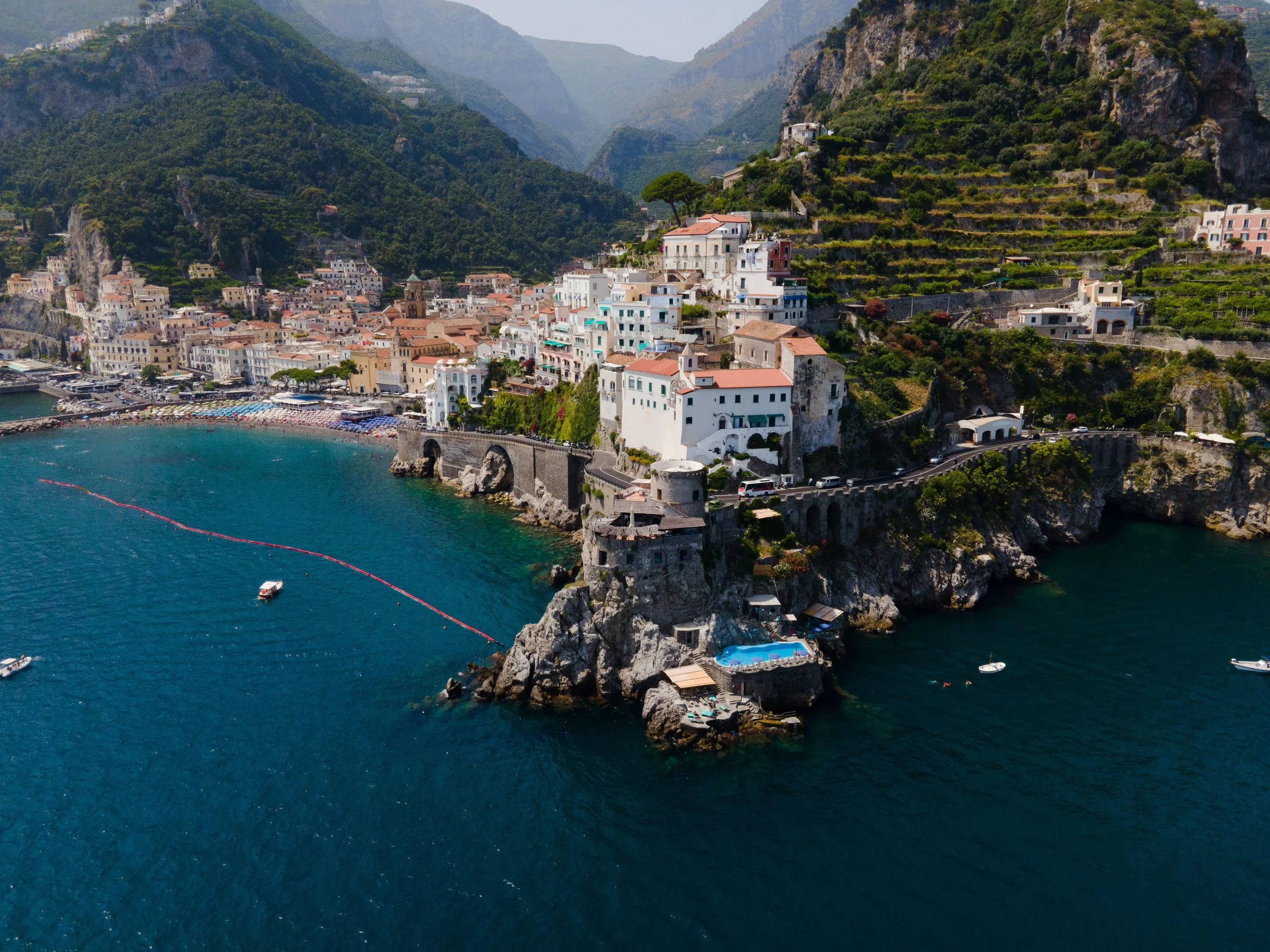
Atrani Overlook from SS163: From the road above, get an iconic wide shot of Atrani’s compact cluster of buildings surrounded by cliffs and sea.
Atrani Beach at Sunrise: A tiny strip of beach that glows beautifully in the morning light, with boats bobbing offshore and pastel homes behind.
Piazza Umberto I: This charming central square has a timeless feel, with colorful facades, the Church of San Salvatore de Birecto, and café tables under umbrellas.
Tunnel Archway Entrance: Capture the dramatic stone arch at the town entrance—framing the beach, church, and piazza in one striking composition.
Fiordo di Furore
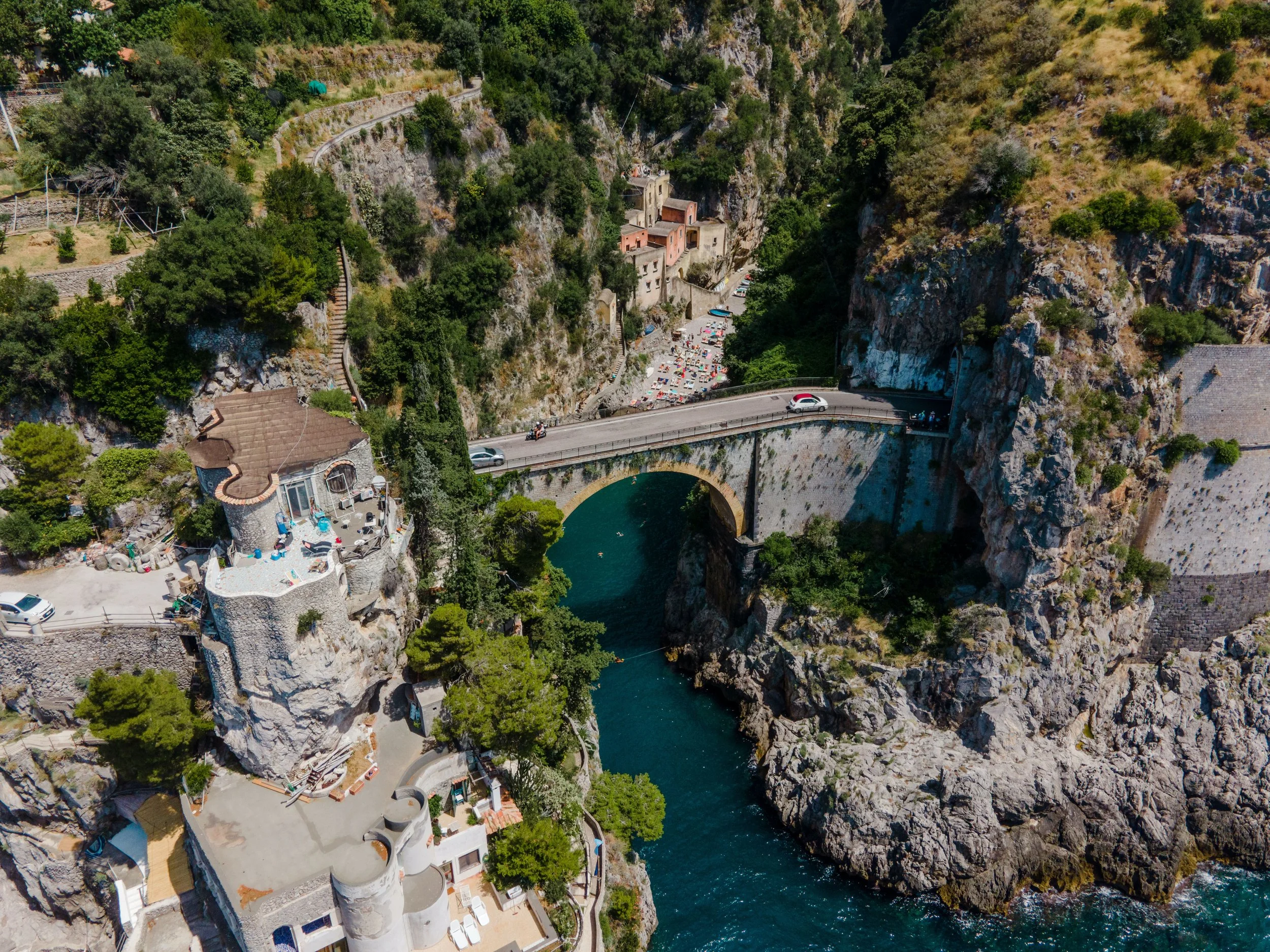
Bridge Overlook (SS163 Bridge): Stand above the fjord for a perfectly framed photo of the narrow beach far below, surrounded by vertical cliffs and turquoise water.
Fiordo Beach Level (via staircase): Descend to the small pebble beach and shoot upward toward the bridge, capturing the full height of the dramatic gorge.
Cliff Path Above the Fjord: Access the walking path just above the fjord for sweeping views of both the inlet and the open sea—ideal for drone or wide-angle landscape shots.
Furore Marina: A small dock area near the fjord’s mouth, great for photographing boats with the fjord’s rock walls rising behind.
Positano
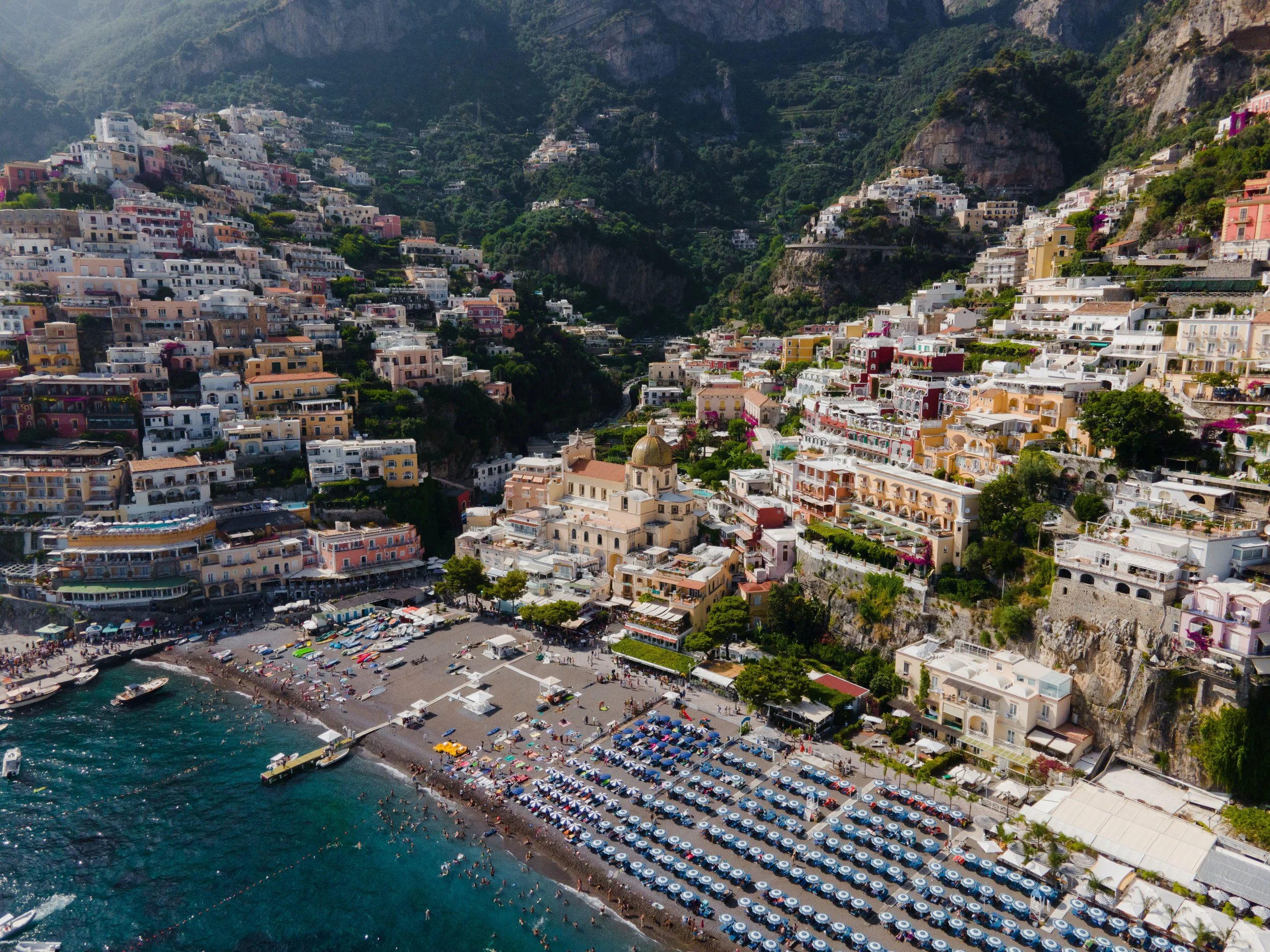
Via Cristoforo Colombo Viewpoint: Near Le Sirenuse Hotel, this is the most iconic Positano overlook—see the whole cliffside village cascading down to the beach.
Spiaggia Grande Pier: Stand on the pier to frame the shoreline, sea, and famous domed church of Santa Maria Assunta in one dramatic shot.
Staircase of Via Positanesi d’America: Capture the winding, colorful stairs as they snake through boutiques and cafes—perfect for vertical compositions.
Path of the Gods Trail Overlook: High above town, this hiking trail delivers sweeping views of the Amalfi Coast with Positano below and the mountains stretching into the distance.
Purchasing Photos
Conclusion and Further Resources
Italy will never stop being one of my favorite destinations. I have been fortunate to have seen so many great places in the country and I still have so many left on my bucketlist. I also intend on coming back to the Amalfi Coast to check out the villages I missed the first time around.
You can see all my Amalfi Coast related blog posts below:
Ravello (A Journey Through the Amalfi Coast: Ravello)
Minori ( A Journey Through the Amalfi Coast: Minori)
Maiori (A Journey Through the Amalfi Coast: Maiori)
Amalfi (A Journey Through the Amalfi Coast: Amalfi)
Atrani (A Journey Through the Amalfi Coast: Atrani)
Fiordo di Furore (A Journey Through the Amalfi Coast: Fiordo di Furore)
Positano (A Journey Through the Amalfi Coast: Positano)
Summary (A Guide to the Towns of the Amalfi Coast in Italy)
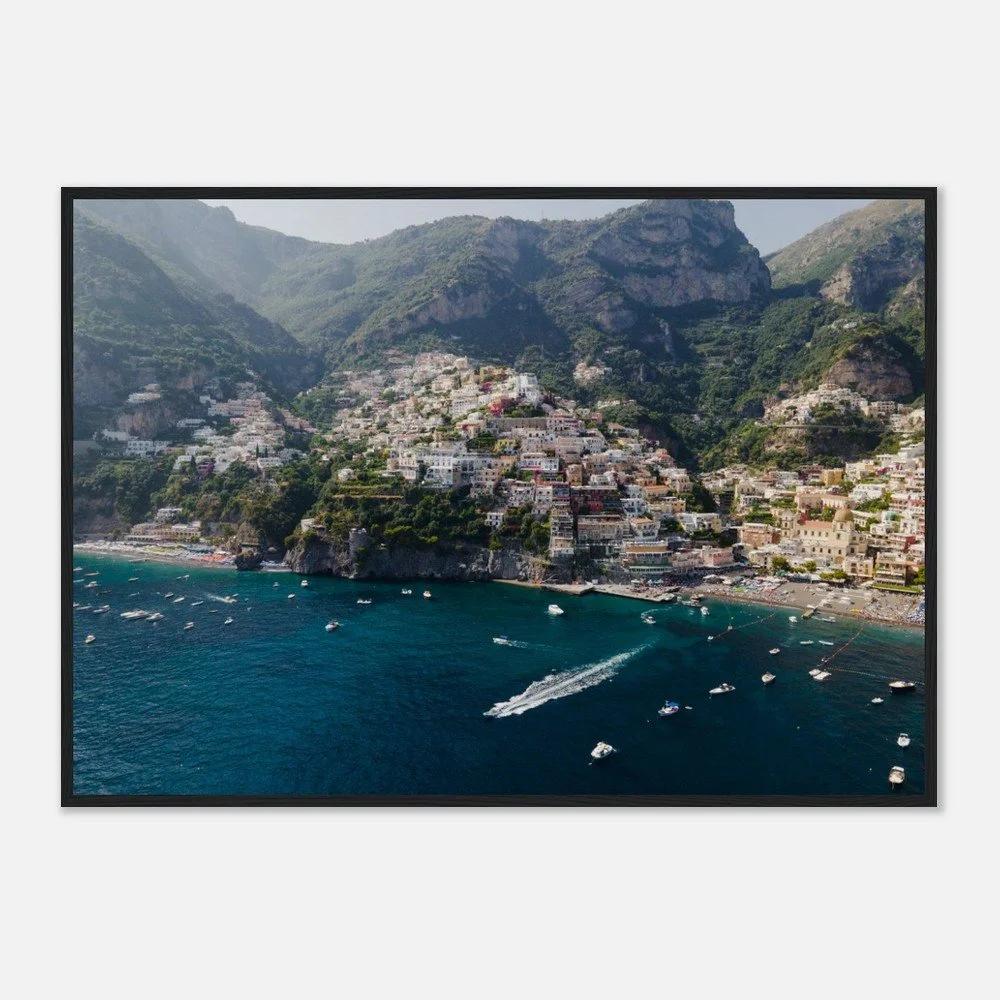




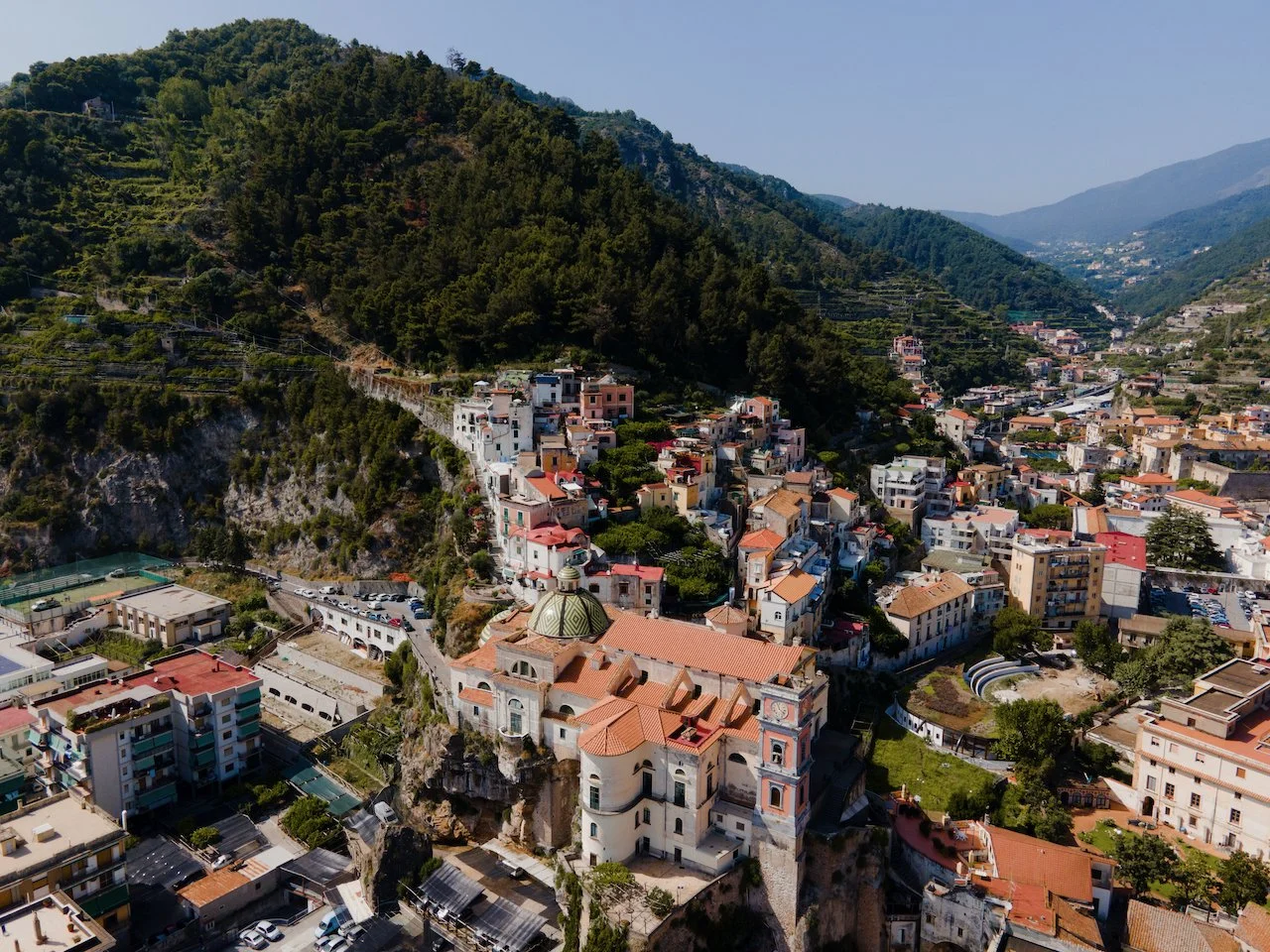
Atrani is a small town located on the Amalfi Coast in Italy. It is often overshadowed by more popular towns in the area such as Positano and Amalfi itself, which makes this place even more special as an underrated destination. This photo was taken with a drone in the Summer of 2023. It is the exemplification of Italian style and architecture.