
How to avoid boredom on the road: ideas for things to do while traveling
New Zealand is one of the most liberal nations that is able to combine productive work and leisure. Locals like spending time in bars with friends, at home with family, or playing sports. However, the preferred activity of most New Zealanders is travel. A common practice is to take 2-3 days of trips to neighboring cities or countries. Traveling takes a lot of energy, but the main mood is formed on the road. Travelers are often at a loss for what to do on the road, so everyone can find the answer to this question below.
Card games
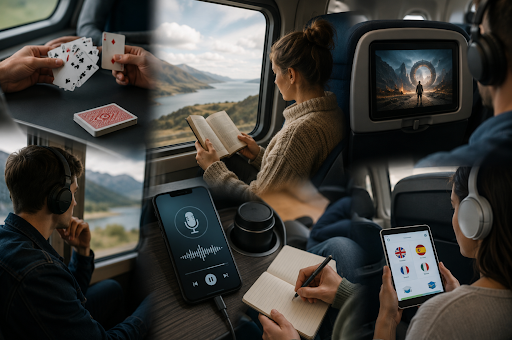
Cards are one of the best ways not to get bored on the road, if you are traveling with friends or family. Games with a deck are easy to organize in almost any conditions because you only need a deck of cards. It is small and easy to carry in a backpack or pocket. Cards give a chance to play more than 10 variants of games, which can be played both for money and for free. New Zealanders can choose poker, blackjack, and baccarat, feeling like in a real 2026 casino. NZ gamblers can practice using online clubs, selecting a reliable one through the Casinos Analyzer bonus evaluation guide. Time on the road passes much faster and more interestingly, thanks to cards.
Cards develop logic, memory, and the ability to think strategically during the game. You need to count the moves of your opponents and think over your own actions in advance in many nice games. This makes the process a useful workout for the brain. They help to communicate better and create a friendly atmosphere if you play in a company. They are not boring, because New Zealanders can change the games, but you need to find a comfortable place to play. Games of this type help you meet new people faster and get nice emotions before vacationing in a new country or city.
Reading books and the news
Reading books on the road is a great way to pass the time. Surveys show that approximately 52% of people read books occasionally, while 33% of daily readers do so. An active traveler will consume 6-10 books a year while traveling, provided the novel is engaging. Many note that they prefer lighter genres or shorter texts while traveling. Electronic devices have made accessing books easier and more convenient. NZ residents can put books in a backpack or travel bag. Book genres that hold interest well:
Adventure;
Detective;
Fantasy;
Science Fiction;
Romance Novels.
New Zealanders can save time and stay informed about what's happening around the world. Research shows that a significant number of people prefer to receive information with their phones instead of books or print publications. News can be read in short sessions of a few minutes, which suits the characteristics of mobile content consumption. It’s read quickly throughout the day because the news is updated constantly. New Zealand residents can combine reading the news with playing slots in an online casino or chatting with friends. Any type of reading develops the human brain and prevents boredom.
Watching movies and TV series
Watching movies and TV series is one of the most popular ways to pass the time on a long trip, because the body is completely relaxed and does not focus on time. Downloading content at home in advance allows you not to depend on the quality of the Internet connection on the road. 80% of New Zealanders choose thrillers, horrors, films about casinos, or comedies for trips. These film genres require the attention of travelers and are best suited for watching at night. It is convenient to watch videos while traveling by train, bus, or plane. Headphones help to completely abstract and not disturb other passengers.
TV series are especially well suited for travel due to short episodes lasting from 20 to 60 minutes. You can watch several episodes in a row or take breaks during stops. Documentaries, travel shows, and educational videos are also popular on the road. They allow you not only to have fun but also to learn a lot. You should charge your device in advance or take a power bank with you for comfortable viewing. New Zealanders have access to Netflix or Apple by subscription, where you can watch content in airplane mode.
Music and podcasts
New Zealand has over 1,000,000 music lovers in the country, so music will help make the trip more enjoyable and create a good mood. Favorite songs help to relax, improve mood, and make the road less tiring. Travelers just need to create playlists for the stages of the trip in advance and use them at a convenient time. Calm music is good for passive relaxation, while more energetic compositions will help to tune in to diving, racing, climbing, or jogging. You can listen to music in almost any kind of transport using a smartphone and headphones. Research from Te Ara Encyclopedia of New Zealand shows that locals prefer:
Rock;
Pop;
Hip-Hop;
Reggae;
Electronica;
Dub;
Indie Rock;
Urban Pasifika.