Ways to Keep Your Skin Glowing While You Travel

Skincare is honestly one of the last things I used to think about before a trip. I would pack whatever was already in my bathroom and hope for the best.

After a week in southern Spain, where my skin completely fell apart by day three, I started taking it a lot more seriously. And here is what I learned.

Get any Treatments Done Before You Leave

I had been thinking about laser hair removal for a long time before I finally did something about it. I searched for facial laser hair removal near me and booked a consultation about six weeks before my next trip. By the time I landed, my skin was fully settled, and I had nothing extra to deal with on the road.

The sessions changed my travel routine in a way I did not expect. I dropped an entire grooming step from my day completely, and with nothing sensitive to protect from the sun, I just got on with enjoying the trip.

The one thing to plan around is that you need to stay out of direct sun for several weeks after treatment, so booking it at least a month before a sunny destination is the smart move. Most clinics will walk you through the basics at your consultation but knowing what to expect before you even walk in puts you in a much better position.

I had no clue that my regular SPF was something I needed to stop using two weeks before the treatment, and there were a few other pre-session rules I was glad I knew about before showing up. Going in informed made the whole process a lot smoother and the recovery faster too.

Match Your Products To The Climate You Are Heading Into

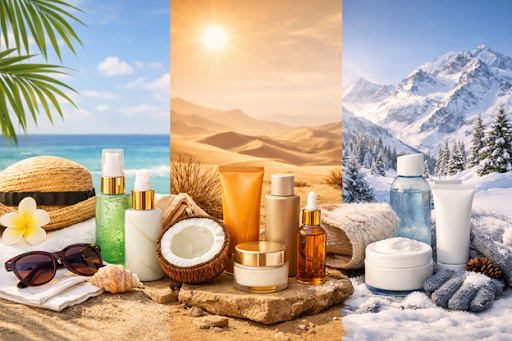
A thick moisturizer that works well at home in cold, dry weather becomes heavy and suffocating the moment you arrive somewhere hot and humid. Also, a lightweight gel does almost nothing for you in dry autumn air.

Most people pack their usual routine and expect it to hold up somewhere completely different, and it rarely does. The better approach is to think about where you are actually going and what your skin will be dealing with once you get there.

Bringing one product for each climate extreme your trip involves adds almost nothing to your bag and saves a lot of frustration once you are there.

Hard water is another thing that caught me off guard on a trip to Budapest. It interferes with your cleanser and leaves a residue on your skin that builds up over several days, and a small bottle of micellar water used as a backup cleanser takes care of that completely without adding much weight to your bag.

Hydration On Long Flights Needs More Effort Than Most People Give It

Cabin air on long haul flights runs at around 20% humidity, which is far drier than almost any environment you would normally spend time in. Most people drink a bit of water and assume that covers it, but by the time you land, your skin has already lost a significant amount of moisture that water alone does not replace quickly enough.

The dryness tends to show up as tightness and dullness rather than obvious flaking, which makes it easy to miss until you are already at your destination, wondering why your skin looks off.

Layering a hydrating serum under your moisturizer before boarding and reapplying a simple balm a few hours into the flight makes a noticeable difference on arrival.

Skipping alcohol on long flights also helps more than most people expect, since it speeds up the dehydration that the cabin air is already causing, and by the time you land, the difference shows clearly on your face.

SPF Every Single Day, Not Just at the Beach

UV radiation does not stop because the sky looks overcast or because you are not near water. At altitude and near reflective surfaces such as snow or sand, it is strong enough to cause real damage faster than direct midday sun at sea level.

SPF 30 is the bare minimum, and SPF 50 is the better option if you are anywhere near water or above 2000 meters. A lot of people apply it once in the morning and consider that sufficient, but without reapplication, it stops being effective within a couple of hours.

Reapplication every two hours is the part most people skip, and it is also the part that makes the biggest difference. A powder sunscreen or SPF setting spray makes this easy over makeup and adds almost nothing to your bag. It is one of those things that feels excessive until the first time you come home with sun damage from a trip where you thought you were being careful.

Sleep And Food Show Up On Your Skin Faster Than You Think

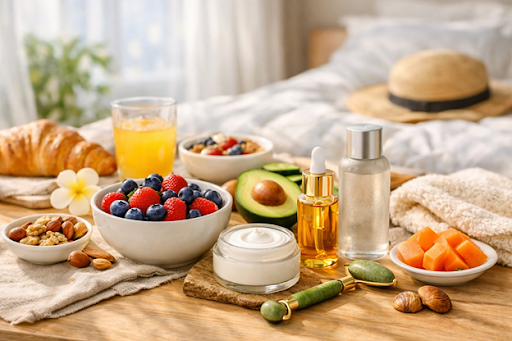
A week of disrupted sleep, more alcohol than usual, and meals that look nothing like what you eat at home will show up on your skin within a few days. Your skin reflects what is happening internally, and travel pushes all of those factors in the wrong direction at once. 

Most people attribute it to jet lag or the change in water, but diet and sleep are doing more work than any product in your bag.

Keeping even one good habit going throughout a trip makes a real difference. Getting close to seven hours most nights, or keeping one meal a day close to what you normally eat, gives your skin something to work with. 

It is genuinely what separates people who come back from trips looking good from those who spend the first week home recovering.