
Rjukan or Abisko? Two Nordic Visions of Ice Climbing
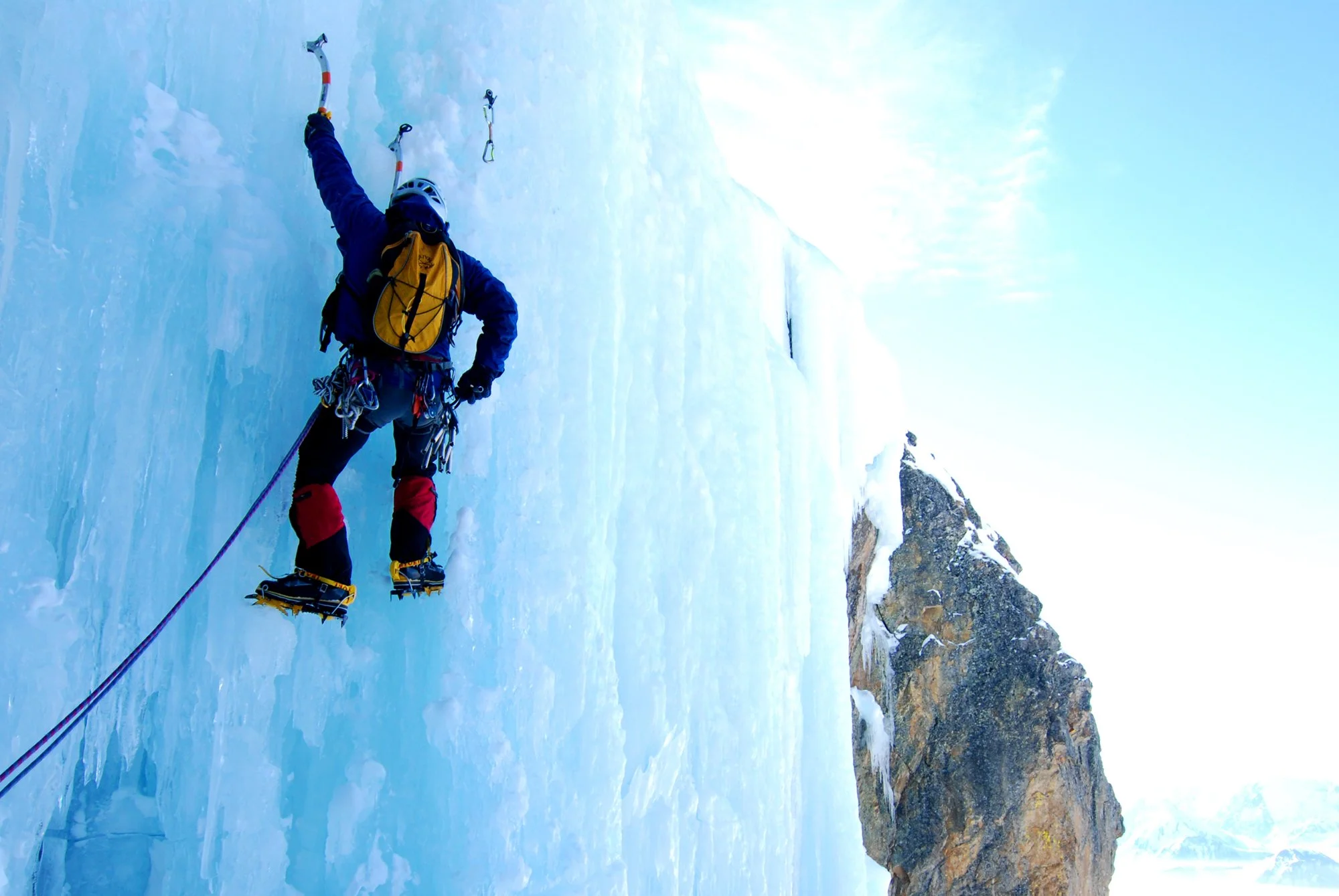
For a climber planning a winter trip in the Nordic region, both Rjukan and Abisko can be places for unforgettable experiences because they are both deep in the winter mood. But particular differences shape very different experiences, and that’s what this article will uncover.
How online storytelling helped ice climbing grow
Ice climbing became more visible because people could finally see more than the climb itself. They could see the people, the mood, the failure, the return, and the place around the route. That changed a lot.
Websites about adrenaline sports changed a lot into the positive shift. Many of them became an adrenaline and thrill seekers hub, giving various sports including ice climbing a public space that felt active and connected. A climb in Norway or northern Sweden no longer stayed inside a small local circle. It became part of a wider conversation that anyone could follow. Readers could learn what drew climbers back each winter, how they described fear and control, what made one venue good for mileage and another good for atmosphere, and why certain places kept showing up in serious climbing plans.
That kind of coverage also helped people understand that ice climbing is not one fixed experience. Some stories focused on professionals and hard lines, but the strongest pieces often did something else. They made room for interviews, recovery stories, first visits, changing conditions, and the slower parts of the day that make the sport feel real. The result was not just inspiration. It was familiarity. Frozen waterfalls stopped looking like remote images and started to feel like places with rhythm, culture, and community.
Why personal stories made the sport feel reachable
Websites about adrenaline sports helped build trust as much as excitement. They connected beginners to experienced voices, often also sharing those interactions. In one such podcast, the creators interview Fay Manners, who shares her impressions after the climbing experience with the host in a way that sounds emotional but also thoughtful. Her story shows the connection between professionals and those who would love to enter the world of this sometimes terrifying activity:
That sense of connection helped ice climbing grow. It also helped places like Rjukan and Abisko become more than names on a route list. They became distinct kinds of experience, known through stories before many people ever tied in there.
Two ways to build an ice climbing trip
The cleanest difference between Rjukan and Abisko is how the climbing day is shaped. Official destination material already shows the split. Rjukan is presented as a place with more than 190 frozen waterfalls, with lines for all levels and many that are easy to reach. Abisko, by contrast, is presented through a guided canyon session on a 12 metre icefall, built as a 3 hour outing with a maximum of six participants. Even before style enters the picture, those numbers point to two different forms of ice climbing.
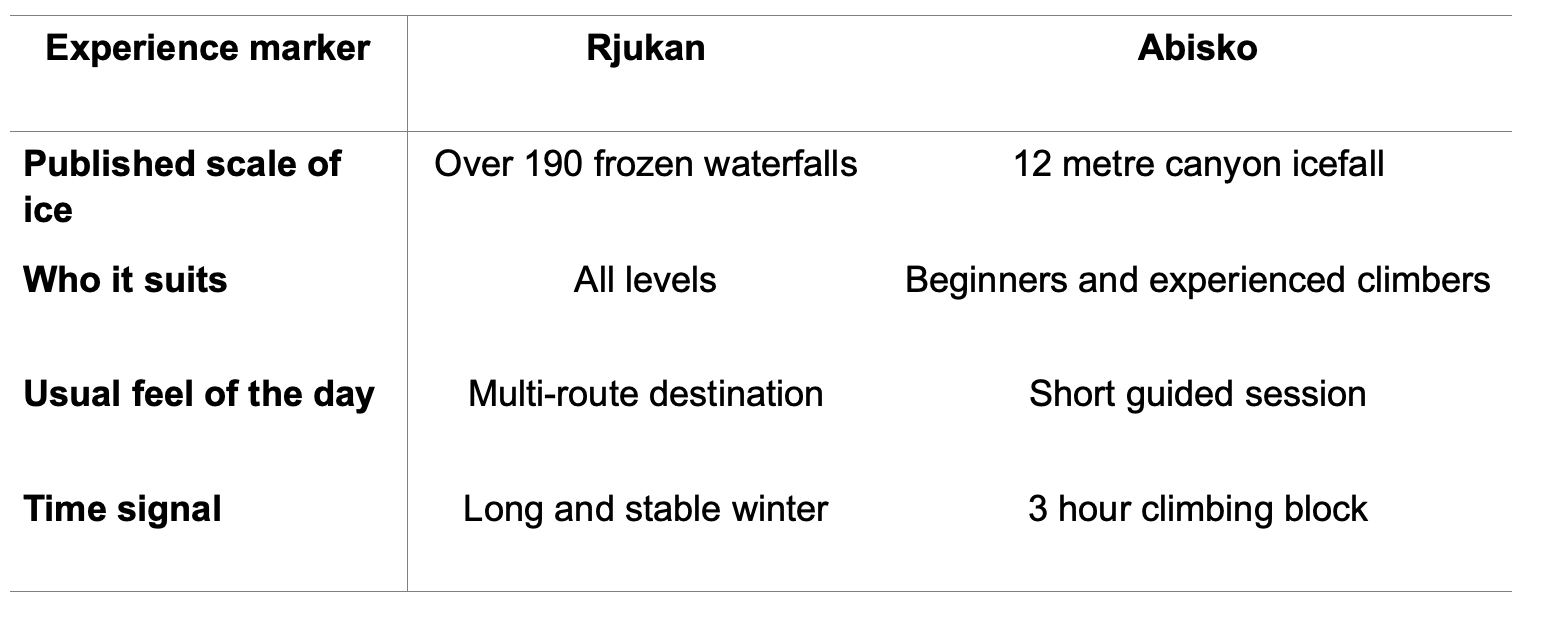
For the climber, this is less about better or worse and more about trip design. Rjukan makes sense when you want a climbing-first week. It favors repetition, route choice, and the satisfaction of adjusting plans without losing much time. If one line is crowded, too wet, or not right for your group, the day can keep moving. Abisko works differently. It feels more curated and contained.
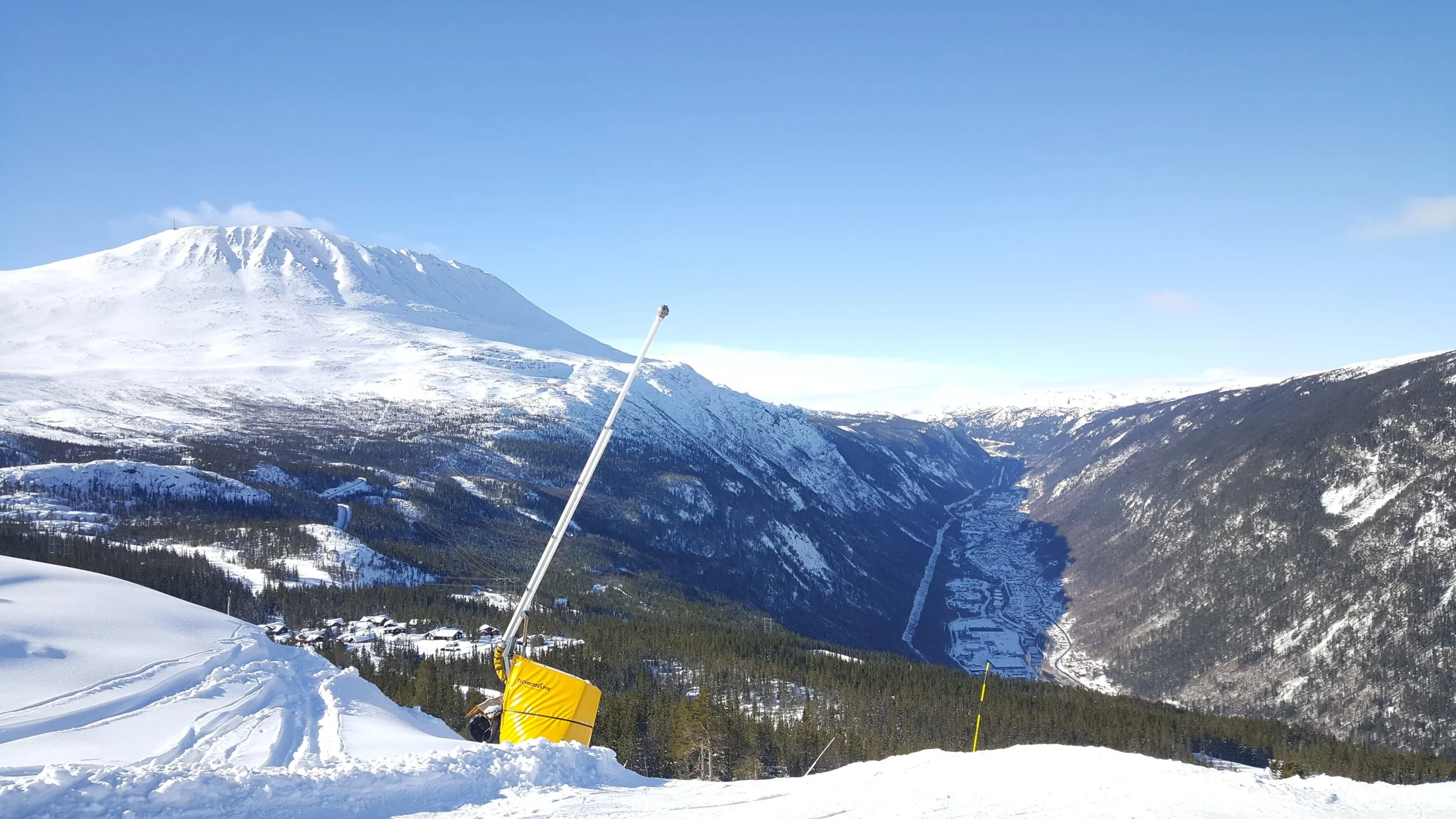
One reason climbers love Rjukan is that many of its frozen waterfalls are very close to the road. You only need to walk a short distance from the car, which is unusual for a place that looks so wild and dramatic.
The climb sits inside a guided frame and a strong natural setting, which can be ideal for someone who wants the sharp feeling of real ice without needing a full valley of options. In simple terms, Rjukan is stronger for climbing mileage. Abisko is stronger for a compact Arctic ice experience.
What kind of ice climbing memory do you want?
The deeper difference is not only route count. It is the weather, feel and mental pace. At Abisko Scientific Research Station, mean annual precipitation is listed at 350.0 mm. SMHI says Sweden’s average annual precipitation is now closer to 700 mm. That gap helps explain why Abisko often feels unusually dry and open for Sweden, which changes the mood of an ice climbing day. The setting can feel calm, sharp, and very clean, with the climb holding your attention as part of a bigger northern scene.
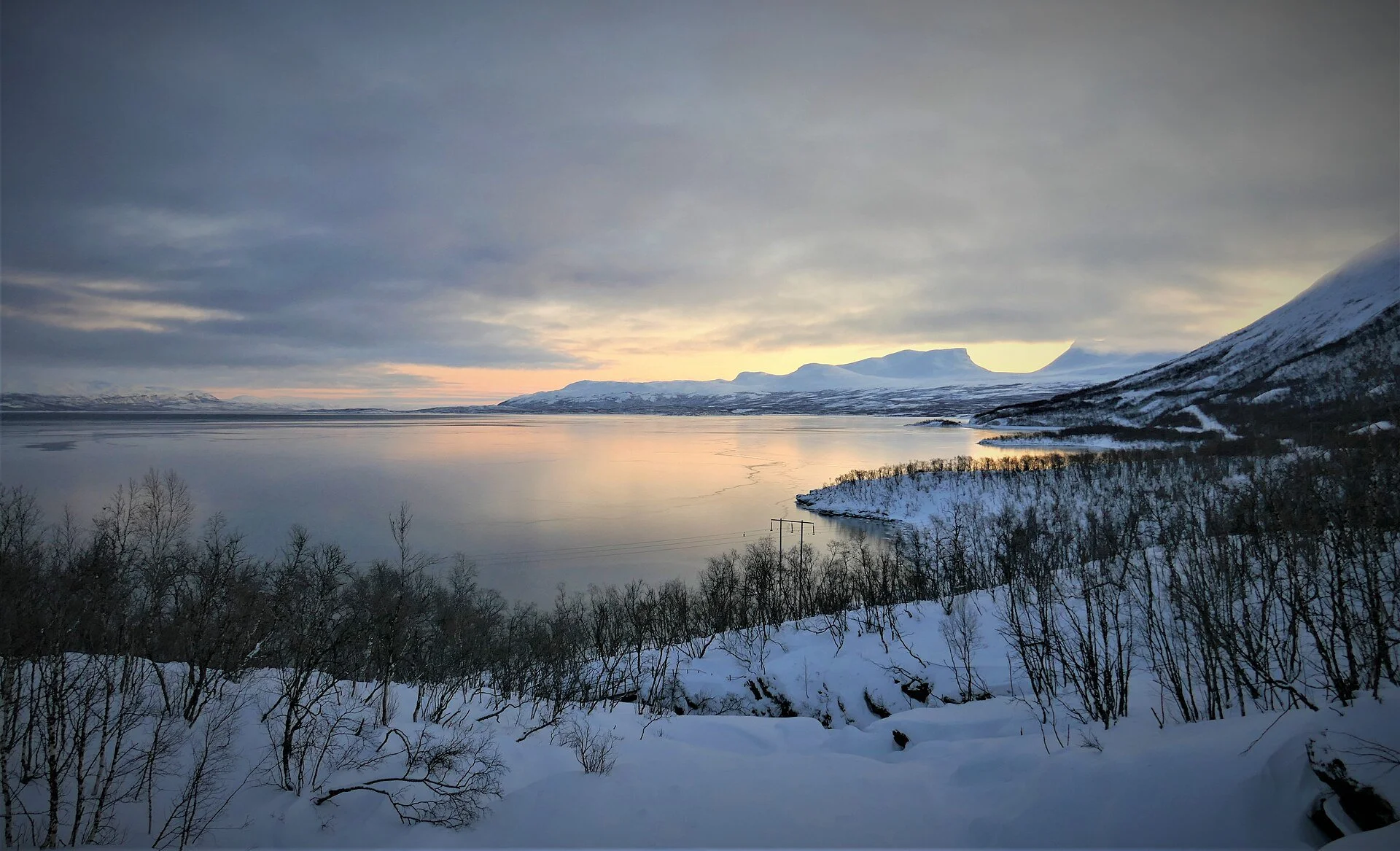
Abisko is a special place for ice climbing not only because it is in the Arctic, but also because it is next to Abisko National Park, which was started in 1909 and is often called Sweden’s first national park.