Planning Efficient Travel Routes Using Simple and Modern AI Tools

Travel smarter. Save time. Get less stressed. These are the promises of AI travel route planning and smart travel planning tools — and many deliver. Below, you’ll find a clear guide: what modern AI does, how it works, which features matter, and simple tips to get the most from AI navigation assistants.

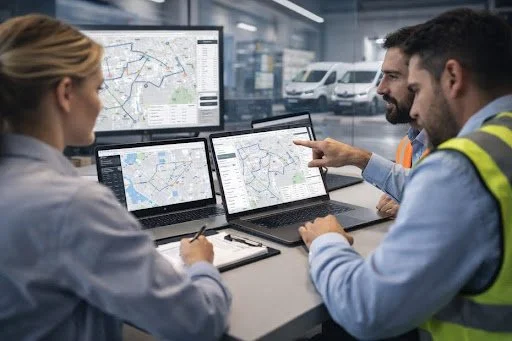
Why AI matters for route planning

Traffic is unpredictable. Weather can change. A planned stop becomes a delay. AI helps by turning messy, live data into better choices. It looks at traffic feeds, historical congestion, reported incidents, and even traffic-signal timing to recommend routes that reduce travel time and uncertainty. One major traffic report found that drivers in congested regions lose dozens of hours per year to delays, which makes smarter routing not just convenient but valuable.Benefits are easy to name: optimize travel routes, reduce travel time, and improve travel efficiency. Short sentence. Big impact.

How AI-powered navigation analyzes traffic

AI systems collect many data streams. GPS pings from phones. Sensor counts at intersections. Crowd-sourced user reports. Historical day-of-week patterns. Machine learning models then find patterns in that data to predict near-term congestion and the fastest paths.These models do two things well: they predict and they adapt. Prediction uses past behavior to estimate what traffic will look like soon; adaptation reacts to live changes (accidents, road closures) and reroutes you. Studies show digital navigation reduces journey-time uncertainty and helps travelers avoid delays, although city-wide effects can be complex.AI is increasingly gaining traction in everyday life and travel. The most popular are AI for expense forecasting andMathsolver, which handles all kinds of math, from calculating travel costs to comparing travel insurance quotes. Numbers surround us, and AI handles this data better than humans in most cases.

Optimizing multi-stop journeys

Planning a trip with multiple stops used to mean eyeballing a map and guessing a good order. AI changes that.It can treat multi-stop routing as an optimization problem (think: the modern traveling salesman, but practical).It factors in time windows (appointments), fuel or battery needs, and traffic patterns.It can order stops to cut driving distance and waiting time, or to prioritize faster arrival at the most important stop.Practical result: fewer left turns, fewer backtracks, and less time circling for parking. Automation of route suggestions reduces decision fatigue and makes long multi-stop trips feel manageable.

Real-world tools and examples

Many navigation products combine live data with AI models.Google Maps provides route recommendations, live traffic layers, and increasingly AI-driven features such as predicted delays and contextual suggestions.Waze relies heavily on crowd reports and quick rerouting when users report obstacles.INRIX publishes global traffic scorecards that quantify congestion costs and lost hours—useful context for why route optimization matters.These tools differ in approach: one emphasizes broad coverage and feature depth; another emphasizes crowd-sourced immediacy; analytics platforms provide the big-picture numbers that planners and fleet managers use.

How AI reduces travel time

Concrete numbers sell the benefit. For example, global traffic studies report that typical drivers in some countries lost dozens of hours per year to congestion; routing that avoids peak delays can therefore yield measurable savings.Other experiments and pilot projects show that AI-driven adjustments to traffic signals or suggested diversions can lower local delays and smooth flows. Cities that test these systems have seen improvements when algorithms propose signal timing changes or alternative corridors.

Personalization and automation: your travel plan, tuned to you

AI travel tools can personalize routes by learning preferences:Avoid highways.Prefer scenic routes.Prioritize fewer tolls.Factor in walking vs. parking time for city centers.They can automate repeat trips too. Commutes become a single saved “routine” (your morning route), and the assistant suggests alternating only when it detects a problem. This automation helps manage travel logistics, simplify trip planning, and keep cognitive load low.

Tips to get the best results from AI route planners

Allow relevant permissions. Location and background updates give the app real-time accuracy.Share expected stops in advance for multi-stop optimization.Use apps that combine historical data with live feed — they balance prediction and reactivity.Update map data regularly (offline maps too).When driving older or in low-connectivity areas, download offline segments and a cached route.For complex trips, compare two tools quickly: one that uses crowd reports, and one with strong historical prediction.Short tip: two apps open is sometimes smarter than one.

Limitations and risks

AI is powerful, but not perfect.Models can be wrong when rare events happen (major incidents, sudden weather changes).Routing that diverts traffic through quiet neighborhoods can create local congestion and complaints.Privacy: continuous location sharing supports better routing but comes with trade-offs; check what data the app stores and how long it keeps it.Not all “shorter” routes are safer — consider road type, lighting, and personal comfort.Be aware. Use tools, but keep human judgment.

A quick planner’s checklist (before you go)

Check the live traffic layer.Enter all stops and time windows.Let the tool calculate optimized order.Confirm any toll or low-emission zone preferences.Keep a backup route or simple map screenshot for no-signal areas.

Final thoughts

AI navigation assistants and smart travel planning tools make route planning easier and more efficient. They analyze traffic patterns, optimize multi-stop journeys, automate suggestions, and personalize plans so travelers waste less time on the road and more time doing what matters. Use them well: combine automation with common sense, keep data-sharing choices under your control, and remember that even the best AI is an assistant — not an autopilot for every judgement.