
Manaslu Circuit Trek A Journey into the Heart of the Hidden Himalayas
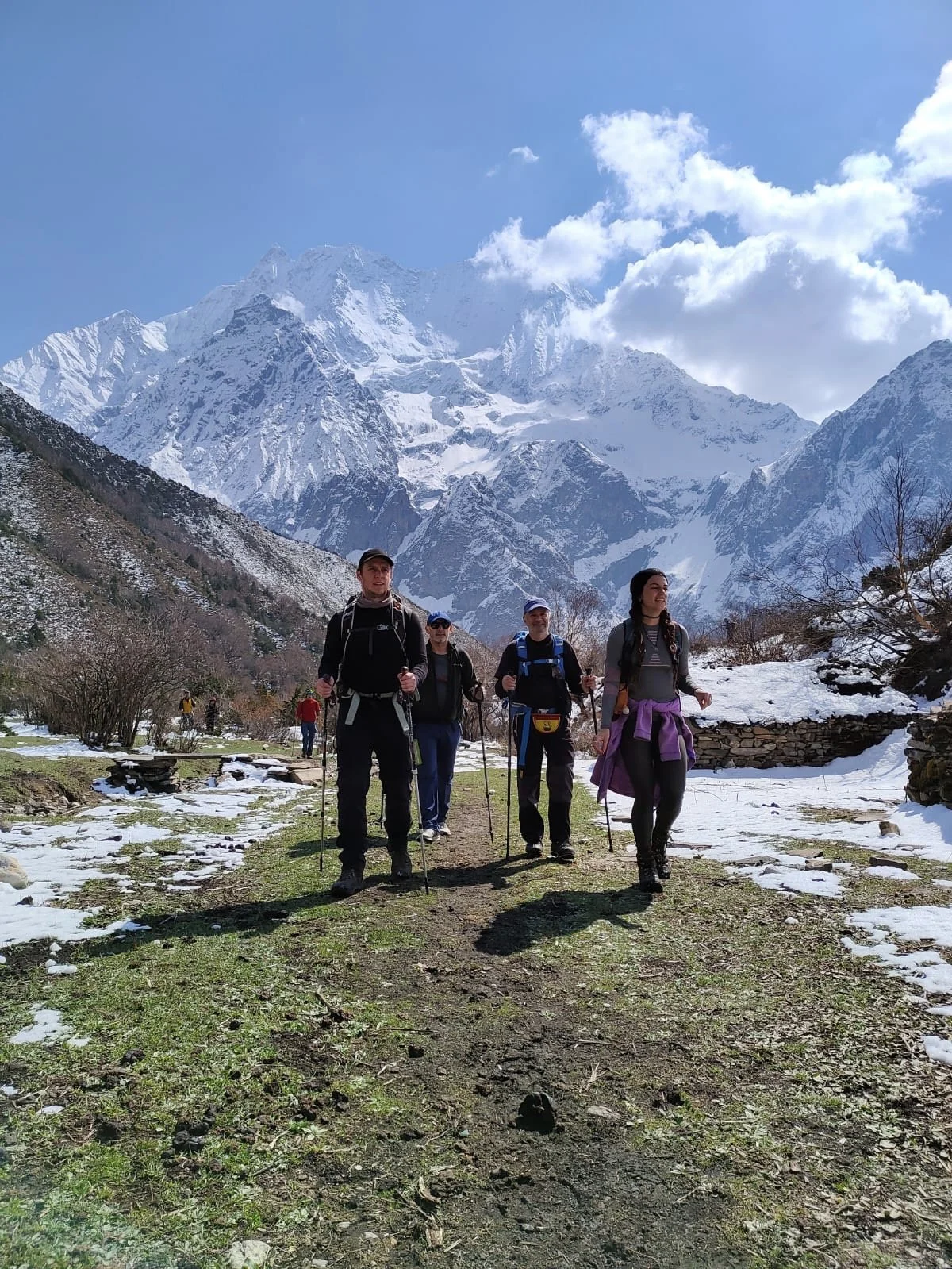
If you are someone who dreams of stepping far beyond ordinary travel experiences, where modern comfort slowly disappears and raw Himalayan reality begins, then there is one name that quietly stands above many others in Nepal’s trekking world the Manaslu Circuit Trek.This is not just a trek.
It is a slow transformation of how you see life, people, mountains, and even yourself.Nestled in the remote western region of Nepal, close to the Tibetan border, the Manaslu region is home to one of the most untouched and authentic trekking experiences in the Himalayas. Unlike crowded trails of Everest or Annapurna, here you walk in silence, with only wind, rivers, prayer flags, and mountain giants guiding your way.
At the center of it all stands the mighty Mount Manaslu (8,163m) the world’s eighth highest peak, silently watching over ancient trails and forgotten villages.
Why Manaslu Circuit Trek is So Special?
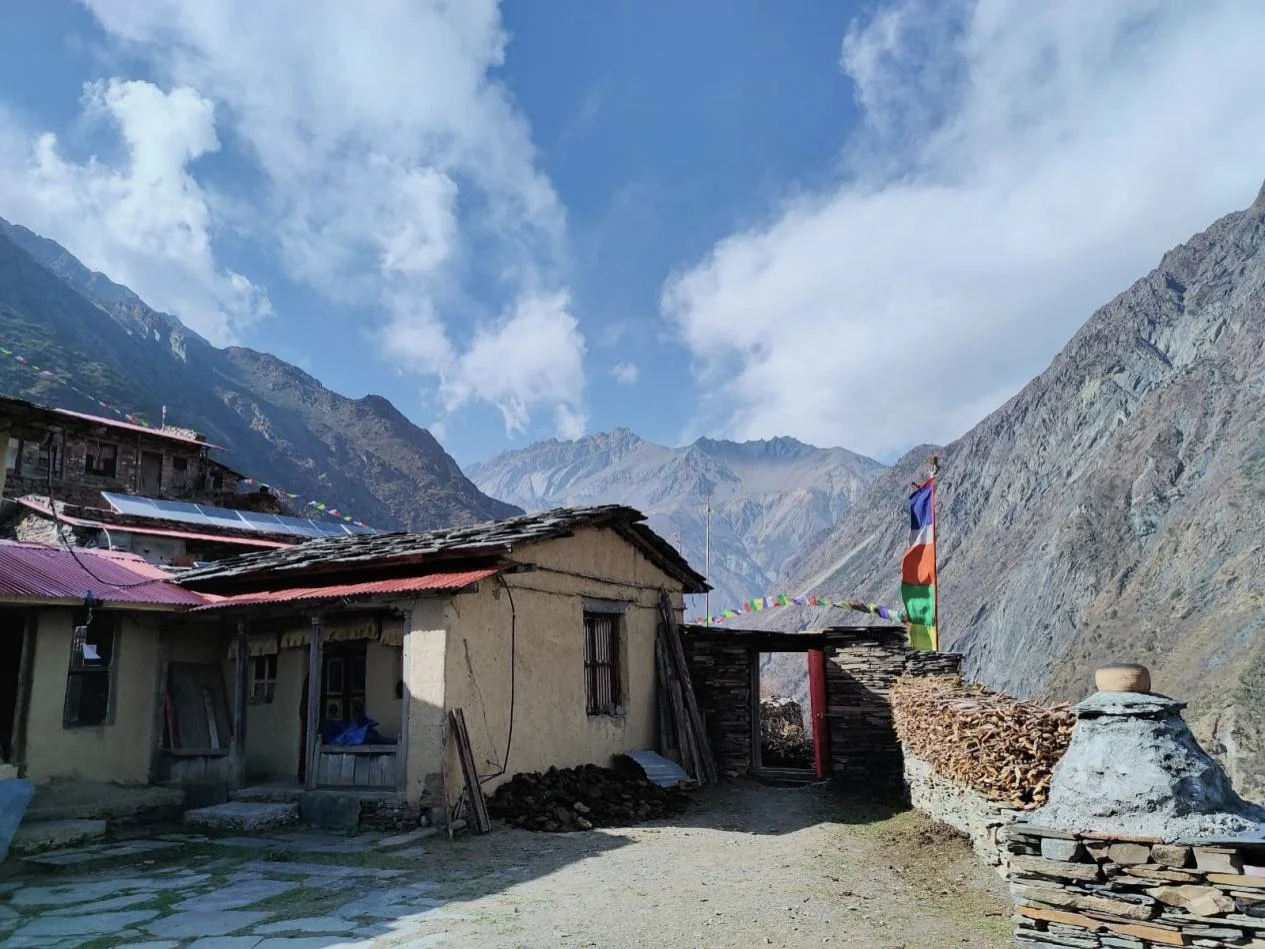
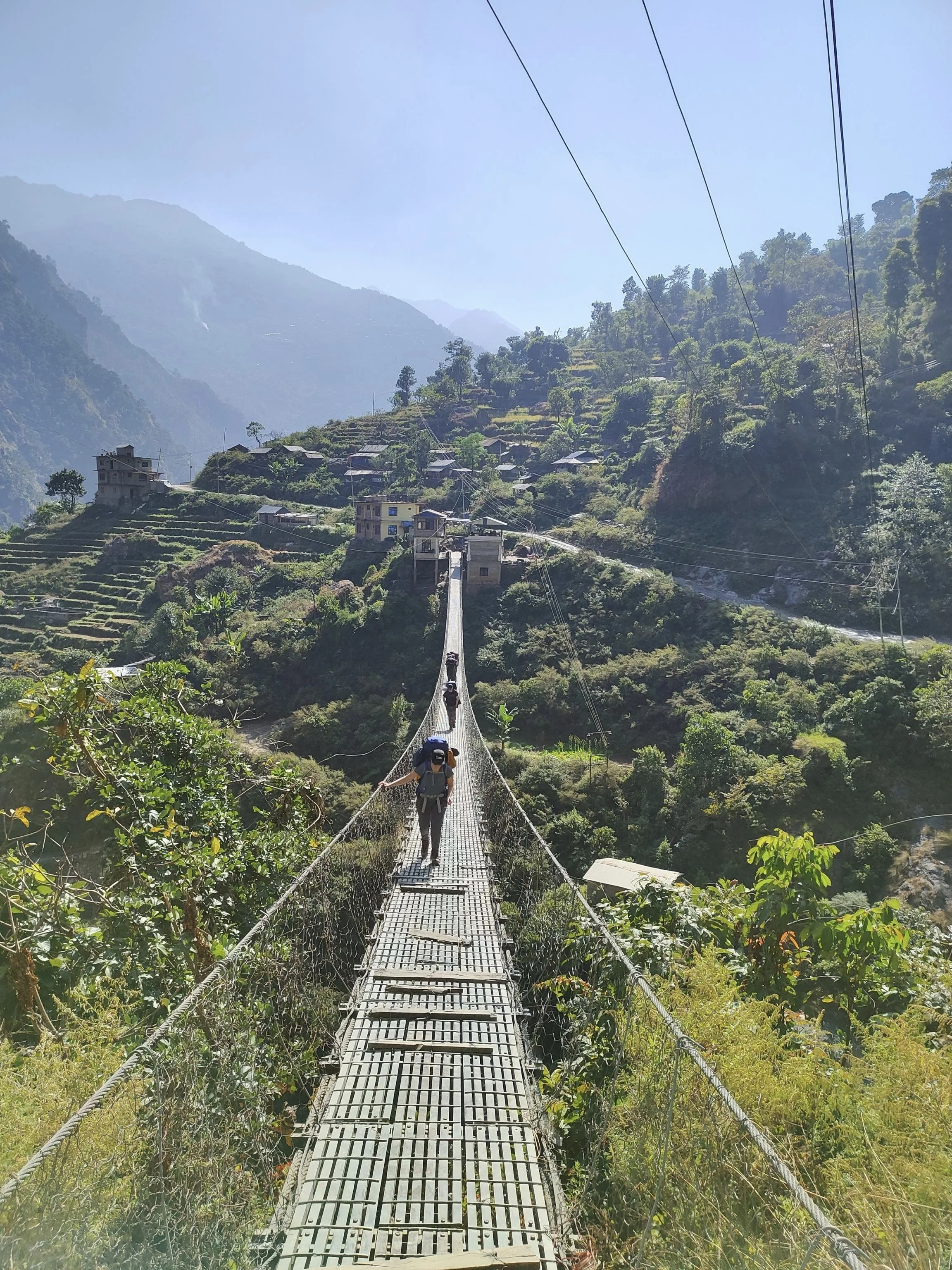
Imagine you’ve always wondered what a real Buddhist monastery feels like not the ones in photos, but something raw and deeply alive. As you walk higher into the Manaslu region, that curiosity slowly turns into reality. You reach places like Pung Gyen Gompa and Mu Gompa where time feels paused prayer flags fluttering in cold mountain wind, ancient chants echoing softly through stone walls. The trail itself keeps surprising you. One moment, you're crossing long suspension bridges swaying above roaring rivers, lined with prayer flags and the distant hum of mule caravans and local traders moving goods across the mountains. The bridges shake slightly under your feet, adding both thrill and awe, especially as dramatic cliffs rise on either side. Then the path climbs ridge after ridge, hill after hill and you begin to feel like you’ve stepped into a completely different world, far removed from anything familiar.
As you continue, you arrive at villages like Namrung, tucked quietly among steep hills and dense greenery. The landscape transforms into something almost surreal stone paved trails winding through clusters of small, traditional houses built entirely from rock. Everything feels grounded, authentic, untouched. The air is crisp, the forests lush and deep green, and above it all, the towering presence of Mount Manaslu slowly reveals itself massive, silent, and incredibly close. Walking through these trails, surrounded by dramatic mountain walls and ancient culture, it doesn’t feel like just a trek it feels like stepping into a story you didn’t know existed, where every step brings a new sense of wonder and a strange, unforgettable connection to the mountains.
There are many treks in Nepal, but Manaslu is different.
It is not only about mountains it is about life.
Remote Himalayan villages untouched by mass tourism
Deep Tibetan-influenced culture and traditions
Ancient monasteries and prayer walls
Wild rivers like Budhi Gandaki roaring through deep gorges
High suspension bridges swinging above dramatic valleys
And finally, the thrilling crossing of Larkya La Pass (5,106m)
This trek gives you a rare feeling as if you are walking inside a living Himalayan documentary.
Strangers Who Feel Like Family
In many popular trekking regions like Everest Base Camp Trek or Annapurna Circuit, the experience can sometimes feel transactional. The trails are busy, the lodges are structured around volume, and interactions often revolve around services, prices, and quick exchanges. It’s not that the journey isn’t beautiful it is but the human connection can feel distant, shaped more by commerce than by genuine presence. With so many trekkers passing through every day, it’s easy to feel like just another visitor moving along a well-trodden path.
But the moment you enter the Manaslu region, everything begins to shift.
Here, the rhythm of life is slower, quieter, and deeply rooted in authenticity. The tea houses are not just businesses they are homes. And the people you meet are not just hosts they are individuals living their culture, not selling it.
You might find yourself staying in a small tea house where the owner is not only a host but also a practicing Buddhist lama. In the evening, instead of a transactional “What would you like to order?”, you may be offered a warm cup of traditional Tibetan tea sometimes made with yak milk not as a product, but as a gesture. A simple act that carries meaning beyond hospitality.
And then something rare happens: time is shared.
He may sit with you, not because he has to, but because he wants to. Conversations unfold slowly—about life, about the mountains, about spirituality. You might hear stories of nearby monasteries, their history, and the rituals that have been practiced there for generations. If you’re curious, he may even guide you toward understanding those traditions, not as a tourist experience, but as something lived and believed.
In these moments, the journey becomes more than a trek it becomes a reflection.
You begin to compare your own life with this simpler, grounded way of living. Coming from fast-paced places like Europe or America, where modern life often moves quickly and constantly demands more, this quiet presence feels different. Here, life is not measured by speed or productivity, but by balance, belief, and connection.
And as you walk deeper into these hidden Himalayan trails, far from crowds and commercial noise, this feeling only grows stronger. The mountains feel more personal. The people feel more real. The experience becomes something you don’t just observe you become part of it.
Manaslu is not for everyone. It’s not for those chasing checklists or comfort zones. It’s for those who are searching for meaning, for connection, for something deeper than just a destination.
Because here, in this hidden corner of the Himalayas, you don’t just meet people…
You arrive as a stranger and leave with stories that feel like home.
Starting Point The Journey Begins at Machha Khola
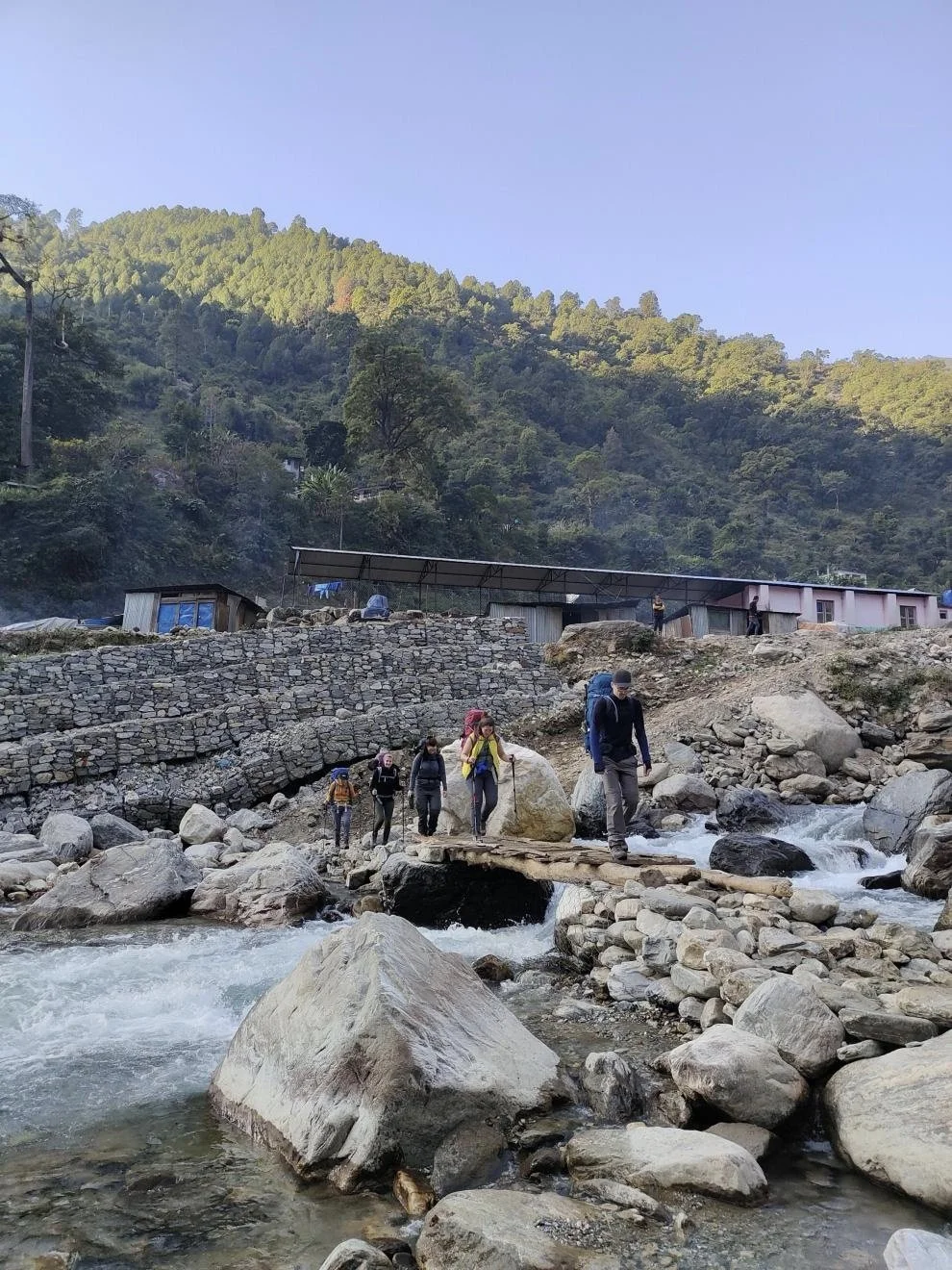
Your journey into the Manaslu region begins at Machha Khola, a small but lively riverside market located near the Budhi Gandaki River. Because road access reaches this point, it feels slightly more developed compared to the remote mountain villages you’ll encounter later. There are several comfortable lodges, small shops, and a steady flow of locals and travelers, giving it the atmosphere of a simple but active bazaar.
The sound of the river flowing beside the settlement is constant, adding a natural energy to the place. You’ll see trekkers preparing for the adventure ahead adjusting their backpacks, checking their gear, and beginning to walk with a sense of excitement. Porters pass by carrying heavy loads with remarkable ease, while guides organize their groups and set the pace for the journey.
Machha Khola is where everything truly begins. It marks the transition from road to trail, from familiar surroundings to the deep wilderness of the Himalayas. As you take your first steps from here, you slowly leave behind the noise of everyday life and move toward a more peaceful, raw, and unforgettable trekking experience.
The road is dusty, the river is wild, and the air begins to feel different. You hear the Budhi Gandaki River constantly roaring beside you, as if guiding you deeper into the mountains.
From Machha Khola, the trail slowly leads you to Soti Khola, passing waterfalls, rocky cliffs, and small settlements where life is extremely simple but deeply connected with nature.
Walking Through Time: From Hindu Lowlands to Tibetan Highlands
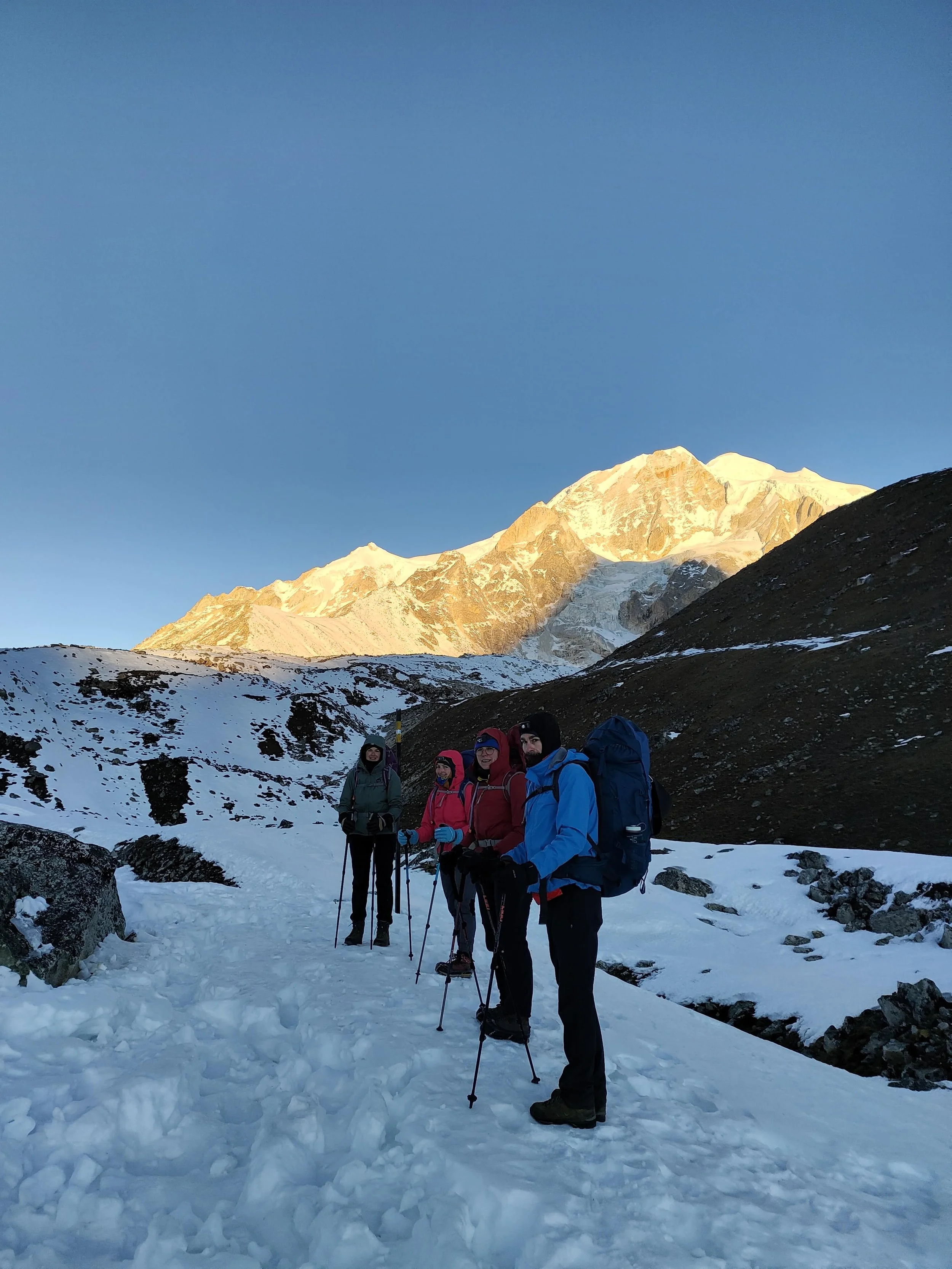
When you begin your journey on the Manaslu Circuit Trek, you don’t just step into the mountains you step into a living cultural transition. In the early days, as you pass through places like Arughat Bazaar and Machha Khola, following the flow of the Budhi Gandaki River, everything feels familiar. The villages are rooted in Hindu traditions, the people you meet share simple daily lives, and the atmosphere carries a sense of warmth and familiarity that many travelers immediately connect with.
But as you move deeper into the trail, something slowly begins to change. It’s not just the landscape rising it’s the culture shifting. The further you walk, the more you start to notice a quiet transformation in religious practices, architecture, and daily life.
By the time you reach higher regions like Samagaun and Samdo, the experience becomes entirely different. Here, the influence of Tibetan Buddhist culture is deeply alive. You’ll see Tibetan women in traditional dress, spinning prayer wheels, and monks (Lamas) who dedicate their lives to spiritual practice. The mountains are no longer just scenery they are sacred, worshipped, and deeply respected.
You’ll witness unique rituals, ancient traditions, and a way of life that feels untouched by modern time. It’s not something you just see it’s something you feel.
You don’t just gain altitude you enter a different civilization.
Entering the Real Himalayas Jagat to Deng
After a few days of walking, you reach Jagat, a checkpoint village where the real restricted Manaslu region begins.
Stone-paved paths replace dusty roads.
Prayer stones (Mani walls) start appearing.
And you feel something ancient in the air.
Life here is not easy. People depend on farming, animals, and seasonal work. Yet their faces carry calmness a kind of acceptance that modern cities rarely understand.
Moving forward, you reach Deng, a quiet village surrounded by forests and deep valleys.
This section is where you start feeling the true isolation of the Himalayas.
No traffic. No noise. Only nature.
Life at the Edge of Survival
For travelers coming from places like Europe or United States where comfort, technology, and convenience shape everyday life the Manaslu region feels like stepping into a completely different reality.
Hidden deep within the folds of the Himalayas, far from modern systems and fast-paced living, you’ll find small mountain settlements scattered across steep landscapes. Villages like Lho and Ghap sit quietly between towering peaks, often appearing fragile against the vastness of nature. The houses are simple sometimes just stone huts or wooden shelters but they hold lives filled with meaning.
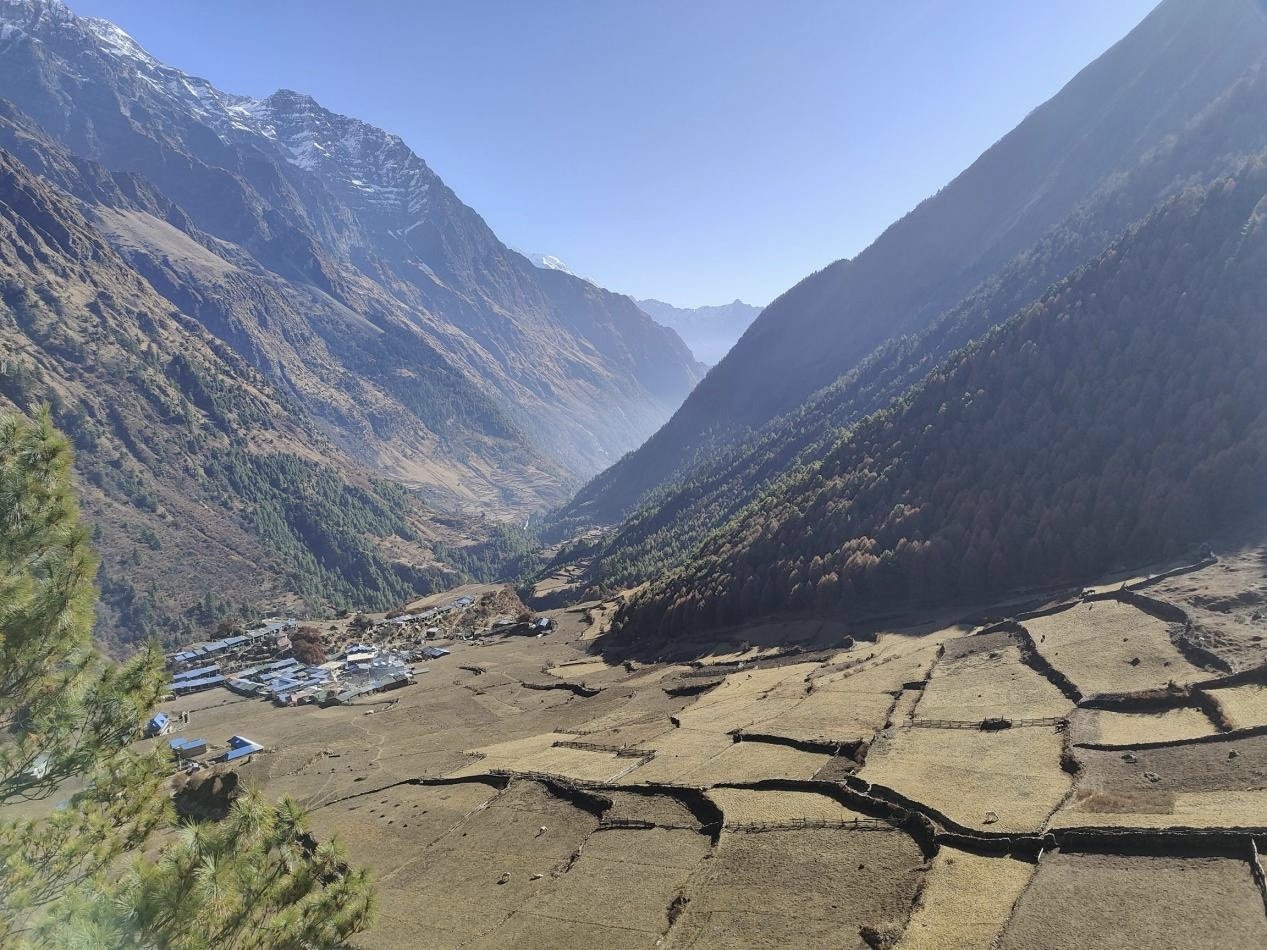
At first glance, it can feel overwhelming.
You’ll see elderly faces marked by time wrinkles shaped by cold winds, years of labor, and a life lived in harsh conditions. Resources are limited. The weather is unforgiving. Daily survival here is not easy. And yet, what surprises most people is not the struggle it’s the peace.
Despite everything, people smile.
There’s a quiet happiness in the way they live. No rush, no excess, no constant need for more. Their lives may seem difficult from an outside perspective, but there is a deep strength in their mindset a resilience that doesn’t complain, but simply continues.
As you observe this, something shifts inside you.
You begin to question what “comfortable life” really means. In places where GDP, economy, and modern development define success, it’s hard to imagine living with so little. But here, beyond tourism and limited income sources, life still carries a sense of balance that feels rare.
And that’s when curiosity grows.
You may feel drawn to step beyond the main trekking route to explore the side villages, to sit with locals, to share a moment without a plan. Not as a tourist, but as a learner. Just spending time, listening, and understanding a way of life that cannot be found in cities or developed countries.
This is why the Manaslu region quietly attracts a different kind of traveler.
Researchers, documentary makers, filmmakers, and those who are searching for something deeper than just landscapes they come here not only to see, but to understand. Because what exists here cannot be replicated or discovered in the developed world.
Not in Europe. Not in America.
Only in remote Himalayan regions like Manaslu region, where life continues between borders, close to the Tibetan frontier, shaped by both nature and culture.
Here, in these isolated villages, you don’t just witness survival you witness a different definition of living.
They have less but live more.
Namrung Gateway to Mountain Views
Then comes one of the most beautiful villages: Namrung.
Namrung is not just a stop it is a viewpoint into the soul of the Himalayas.
From here, everything changes.
You begin to see distant snow peaks like:
Ganesh Himal
Siringi Himal
Himchuli
The village itself is peaceful, with kind-hearted locals, traditional stone houses, and prayer flags dancing in the wind.
Life here feels slower, deeper, and more connected to nature.
You sit in a tea house, drink hot tea, and look at mountains that feel close enough to touch yet still far away.
Lho Village First Clear View of Mount Manaslu
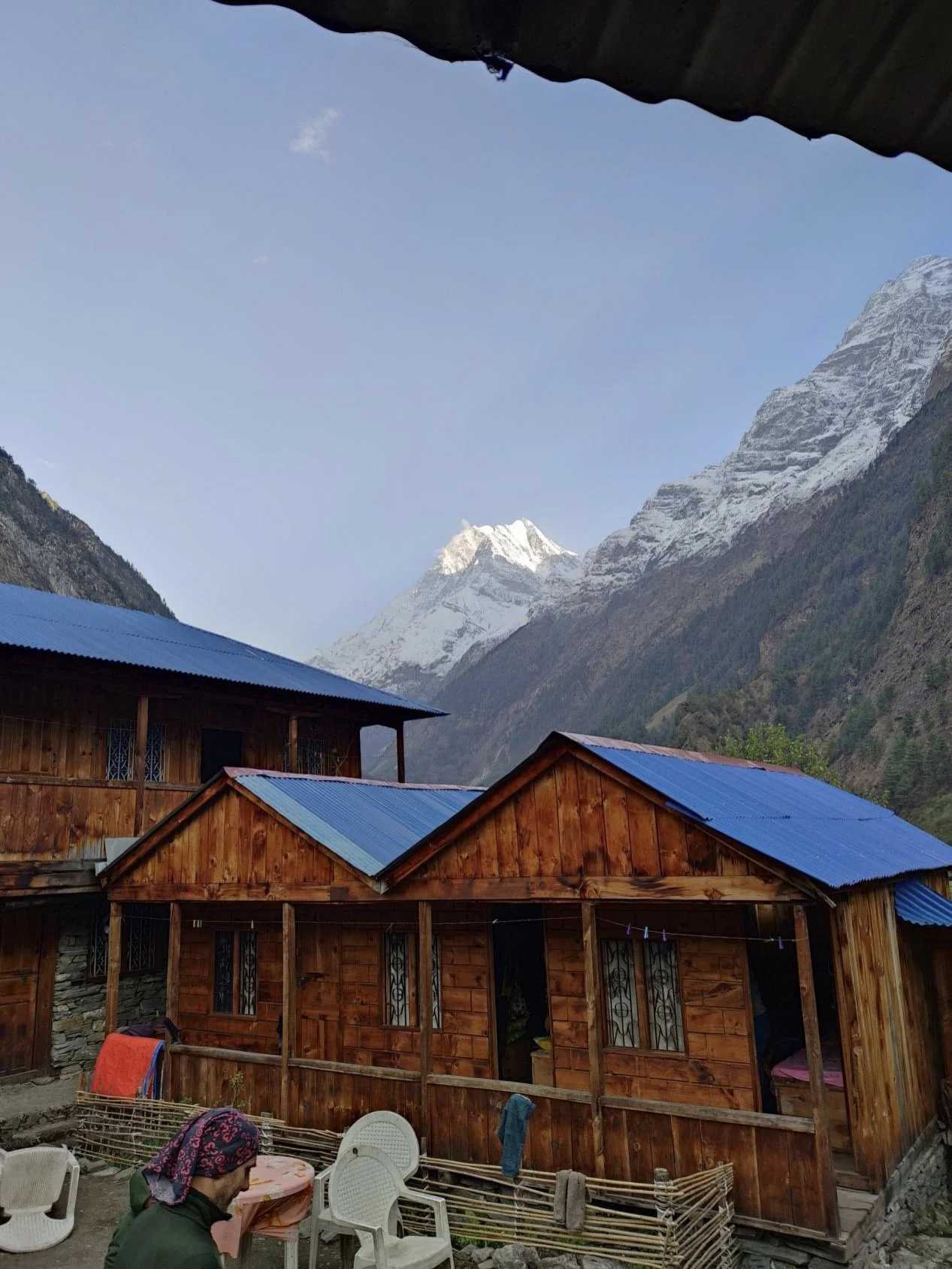
As you continue your journey, you arrive at Lho.
This is one of the most magical moments of the entire trek.
Because here, for the first time, you see the giant Mount Manaslu clearly.
The feeling is difficult to describe.
It is not just a mountain anymore it becomes a presence.
At Lho, you can also visit monasteries like Ribung Gompa, where monks chant softly while mountains stand silently behind them.
Shyala village nearby gives you panoramic views of:
Himchuli
Manaslu
Peak 29
And many unnamed snow giants
It feels like standing inside a Himalayan amphitheater.
Samagaun Heart of the Manaslu Region
One of the most important stops is Samagaun.
This is not just a village it is the cultural heart of the Manaslu region.
Here, you will stay for acclimatization, and slowly adjust to higher altitude.
Samagaun is where you truly observe Himalayan life:
People wearing traditional wool clothing
Yaks grazing in open fields
Children playing near stone houses
Ancient monasteries sitting quietly in the mountains
You can also hike to Manaslu Base Camp or Birendra Lake for exploration.
At night, the sky becomes unbelievably clear. Stars feel close enough to touch.
Altitude & Acclimatization Guide (Very Important in samagaun and samdo)
For any trekker or hiker, understanding altitude is not optional it is essential. Many trekkers coming from Europe, America, or Australia often imagine Himalayan trekking to be similar to well-developed hiking routes back home, with comfortable mountain lodges and predictable conditions. But the Manaslu region is very different. This is not a luxury mountain experience. The lodges here are simple, the terrain constantly changes, and your body must adjust not only to physical effort but also to increasing altitude and lower oxygen levels. Every step higher into the Himalayas demands awareness, patience, and respect for your own limits.
What is Altitude Sickness (AMS)?
Altitude Sickness occurs when your body struggles to adapt to lower oxygen levels at higher elevations. As you gain altitude quickly without proper adjustment, your body cannot function normally, which can lead to serious health risks if ignored
Common Symptoms:
Headache
Nausea
Dizziness
Loss of appetite
Fatigue or unusual weakness
These symptoms may seem small at first, but in the mountains, they should never be ignored.
Why It Matters in Manaslu
Unlike modern trekking destinations, the Manaslu Circuit offers raw Himalayan conditions. Trails are steep, remote, and physically demanding. Lodges are basic, weather can change quickly, and medical help is not always immediately available. This means your ability to adapt both physically and mentally is what keeps you safe.
Prevention:
Walk slowly and maintain a steady pace (never rush)
Drink 3 4 liters of water daily
Take proper acclimatization days (especially at Samagaun and Samdo)
Eat regularly, even if you lose appetite
Listen to your body at all times
In the Himalayas, going slow is not weakness it is survival wisdom.
Emergency Action:
If symptoms become worse:
Descend immediately to a lower altitude
Do not ignore or “push through” the pain
Inform your guide right away
The mountains will always be there but your safety comes first.
SamdoTibetan Influence and Cultural Depth
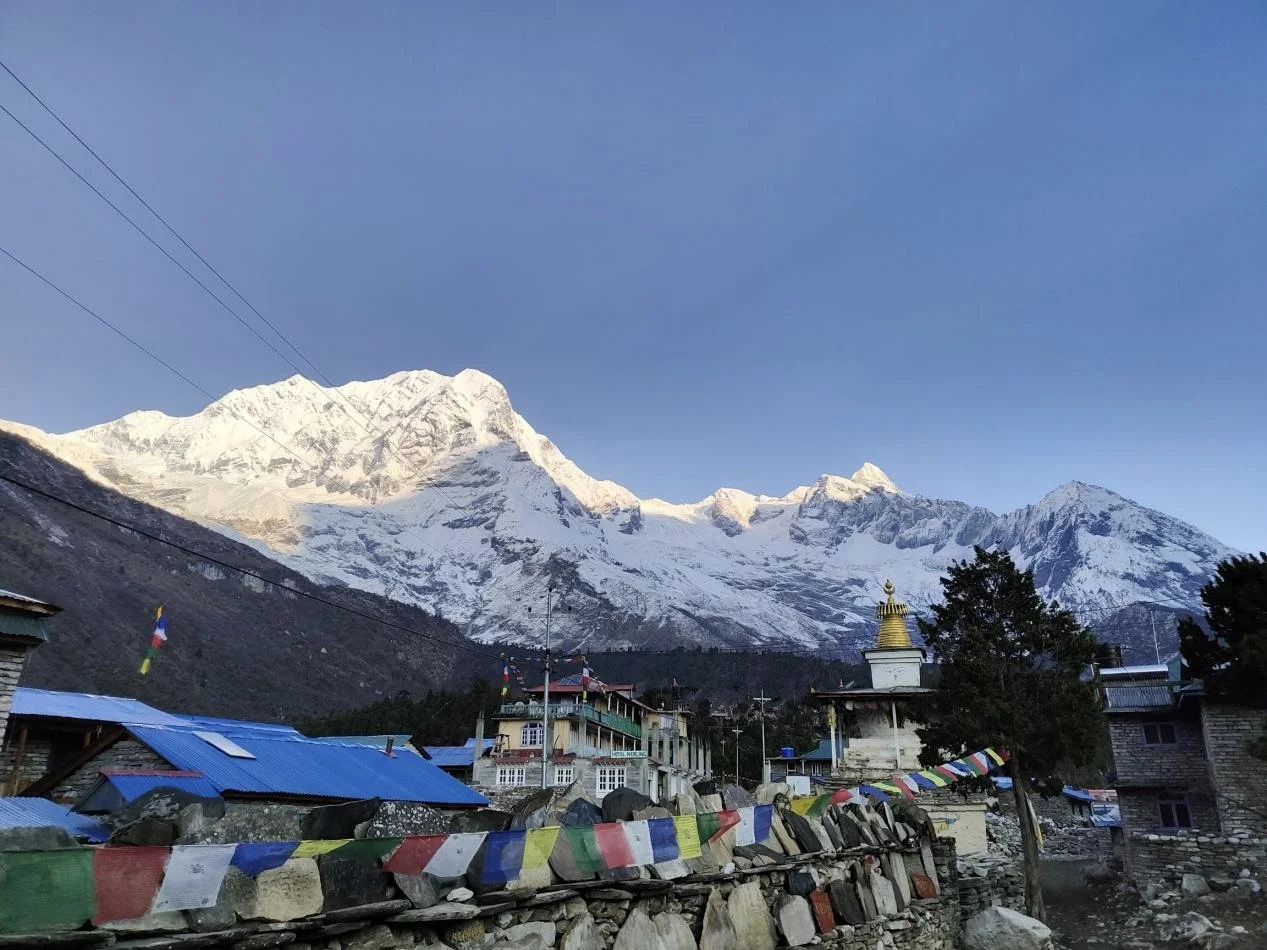
Samdo is one of those rare Himalayan villages where culture is not displayed it is lived. As you walk into this high-altitude settlement, you immediately feel its strong Tibetan influence. Elderly women move slowly along the stone paths, turning prayer beads (mala) in their hands, quietly murmuring mantras as they walk. Their traditional clothing thick woolen dresses, aprons, and layered garments reflects a way of life that has remained unchanged for generations. There is no rush here, only rhythm.
Inside the lodges, the experience becomes even more intimate. In the kitchen, large metal pots sit over the fire, where locals and Sherpa families prepare tea often made with yak milk, rich and warm, perfect for the cold mountain air. During the off-season, villagers rely on farming, especially potatoes grown in these harsh conditions, which later become one of the main ingredients in their daily meals. Simple, but incredibly nourishing.
By evening, snowfall often begins quietly outside, covering the village in white silence. Inside, the dining room comes alive. Trekkers gather around long tables, sharing dal bhat and stories from the trail. There’s laughter, tired smiles, and that shared feeling of having earned the day. In that warm, simple space surrounded by mountains, culture, and strangers who feel like companions you realize that Samdo is not just a stop on the trek. It’s an experience that stays with you, long after you leave.
The Ultimate Challenge Larkya La Pass
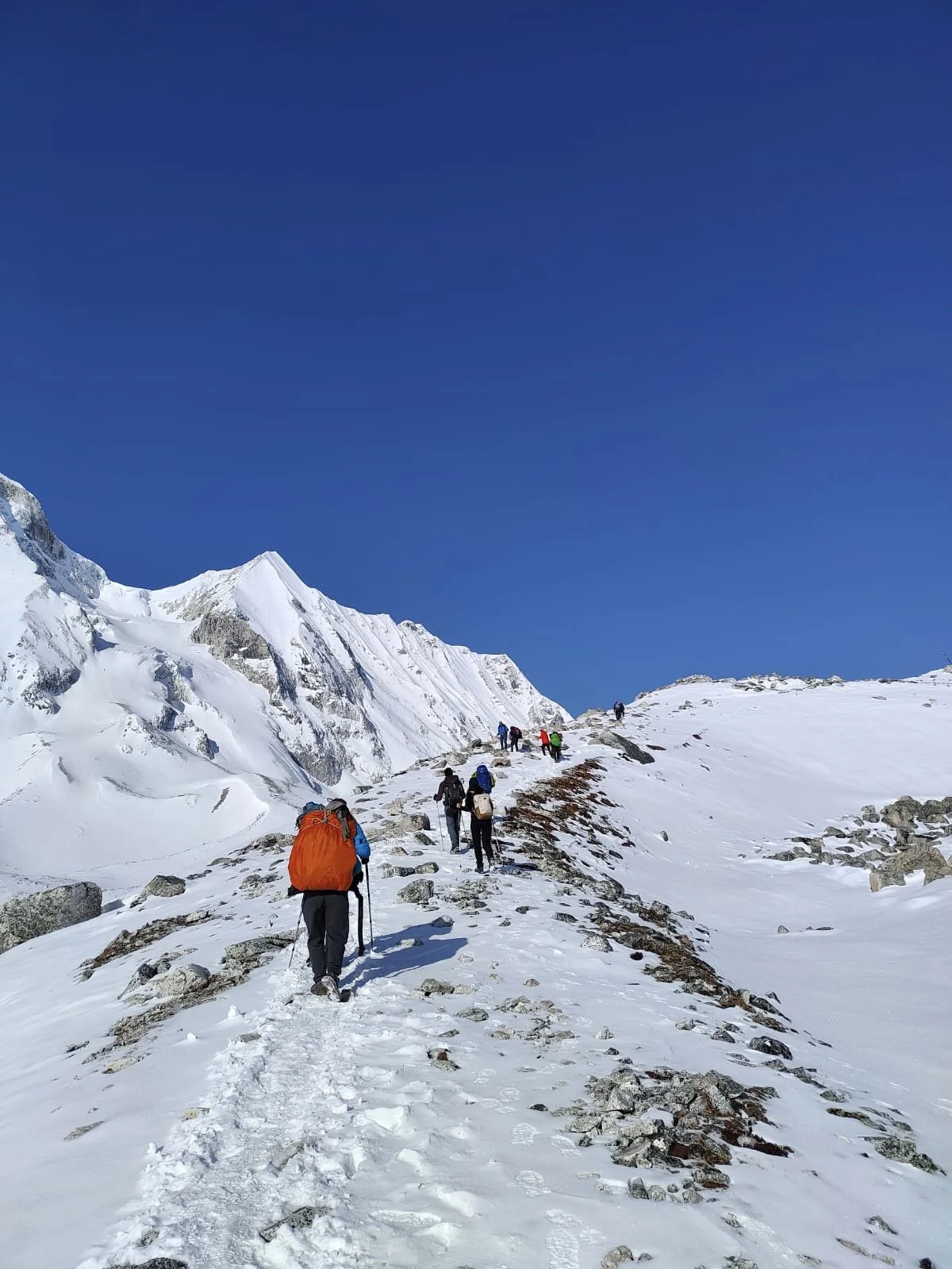
This is where the real challenge truly begins. As you approach Larkya La Pass, the Manaslu Circuit transforms from a scenic trek into a demanding Himalayan journey. The trail becomes longer, steeper, and more rugged. You walk for hours along narrow mountain paths, sometimes exposed, with deep valleys below and towering peaks around you. Your breathing becomes heavier as the altitude increases, and every step feels slower, more deliberate. It is not just a walk anymore it is a test of endurance.
Along the way, you pass fluttering prayer flags stretched across the trail, moving constantly in the strong mountain wind. Small Buddhist shrines and stone structures appear, reminding you of the deep spiritual presence in these mountains. The path feels endless long, stretching far into the distance and yet, there is a growing excitement inside you. You begin to understand what the Manaslu trek really is: not just beautiful, but powerful, raw, and deeply challenging.
As you climb higher, you enter the frozen zone. The landscape changes dramatically snow covers the ground, the air becomes sharper, and everything feels quieter. When you finally reach the top of Larkya La Pass, the reward is overwhelming. Massive Himalayan peaks surround you, standing clear, bright, and incredibly close. The view feels almost unreal, as if the mountains themselves are alive and watching.
At the top, trekkers gather some sitting silently, taking in the moment, others laughing, celebrating, and sharing the experience. Friends, couples, and even strangers connect through this shared achievement. There is a strong sense of joy, relief, and pride. After such a long and difficult climb, reaching this point feels deeply emotional.
Larkya La Pass is not easy. It is long, strenuous, and one of the most challenging mountain passes you may ever encounter. But it is also one of the most rewarding. If you are ready to push your limits, it will give you an unforgettable experience. But if you are not prepared for such a demanding journey, then the Manaslu Circuit may not be the right trek because this is a place that asks for your strength, patience, and determination at every step.
Descent Bhimthang and Return to Civilization
After crossing the pass, the trail descends toward Bhimthang.
Green hills return. Forests reappear. Rivers soften.
The harshness of high mountains slowly disappears, replaced by peaceful valleys.
But something inside you remains changed forever.
Emotional Reality of Manaslu Trek
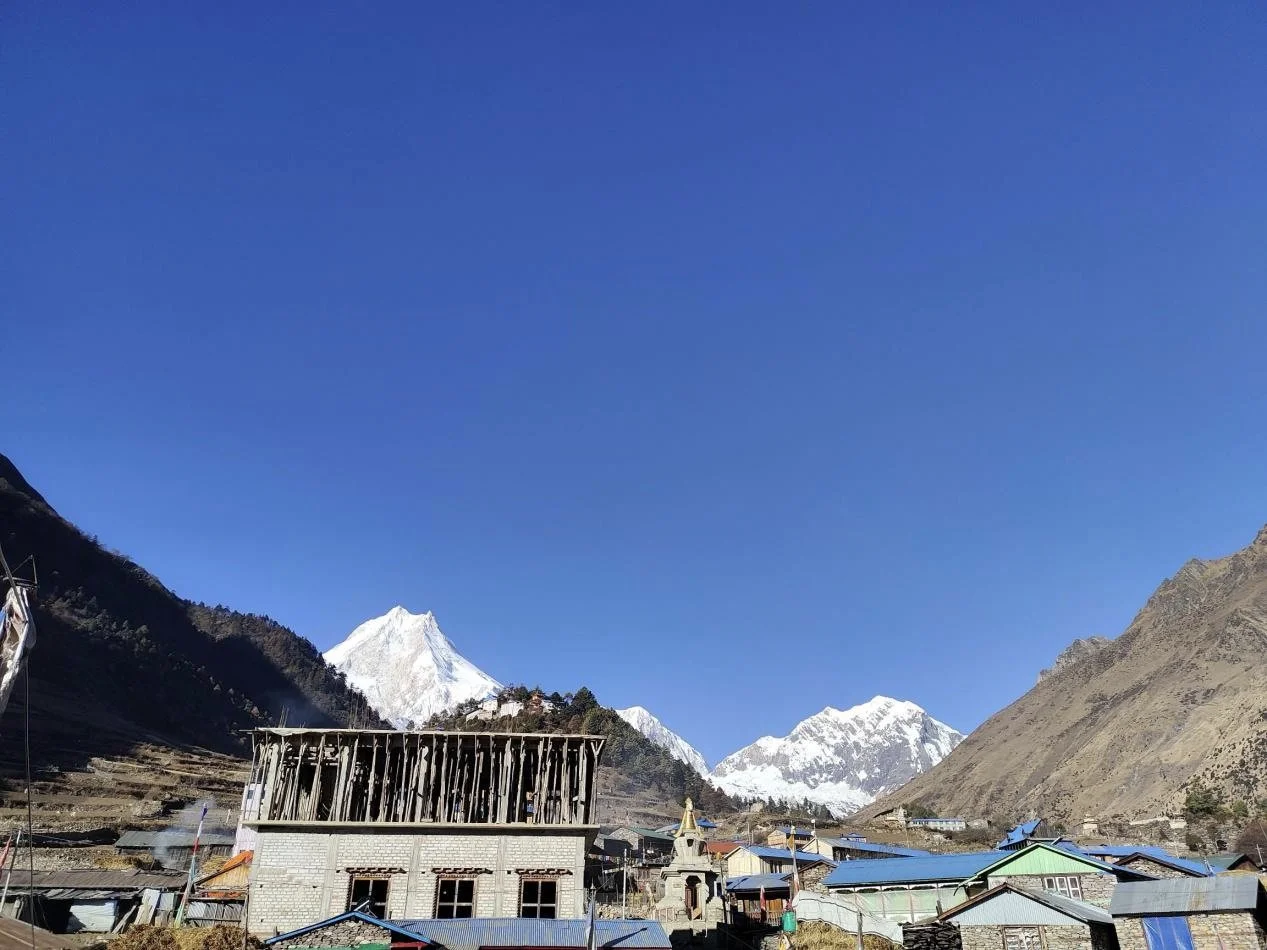
The emotional reality of the Manaslu Trek goes far beyond mountains and trails it is deeply tied to the lives of the people who live in these hidden Himalayan valleys. As you pass through villages like Samagaun and Samdo, you don’t just see landscapes; you witness a way of life shaped by Tibetan influence, ancient Buddhist traditions, and generations of quiet resilience. Prayer flags flutter above stone houses, and small Buddhist gompas stand silently on hilltops, where monks continue their chants as they have for centuries. There is a sacred stillness here that feels untouched by time.
In these villages, life is simple and deeply connected to nature. Children walk along rough stone paths wearing old, often worn-out clothes, yet their faces carry innocence and curiosity. Families live in traditional mountain homes made of stone and wood, without modern luxuries. There are no advanced facilities, no fast-paced technology only the rhythm of nature, farming, and survival. Most people depend on small organic farmlands, growing potatoes, barley, and seasonal vegetables. Everything is local, everything is earned through hard work in difficult terrain.
Markets here are small but culturally rich, influenced strongly by Tibetan traditions. You may see people trading goods, yak products, and handmade items, not as a business of luxury, but as a way of life passed down through generations. The people you meet whether in Samdo, Samagaun, or other remote settlements may appear simple, but they carry deep inner strength, intelligence, and humility. They do not show off their struggles; instead, they live with quiet dignity and kindness.
In this region, tourists are often welcomed warmly. Locals treat visitors with respect and hospitality, sometimes even with a sense of reverence, offering guidance, food, and shelter. Many of them work as guides or porters, carrying heavy loads across dangerous trails, not out of choice for comfort, but as a means of survival. Economically, these communities remain marginalized, yet their spirit is incredibly strong. They face harsh winters, limited resources, and isolation from modern development, but still continue life with patience and acceptance.
And as you walk through these villages, surrounded by silence, mountains, and prayer wheels spinning in the wind, a strange emotion begins to rise inside you. You start questioning everything why life is so different here compared to modern cities, why some people live with abundance while others live with simplicity, and why places like this exist in such isolation yet such beauty. It makes you reflect deeply on nature, humanity, and existence itself.
Sometimes, in those quiet Himalayan moments, standing between towering peaks and humble villages, you feel something unexplainable gratitude, sadness, admiration, and wonder all at once. The Manaslu region doesn’t just show you mountains; it shows you life in its rawest form. And long after you leave, these people, their smiles, their struggles, and their silent strength stay with you etched into memory like the mountains themselves.
The Manaslu Circuit is not only about landscapes.
It is about:
Remote mountain life
Struggles of villagers
Silence of high Himalayas
Cultural depth of Tibetan Buddhism
And your own mental transformation
You realize how people live without luxury, yet with dignity.
You understand how nature is both harsh and beautiful at the same time.
And you learn patience step by step.
Final Reflection
The Manaslu Circuit Trek is not just a route on a map.
It is a journey through silence, struggle, beauty, and transformation.
It is where mountains are not just seen they are felt.
And long after you return, even in busy cities, a part of you will still be walking somewhere between Machha Khola and Larkya La Pass, listening to the wind of the Himalayas.
Because Manaslu does not end when the trek ends.
It stays with you.
Forever.
Why Choose a Local Trekking Company like Trek Around Himalayas?
Himalayan trekking—especially in remote regions like the Manaslu Circuit Trek—is not just about walking trails. It’s about understanding the land, the people, and the unpredictable conditions that come with it. And that’s exactly where a local trekking expert makes all the difference.
In places like Manaslu, challenges can come unexpectedly—weather changes, altitude issues, or even simple communication barriers with locals. As a trekker, you may not fully understand the culture, behavior, or lifestyle of the people living in these remote Himalayan villages. But a local guide does.
When you choose a company like Trek Around Himalayas, you’re not just hiring a guide—you’re gaining a companion who knows the region inside out. These are people who have trekked the same trails countless times, who understand every route, every shortcut, and every risk.
They make your journey smoother at every step:
They understand your body condition, fitness level, and how much altitude you can handle
They guide you on how to interact with local people respectfully and comfortably
They know which routes are safer and which paths to avoid in difficult conditions
They manage permits, restrictions, and all logistics without stress
They recommend the right gear based on the terrain and season