Exploring Cyprus Beyond the Beach Resorts: Villages, Mountains, and Day Trips
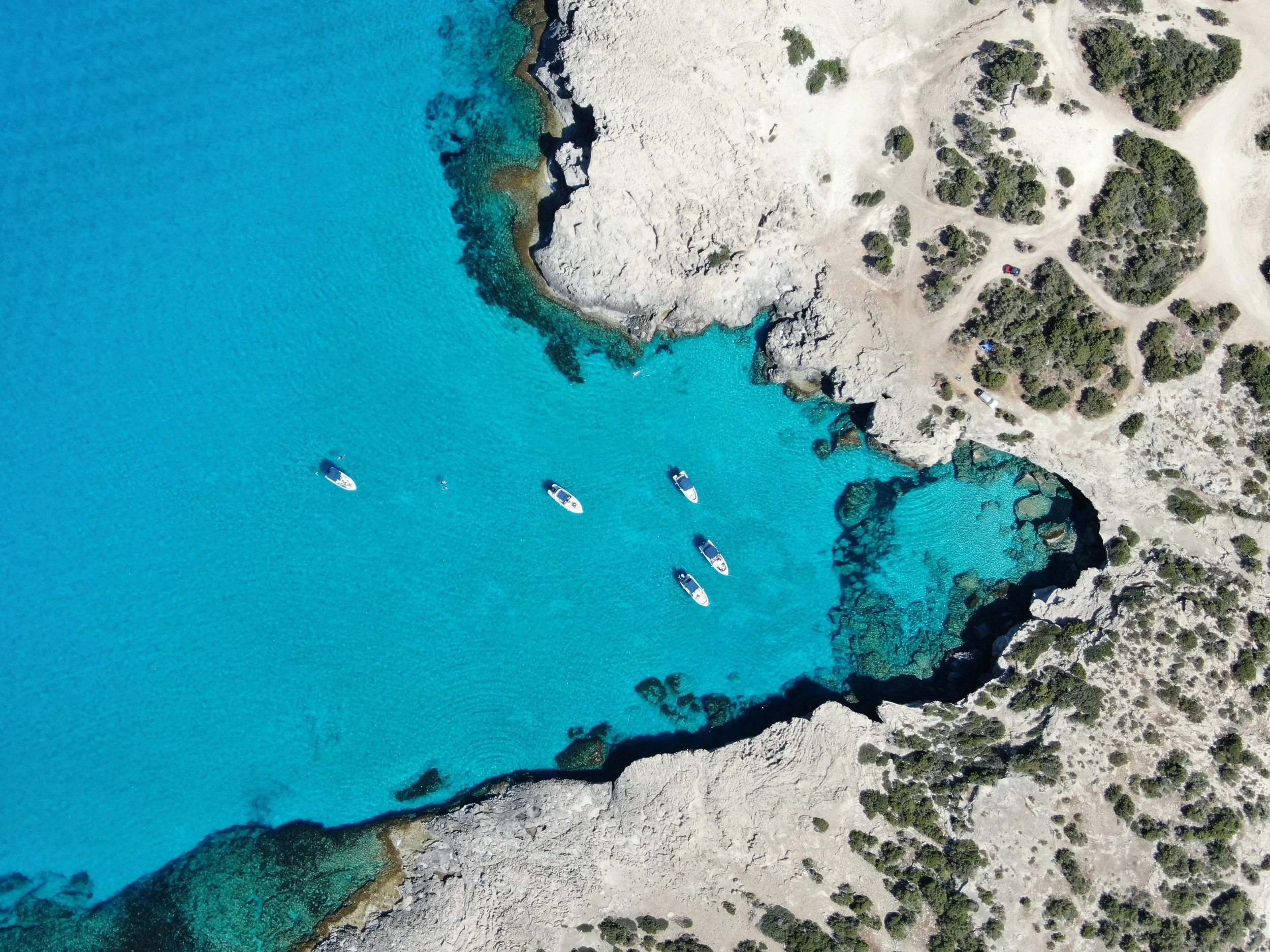
What do most people actually see of Cyprus? The airport, the hotel strip, the beach, the hotel restaurant. Maybe one excursion bus to a nearby site before the flight home. The island gets reduced to a pool and a view, and a genuinely extraordinary place ends up being experienced as a pleasant but forgettable sun holiday.
The interior of Cyprus is a different country from the coast. It rewards the visitors who leave the resort, and it has a way of surprising people who thought they had already figured out what the island was.
The Troodos Mountains: More Than a Backdrop
The Troodos range runs through the heart of the island and rises to just over 1,900 metres at Mount Olympos. From the coast, it looks like a green smudge on the horizon. From inside it, it is a landscape of pine forests, stone terraces, ancient monasteries, and villages where the 20th century arrived reluctantly and the 21st even more so.
The mountain villages, places like Kakopetria, Kalopanagiotis, Pedoulas, and Omodos, are genuinely old in a way that resort towns are not. They have working bakeries, local coffee shops where the same people have sat every morning for decades, and the kind of quiet that comes from being somewhere the tourist infrastructure decided to leave mostly alone.
Kakopetria in particular is one of the best-preserved medieval villages on the island. Its old quarter, a cluster of stone houses on a narrow ridge above a river valley, is exactly the kind of place that photographs cannot quite capture. You need to be in it, wandering the alleys at your own pace, to understand what makes it worth the drive.
The UNESCO Painted Churches
The Troodos region holds one of the highest concentrations of Byzantine churches and monasteries in the former Byzantine Empire. Ten of them have been on the UNESCO World Heritage List since 1985, recognized for their extraordinary frescoes dating from the 11th to the 16th centuries.
These are not grand cathedral churches on city squares. They are small, modest structures, sometimes tucked into hillsides, with steep wooden roofs built to handle mountain snow. Inside, the walls are covered floor to ceiling in Byzantine murals that have survived remarkably intact, telling biblical stories in pigments that still carry extraordinary depth and color after nearly a thousand years.
The church of Panagia Forviotissa, known as Asinou, is one of the most visited and most striking. The frescoes inside span several centuries of painting style and include some of the finest examples of Comnenian Byzantine art anywhere in the world. It sits at the end of an unmarked road in a pine forest, with no adjacent town and no souvenir stand. The contrast between the humble exterior and the interior is one of the genuine surprises Cyprus offers.
The catch is that these ten churches are spread across three mountain routes covering nearly 400 kilometres in total. Visiting more than two or three of them in a day requires planning, and navigating between them on winding mountain roads while also trying to absorb what you are seeing is a significant ask.
The Wine Villages of the Limassol Highlands
Below the high Troodos, on the southern slopes of the mountains, sits the Commandaria wine region, one of the oldest documented wine-producing areas in the world. The wine produced here, sweet and amber-coloured, was traded by the Crusaders and documented by Richard the Lionheart in the 12th century.
Villages like Kolossi, Omodos, Lofou, and Vouni produce wine from indigenous grape varieties that have grown here for millennia. The Xynisteri and Mavro grapes are found almost nowhere else in the world at this level of cultivation. Small, family-run wineries in these villages still receive visitors during harvest season and throughout the year, and tastings in a stone courtyard with the mountains behind you is one of those experiences that places tend to promise and rarely deliver.
Omodos itself, the central village of this wine region, has a monastery square that fills with locals and visitors at weekends, and a lattice of lanes running off it with small shops and cafes that have not changed much in decades. It is the kind of place where you arrive planning to stay an hour and leave two hours later.
Lefkara: Lacework, Silver, and Old Lanes
On the southern slopes of the Troodos sits Lefkara, one of the most visited villages in Cyprus for good reason. It has been a centre for lacework production for centuries, a tradition so established that Leonardo da Vinci is said to have visited in 1481 and purchased a lace altar cloth for Milan Cathedral.
The lacework is hand-produced and intricate. The village also has a silversmithing tradition, and the main street is lined with workshops where both crafts are still practiced. Walking through Lefkara and watching craftspeople at work is a window into a tradition that has survived remarkably intact.
Why Getting There Matters
All of these places share a logistical reality: they are not straightforwardly accessible without your own transport. Public buses in Cyprus connect the major cities but serve the interior villages infrequently, with services that may run once or twice a day and require connections that add significant time.
Most people rent a car, which works well for those comfortable on mountain roads with unfamiliar signage. Mountain driving in Cyprus, particularly on the narrow lanes leading to some of the Troodos churches, requires confidence on hairpin bends and comfort with sharing a single-track road with the occasional lorry or herd of sheep.
Most people fly into Cyprus for the beaches and never leave the coast. That is a missed opportunity, because the interior is where the island gets interesting — the Troodos villages, the painted churches up in the mountains, the small wineries that do not show up in package itineraries. The catch is that these places sit far apart, and public buses barely connect them. This is why some visitors arrange custom day trips with a driver around Cyprus instead of renting a car, skipping the mountain-road navigation and the parking hunt in tiny stone villages. Taxi4Travel arranges this kind of full-day setup for people who would rather see the island than drive it.
What a Day in the Interior Actually Looks Like
The most satisfying day trips tend to combine two or three places rather than trying to cover everything. A morning in a Troodos village, a stop at one of the UNESCO churches, and an afternoon in a wine village gives you real range without the exhaustion of constant movement.
A well-planned route from Limassol might take you up to Omodos for coffee, then north through the pines to Kakopetria for lunch at a village tavern, with a stop at the Asinou church on the way back down. It is a full but manageable day, covering three completely different experiences of the island in a single loop.
Conclusion
The beach resorts are fine for what they are. But the island's real character lives in the mountains, the villages, and the old stone lanes where nothing is designed to impress anyone.
The interior is not hidden. It is just slightly inconvenient to reach. That inconvenience is what keeps it interesting, and making the effort to get there is what separates a holiday in Cyprus from the kind of experience that becomes a story worth telling.